Businesses need to advertise to survive. Without advertising, no one will ever know you exist, let alone what products you sell or who you're trying to sell them to. Getting word out, getting exposure, and bringing in an audience is the single largest challenge for any business.
It's no surprise that there are dozens of ad networks out there aimed at facilitating this process. Everyone seems to want to get in on the game, from Google and Facebook to small channels aimed at niche audiences. The question is, which of them is best for you?
In order to determine the best ad network, you need to look at a bunch of factors. An ad network is only as good as its publishers, right? With Facebook, Facebook itself is the publisher, and they have one of the largest audiences in the world - over 3 billion monthly active users as of 2026, reaching 62.2% of U.S. adults. Google is similar, combining their own site and their entire display network.
Other ad networks have smaller networks of publishers. The question then becomes: are those publishers high quality? If they have ten million websites in their network, but all of them are spam sites and PBN sites with zero traffic, your ads don't do anything. If you're not reaching actual people - and if you're not reaching people on relevant content - you're paying for nothing.
You also have to consider whether the ad network caters to B2B or B2C companies. Most ad networks do both, but some lean heavily one way or the other. A B2B network is generally going to focus on audiences with a business emphasis; on sites that write for business owners or on sites that offer business services. A B2C network, by comparison, is targeted at "regular" people, regular consumers who are more likely to have an interest.
Every network has average performance rates. These are determined by pressure from both the advertiser and the publisher. If publishers are low quality, advertisers don't want to pay much or put much effort into ads. If advertising is low quality, publishers don't want to run the ads. It's hard to tell what kind of ads and performance a network has, though, so you may want to do some research.
Key Takeaways
- Facebook Ads leads B2C advertising, with 51% of B2C marketers citing it as their most important social platform.
- Google Ads excels at capturing high-intent users actively searching for products, something social platforms cannot replicate.
- TikTok is a growing B2C channel where authentic, native-feeling content dramatically outperforms polished traditional ad creative.
- Email marketing delivers a 2.8% B2C conversion rate and, unlike paid ads, is an asset brands fully own.
- Top B2C brands use paid ads for awareness, then rely on email, retargeting, and content to drive conversions.
A Note on Effectiveness

Before I get into any specific list of ad networks, remember that my advice is by necessity generic. I have a wide variety of different business owners and entrepreneurs reading my content, so I try to avoid writing specifically for one niche or another, outside of targeted blog posts. A post about ad networks like this one is going to be broad.
What this means is that, when I recommend an ad network, I just mean it's likely to be a good place to start. You need to do your own testing to make sure it's actually a viable ad network for you to use.
It's also worth noting that paid advertising doesn't exist in a vacuum. According to the HubSpot State of Marketing Report 2025, the channels delivering the best ROI for B2C brands are (1) email marketing, (2) paid social media, and (3) content marketing. Among paid distribution channels specifically, social media advertising accounts for 45% of the most effective results, with pay-per-click at 31%, per the Content Marketing Institute. The takeaway: your ad network strategy works best when it complements a broader marketing mix.
How can you perform testing on ad networks? Well, you're going to need a budget. Register for any ad network that interests you, set up your account, and run some ads. Ideally, you will know the basic information necessary to appropriately target those ads. Specifically, you want some audience demographic and interest information. Facebook's native analytics tools help a lot with this, assuming you have an engaged audience. Otherwise, you need to figure out your buyer personas.
I recommend spending at least $100-$200 on these testing ads and running them for a couple of weeks. The numbers may vary, however. You need to run them for however long it takes to get a statistically relevant amount of data. Then you can make a determination as to whether or not it's worth investing more heavily into the ad network.
Be sure to calculate your raw number of conversions as well as your conversion rate and the cost per conversion for your ads. You can optimize these later, but if the baseline isn't good enough, the network might not be worth the effort.
Alright, with all of that out of the way, let's look at the top ad networks you can use as a B2C company. I'm going to give you a bunch of different networks to explore, in the hopes that you can find a few that work for you.
Facebook Ads
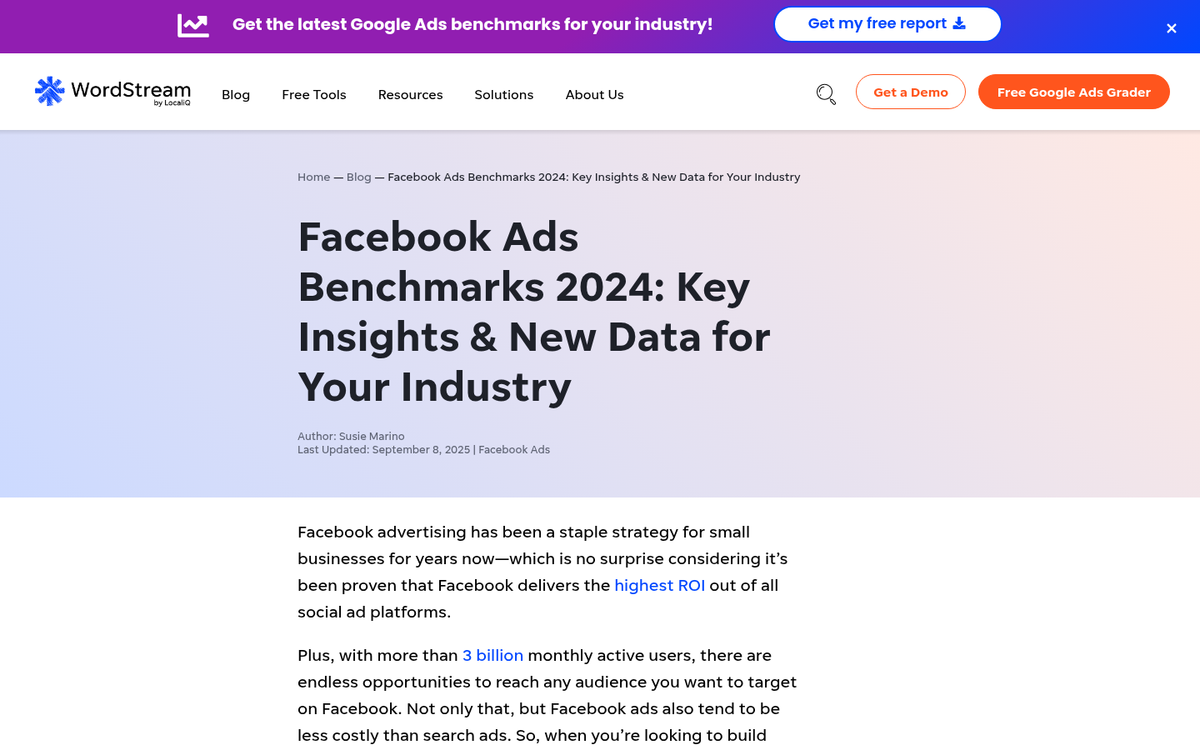
It should come as no surprise that Facebook remains one of the top ad networks for B2C businesses. In a 2024 global survey by Social Media Examiner, approximately 51% of B2C marketers said Facebook was their most important social media platform - and for good reason. With over 3 billion monthly active users and highly granular targeting options, Facebook Ads give you an enormous amount of control over who sees your message.
According to WordStream's 2024 Facebook Ads Benchmarks, B2C brands achieve an average conversion rate of 8.95% and a median ROAS of 1.79x - solid baseline numbers that can improve significantly with proper optimization. There are so many different levers to pull that if you're wasting money, it's generally a targeting or creative problem, not a platform problem.
Google Ads
Google remains best-in-class alongside Facebook. Between Search, Display, YouTube, and Performance Max campaigns, Google offers an immense variety of ad formats and targeting options. Search ads in particular are powerful for capturing high-intent users who are actively looking for what you sell - something social platforms can't replicate in the same way.
Even if Google isn't your primary channel, you should at least be running a minimal brand campaign to protect your brand name in search results and capture warm traffic. You're simply leaving conversions on the table if you ignore it entirely.
BuySellAds
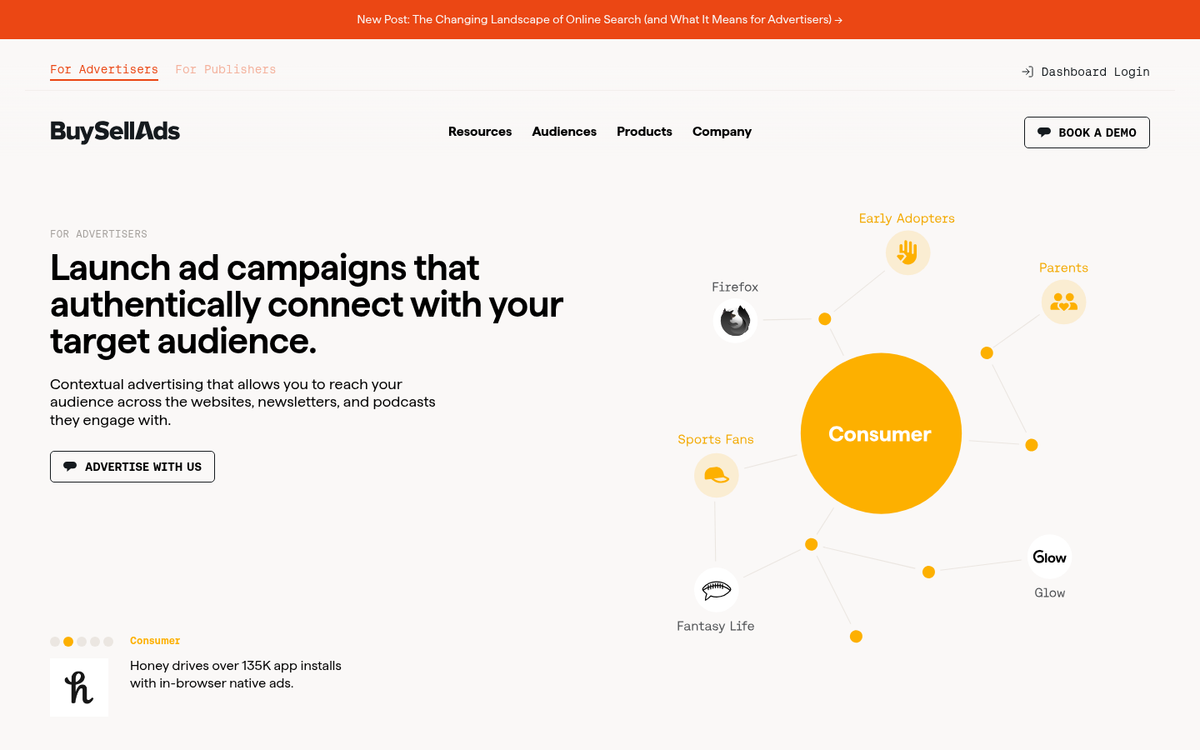
BSA is one of the more established third-party ad networks, and they maintain their position by curating a marketplace where publishers list their site statistics and advertisers bid for placement. As an advertiser, you can hand-pick the exact sites you want your ads to appear on. This is called media buying, and it gives you a level of transparency and control that programmatic networks often don't.
Picking the right sites with BSA is part art, part timing. You need to find sites with open inventory that align with your audience, and develop a sense for which placements will convert and which will burn through budget. It can take time to develop that instinct, which is why I'd consider BSA more of an intermediate to advanced-level channel rather than a starting point for most advertisers.
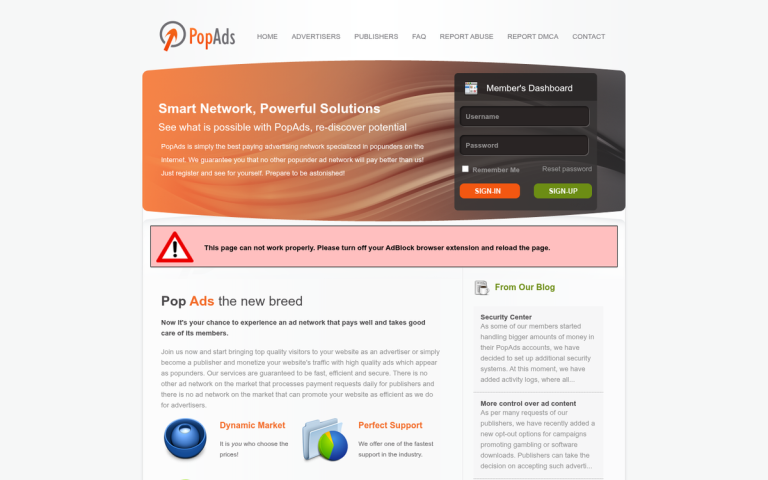
PopAds
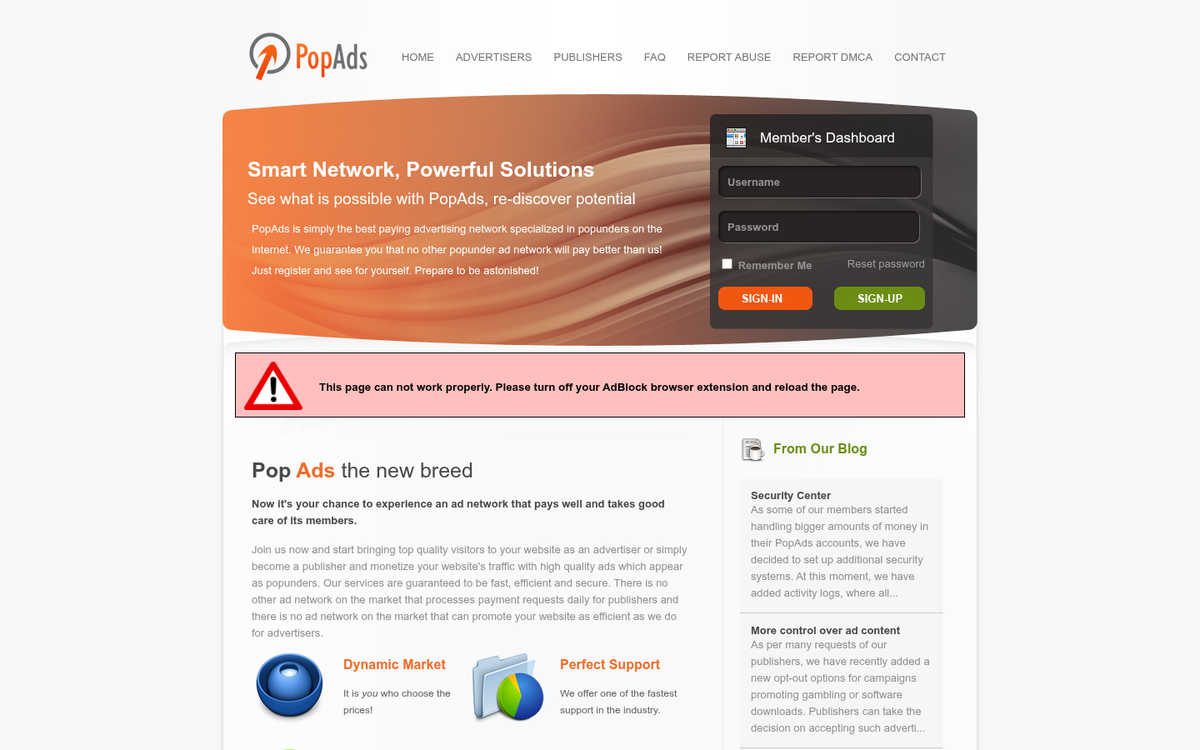
PopAds is a pop-under advertising network. I'm always a little cautious recommending these kinds of ads, because they can feel intrusive to users and aren't necessarily the association you want for your brand. That said, pop-unders can be effective when the network filters for quality and the ad itself is compelling.
PopAds operates on a CPM model, meaning you pay per thousand impressions regardless of whether a conversion occurs. This means your creative and landing page need to do a lot of heavy lifting. If that model interests you, it's worth testing with a small budget to see how it performs for your specific offer before scaling up.
AdRecover
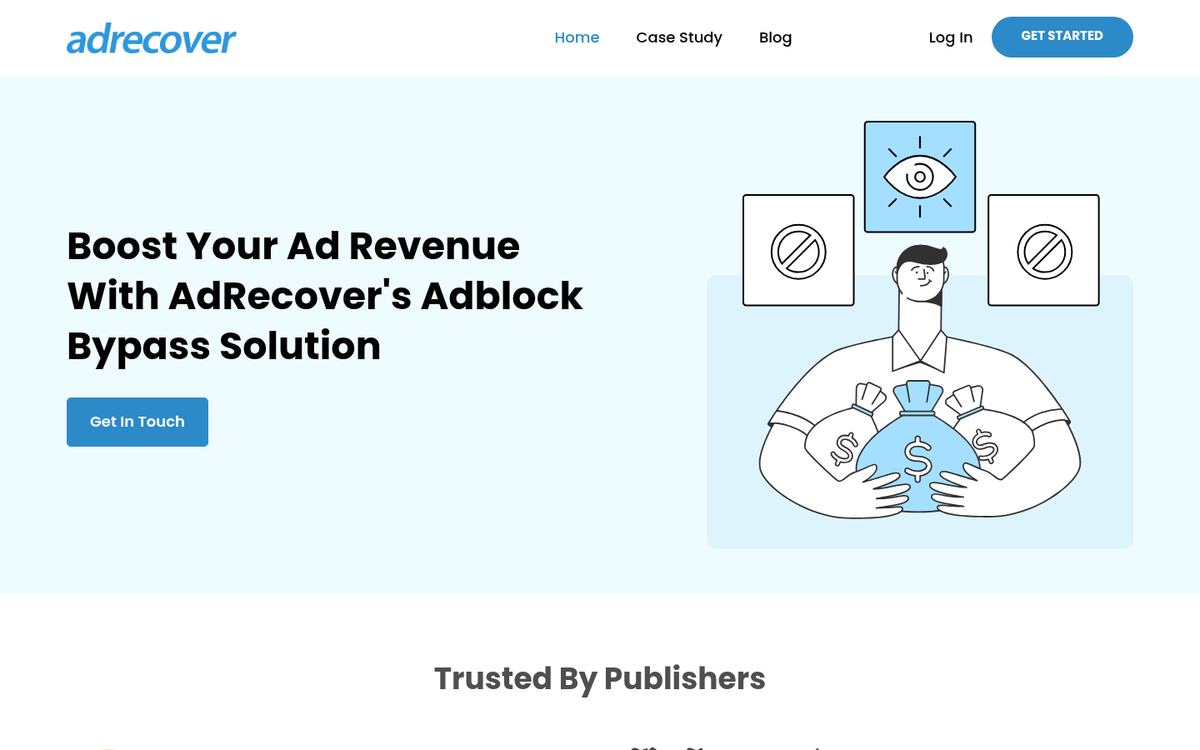
Ad blocking continues to be a real challenge for display advertisers. AdRecover addresses this by targeting users who have ad blockers installed - specifically by serving compliant, non-intrusive ads in the space that would otherwise be left blank. It's a clever middle ground between traditional display and the dead zone that ad blockers create.
Because it works best with minimally intrusive formats, it's particularly well-suited to advertisers who already have clean, simple creative. If you've been frustrated by ad blocking eating into your display reach, AdRecover is worth adding to your testing list.
Meta's Broader Ecosystem (Instagram, Threads, and Beyond)
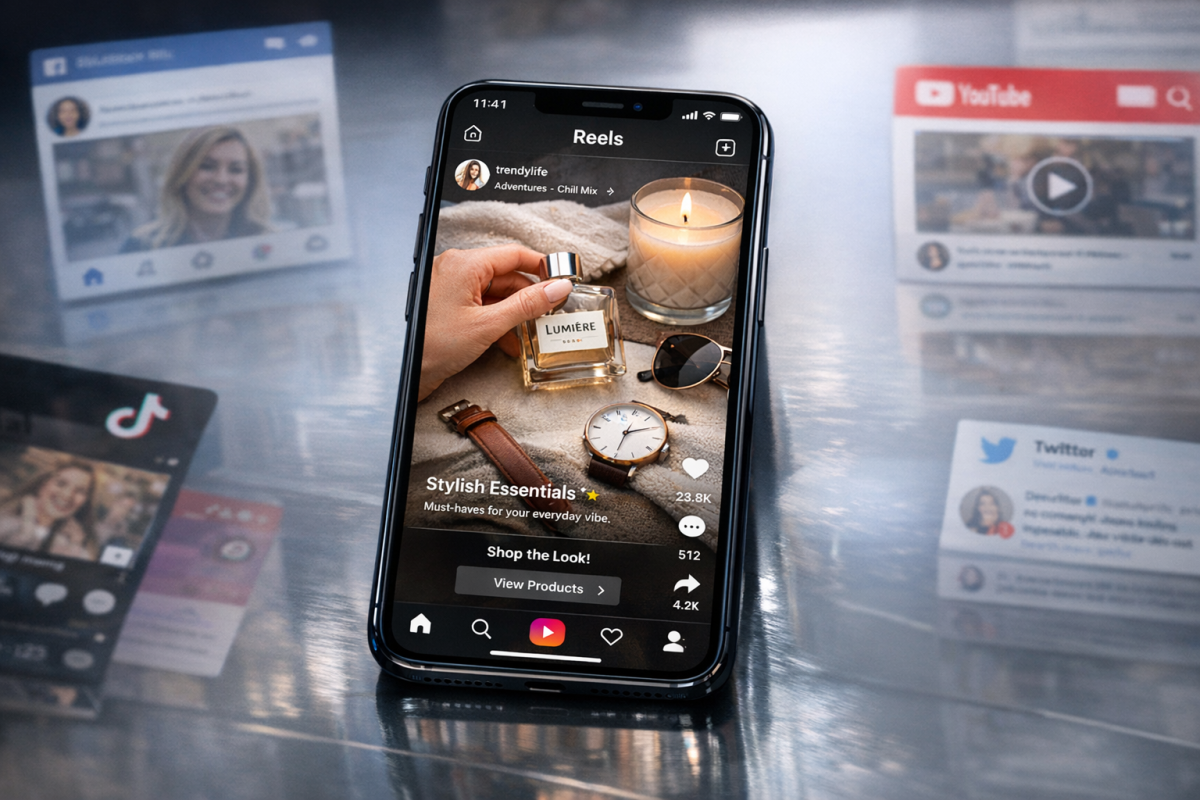
While Facebook Ads are covered above, it's worth calling out that Meta's advertising platform now spans Facebook, Instagram, Messenger, and increasingly Threads. For B2C brands with strong visual products or lifestyle appeal, Instagram placements in particular continue to deliver strong engagement. Meta's unified Ads Manager lets you run and optimize across all of these properties from one place, which simplifies campaign management considerably.
If you're already running Facebook Ads and haven't experimented with Instagram-specific placements or Reels ads, that's a logical next step before branching out to entirely new platforms.
TikTok Ads
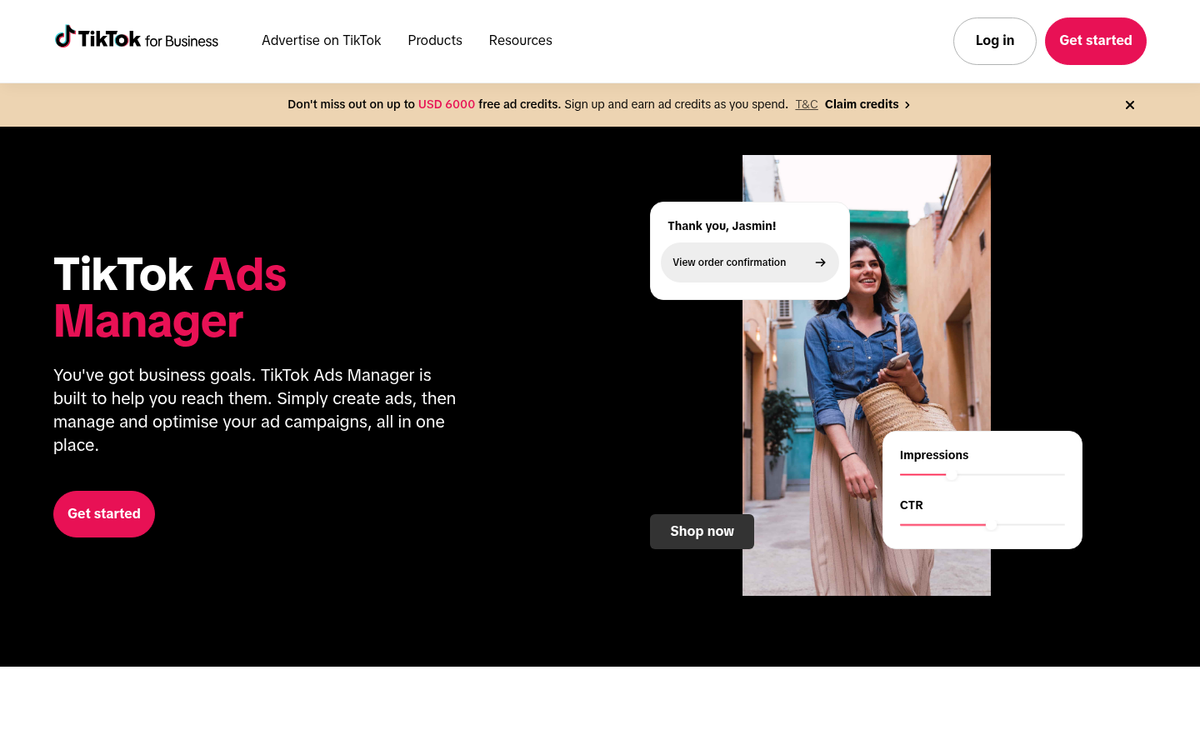
TikTok has firmly established itself as a major player in B2C advertising, particularly for brands targeting younger demographics. TikTok's ad platform offers in-feed video ads, TopView placements, branded hashtag challenges, and more. The platform's algorithm is notably good at finding relevant audiences even without heavy manual targeting, which lowers the barrier to entry for newer advertisers.
The creative bar is different on TikTok - content that feels native and authentic tends to dramatically outperform polished, traditional ad creative. If your brand can lean into that style, TikTok Ads are well worth testing as part of your 2026 B2C strategy.
A Note on Channels Beyond Ad Networks
To round out this post, it's worth revisiting the broader picture. Ad networks are a critical piece of the puzzle, but they're not the whole picture for B2C marketers. Email marketing, for instance, carries a 2.8% conversion rate for B2C brands according to FirstPageSage (2025) - and unlike paid ads, your email list is an asset you own outright. Building and nurturing that list alongside your paid advertising efforts is one of the smartest things you can do for long-term stability.
The best-performing B2C brands in 2026 tend to treat paid ads as the top of the funnel - driving awareness and initial traffic - while relying on email, retargeting, and content to bring those users back and convert them over time. No single network is a silver bullet, but the combination of the right channels, tested properly and optimized consistently, is what separates brands that grow from those that stagnate.
So, that's the scoop! Now let's hear from you. I know you all are playing around with different ad networks, so which ones have proven to be the best for you? Let me know in the comments.