I've been seeing the term "performance marketing" or "performance advertising" floating around a lot the last few months. It's not a new concept or a new term - it's simply a case of the Baader-Meinhof Phenomenon; when a term comes to your attention and it's new to you, you then start to notice it everywhere. It's not new, but it had never captured my attention before, and now I'm noticing it around. So I decided to do some investigating - and update what I originally wrote, because a lot has changed.
Key Takeaways
- Performance advertising means paying only for measurable results, with CPL (cost per lead) being most relevant for lead buyers.
- Average CPLs have risen significantly: Google Ads averages $70.11, Meta $142, and LinkedIn a staggering $408 per lead.
- Three main lead-buying approaches exist: specialist agencies, affiliate networks, and direct platform lead ads, each with distinct tradeoffs.
- Agencies offer speed and expertise but cost $2,000-$10,000+ monthly; affiliate networks deliver volume but often produce unqualified leads.
- Bought leads still require strong follow-up funnels, conversion tracking, and regular auditing to turn them into profitable customers.
The Concept Behind Performance Advertising

As with most terminology, the first step when looking into it is the basic definition. So what is performance advertising? It's also known as pay-for-performance advertising, and it's a form of advertising wherein the advertiser pays only when there are measurable results for their campaign.
Let's take two examples of advertising. The first is a television commercial. With a TV commercial, you pay for a time slot. You produce your commercial and you run it in your time slot, as often as the network you paid allows. That's it. Some people may become more aware of your brand because of it, but you have very little way of determining who discovered you and when. It's notoriously hard to track offline conversions compared to online, where you have access to so much more data.
For the second example, consider Meta (Facebook) ads. The standard model of, say, clicks to your website, lets you run ads and only pay when someone takes action. If people see the ad but don't click it, you don't pay a cent. If they see an ad and click it, you pay for the click.
See the difference? The first is the older form of advertising - broad spectrum marketing that reaches as many people as possible in a relatively untargeted way. You can't exactly choose to have your TV commercial only show to people within a certain demographic group. The best you can do is choose networks most likely to be watched by your target audience. With Meta, Google, LinkedIn, and many other forms of online advertising, you get far more precise targeting and, as such, can pay for performance.
Wikipedia lists a handful of types of pay-for-performance pricing models. These are all familiar, and should not come as a surprise now that I've shown what pay for performance actually is. They are:
- CPM, or cost per mille, the pay for performance model where the action performed is a view of the ad. It would be like paying for a TV commercial but only paying for the number of people actually tuned in. See how CPM compares to CPC ads to understand which model might work best for you.
- CPC, or cost per click, the pay for performance model where the action performed is a click on the ad, a click through to your website. Still one of the most common forms of advertising online.
- CPA, or cost per action, the pay for performance model where the action performed is variable depending on what you want to track. It could be submitting a form with an email, connecting to live chat, calling a sales number, or purchasing a product.
- CPL, or cost per lead, the pay for performance model where the action performed is the generation of a lead. This is generally a user on a landing page filling out a form with their contact information, though it can come in a few other forms as well.
Since we're discussing buying leads, CPL is what we're primarily discussing, though it could be considered a subset of CPA. If you're looking to optimize this further, learning how to find the ideal cost per action on Google Ads is a great next step.
Buying Leads Through Performance Advertising Companies
Performance advertising companies are interesting, because they're one of the oldest forms of marketing agencies in existence. Many of the old-guard players have been disrupted or absorbed, but the model itself is far from dead - it's simply evolved.
A performance marketing agency builds itself an audience or an advertising network around fans of a given type of content or within a specific industry vertical. The problem with the narrower, older version of this model is that it was based entirely on narrow channels, in tall vertical silos, without the flexibility of modern performance marketing. Many of those legacy networks have been acquired and rolled into the platforms of larger companies like Google and Meta.
Those agencies that continue to operate today have largely adopted advertising methods like Meta ads, Google Ads, and programmatic display as part of their own methodology. As such, when you contract such an agency to purchase leads, you're essentially having your advertising campaign managed by them rather than running it yourself.
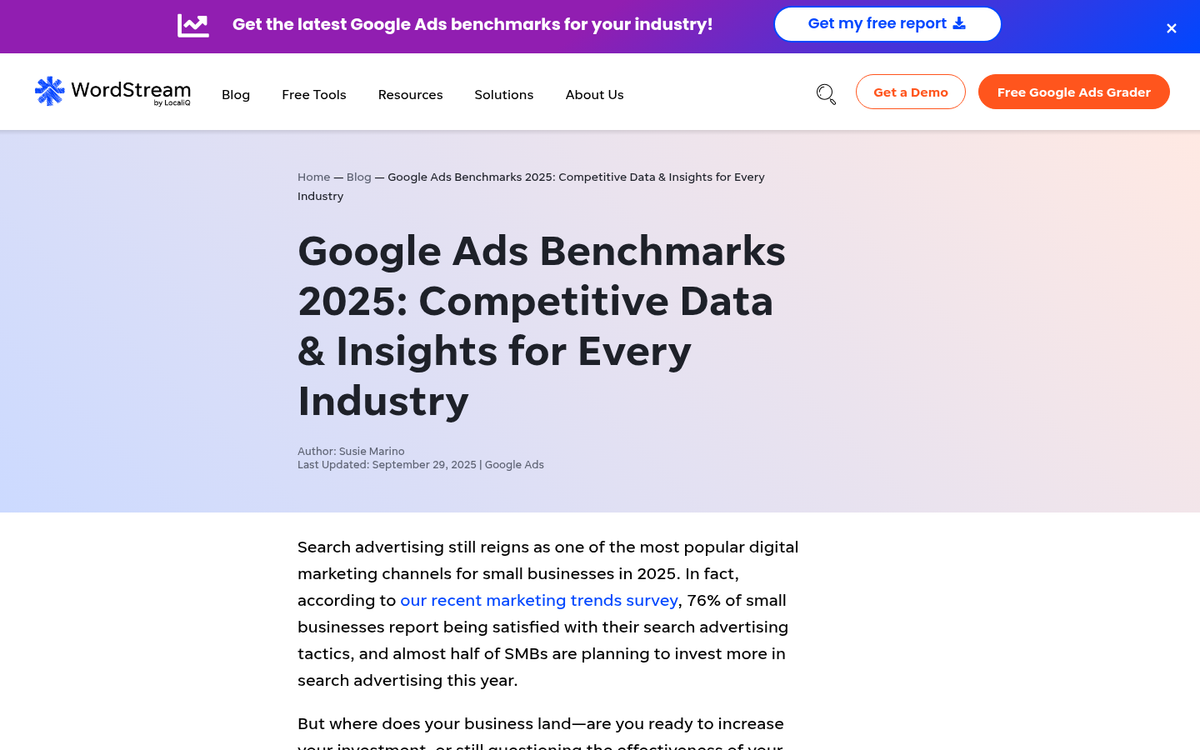
What was once a relatively niche and opaque industry is now far more transparent - and far more expensive. According to WordStream's 2025 data drawn from over 16,000 campaigns, the average cost per lead on Google Ads is now $70.11, and CPL increased for 13 out of 23 industries year-over-year, with an average annual growth of around 5%. Some industries are paying dramatically more: Legal Services averages $649 per lead, Manufacturing comes in at $553, and IT & Managed Services sits at around $503. LinkedIn Ads, popular in B2B contexts, average a staggering $408 per lead, with some B2B companies paying upward of $800. Even Meta/Facebook Ads, often considered a more affordable option, now average $142 per lead. In 2023 alone, marketers spent approximately $3.2 billion on paid ads to generate leads - a number that has only grown since.
These aren't cheap numbers. They make the question of where and how you buy leads a genuinely high-stakes decision.
Sounds Familiar, Right?
Let me put things in a slightly different light. Say you're a company looking to get your foot in the industry. Your business model is to sell products you don't produce, on behalf of other companies. You find these companies and strike a deal: for a cut of the profit, you will advertise their products, producing content and even buying ads where the case warrants it.
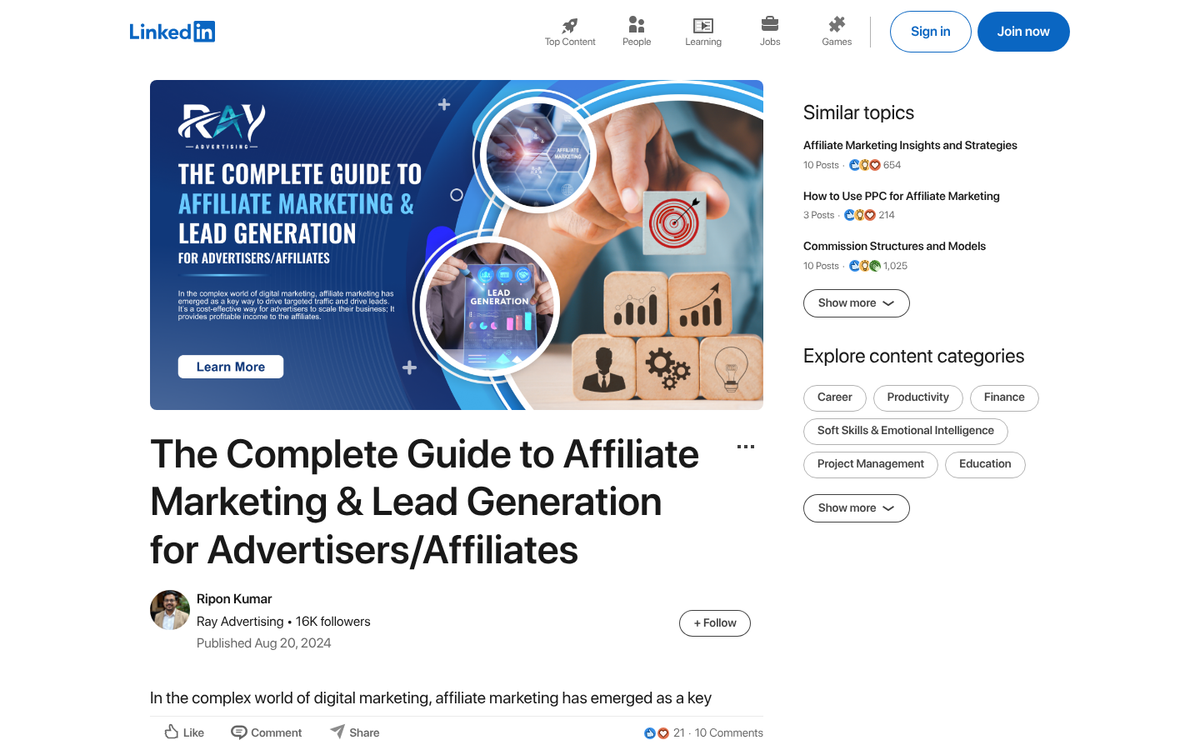
The concept you're looking for is Affiliate Marketing.
As a brand looking to buy leads, you're looking for companies that offer an affiliate program or a pay-for-performance lead generation platform. It's all the same thing, really - you're just trying to buy leads without spending an exorbitant amount of money on unqualified ones.
There are three primary ways to go about this. One is by seeking out individual agencies that specialize in lead generation within your industry. The second method is to contract with affiliate networks, who promote your offer to their crowds of affiliate marketers. The third is to go through an advertising platform directly - Meta with their Lead Ads, Google with their lead form extensions, or LinkedIn with their Lead Gen Forms.
Each Method Has Its Ups and Downs

Contracting individual lead generation agencies has the potential to get you a lot of leads quickly. These companies have a lot of practice doing what they do, and the better ones are selective with who they work with. However, there are two key problems. Problem one: they're selective, so you might approach several agencies before finding one willing to take you on. Problem two: they're expensive. An SME-focused agency typically costs $2,000-$5,000 per month. Medium-sized businesses often invest $5,000-$10,000 monthly, while larger enterprises can exceed $10,000 per month - before ad spend. Many also take a percentage of revenue on top of retainer fees.
With the affiliate network option, you can pull in a large volume of leads, but they aren't necessarily going to be qualified leads. Your costs may be lower as a consequence, but your affiliate link will be showing up on sites all over the web, across a wide variety of quality levels, mixed in with all sorts of other products. You have limited control over placement, and poor placements can harm your brand's reputation.
The third option - lead ads through platforms like Meta, Google, or LinkedIn - offers transparency, targeting precision, and measurable results. The tradeoff is that it's all self-serve: you have no one to blame but yourself if the campaigns don't perform. You also need solid creative, well-built audiences, and ongoing optimization to keep CPLs under control, especially given how much costs have risen across the board in recent years.
Of course, nothing stops you from using two or even all three methods simultaneously, as long as you're maintaining good tracking to ensure you know which sales come from which sources.
There's also one more option on top of all of these: hiring a dedicated performance marketing manager or consultant to handle everything for you. They deal with paid platforms, affiliate networks, and other advertising channels on your behalf. They often ask for a salary or a defined retainer rather than just a commission cut - though agency-style commission structures do still exist. A commission-based structure can incentivize the agency to optimize aggressively, since the more you sell, the more they make. But that doesn't automatically mean they'll prioritize your long-term brand health over short-term volume. A good in-house hire or contractor with a fixed structure can be just as motivated - and more aligned with your overall strategy.
Following Up
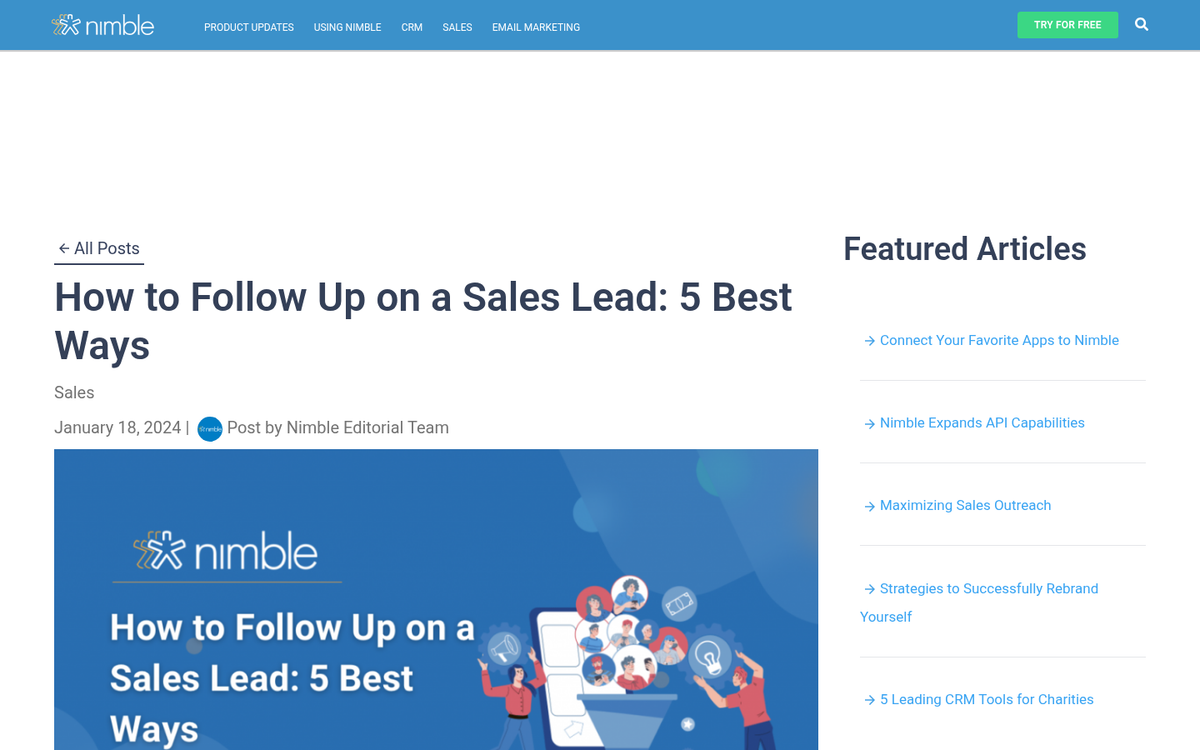
The number one thing to remember, completely disregarding the source of your leads, is that they're still just leads. It's up to you to figure out who these people are, what convinced them to raise their hand, and how to convert them into customers. You're still paying for leads through these performance advertising methods, and if those leads don't convert, you're not making your money back.
This means building a proper sales funnel, tracking people as they move through it, setting sub-objectives like growing a mailing list or subscriber base, and following up with timely, relevant communication. It means upselling the people you do convert to give yourself more margin to absorb the leads that don't go anywhere. It also means regularly auditing your lead sources and cutting the ones that consistently deliver unqualified traffic.
With CPLs rising across nearly every industry, getting this follow-up process right isn't optional - it's what separates a profitable lead generation program from an expensive one.