





With the increasing prevalence of mobile devices and the fact that now nearly 60% of web traffic is from mobile users, it makes sense to start catering to mobile more and more in everything from web design to content to advertising.
Traditional display ads, banners and lightboxes and slide-ins and pop-unders, these all rely on the unique multi-windowed approach to computer usage coming from desktop platforms. Mobile devices have less available screen space and less room for pop-style additional windows, so advertising has to adapt.
One unique advantage mobile devices bring to the table for advertisers is push notifications. If you can use push notifications for advertising, you can take advantage of a unique mobile-specific channel that is otherwise left for, well, notifications.
Key Takeaways
- MegaPush is a push notification ad network founded in 2017, boasting 450 million active users and a $0.001 minimum CPC.
- Push notification ads are limited to 30 characters for titles and 45 for descriptions, requiring highly disciplined copywriting.
- Traffic quality is a major concern; feed-level targeting using the {feedID} parameter is essential to avoid wasting budget.
- Competitors like PropellerAds and RichAds now offer push notifications with stronger targeting and fraud filtering than MegaPush.
- Desktop push notifications typically convert lower than mobile, so running separate campaigns for each device type is recommended.
What are Push Notifications Exactly?
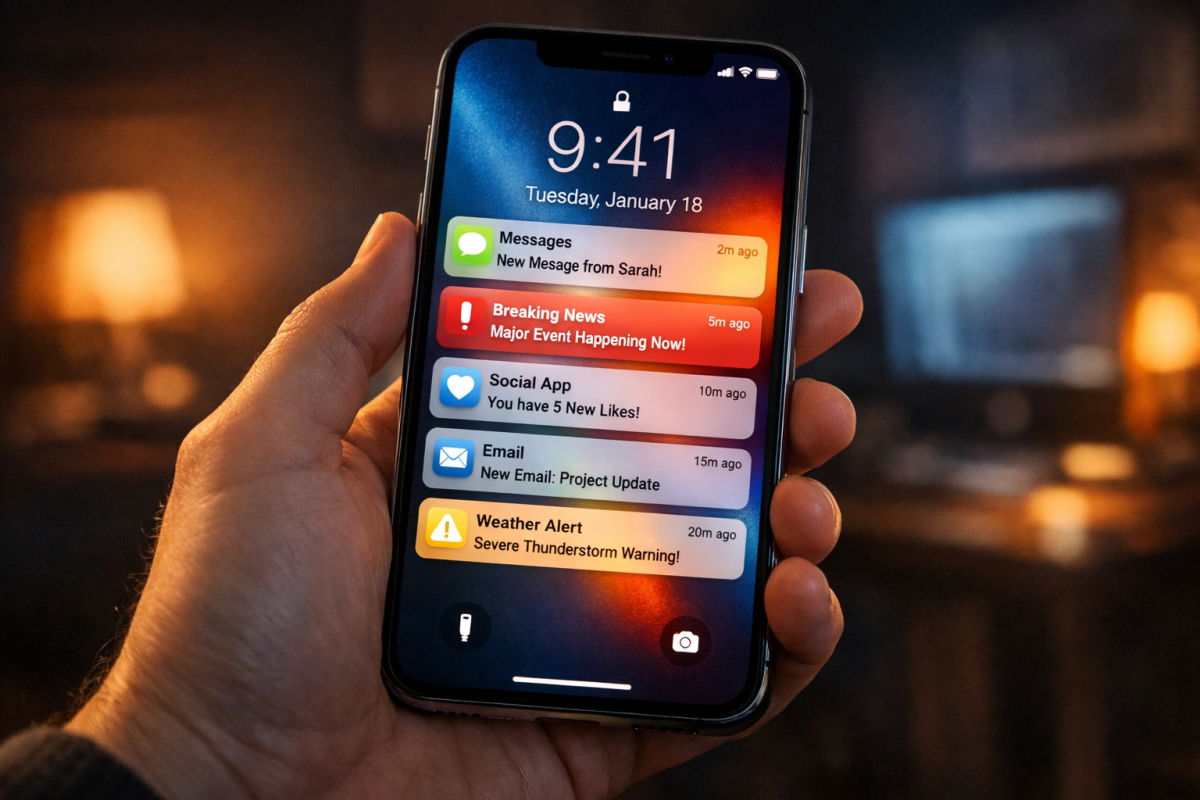
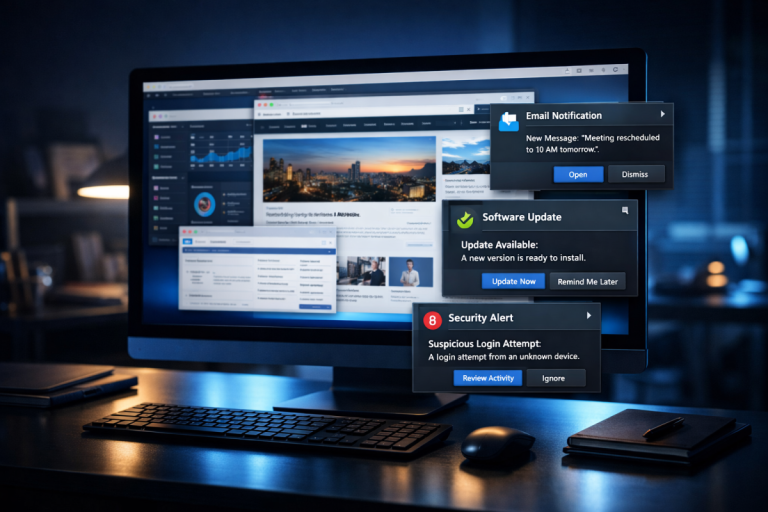
If you have a smartphone, you've experienced push notifications. Any time you see a message or icon on your lock screen, or an app icon in your top nav bar, you're seeing a push notification. They come from a wide range of sources, but mostly apps. A game might send you a notification when they've pushed a patch, or when your stamina bar refills. A restaurant app will message you when a special deal is active or when your reservation is ready. Messaging apps like WhatsApp or Instagram will leave you a notification when a new message comes in.
Push notifications are powerful because every mobile user is used to checking them. In a way it's like email in that sense, but push notifications don't have an inbox to be ignored or a spam filter to weed out the messages.
Using push notifications for marketing has evolved from a relatively niche channel into a well-established advertising format. What was once a largely untapped space has matured significantly, and networks have grown to match that demand. MegaPush was among the first to build a complete advertising network around them, and they remain a notable player in the space today.
These days, push notifications are a widely available marketing channel. Major established ad networks have added push notifications as a standard format alongside display, native, and video ads, meaning competition in the space has increased considerably since the format first emerged.
What is MegaPush?
As you probably guessed, MegaPush is an advertising network built around push notifications. They were founded in 2017 and were among the earliest dedicated push notification ad networks to gain traction. As of 2026, they've grown into a substantial operation, boasting more than 450 million active users, over 70 push traffic sources, 5 billion+ impressions, and 35 million clicks. Their eCPC sits at around 3.1 cents, which remains competitive for the format.
MegaPush publishes demographic and audience niche information on their homepage. Their audience skews heavily male at around 80%, with strong representation across multiple age brackets. In terms of niches, categories like cinema, literature and education, tourism, software, and business tend to see the most traffic volume, though many other verticals are supported.
So what advantages does MegaPush bring to the table? Here are some of their core selling points:
- Global traffic across 70+ push traffic sources.
- CPC bidding model.
- Minimum price per click of just $0.001.
- Fully implemented tracking with feed-level visibility.
- Over 450 million active users.
- 35 million+ clicks and 5 billion+ impressions.
- Over 26 payment methods accepted.
The breadth of payment options is worth highlighting. MegaPush supports over 26 methods of funding your account, including various regional payment processors as well as cryptocurrency options like Bitcoin. That said, some of the more universally recognized processors like PayPal and Stripe are still notably absent, which may be a friction point depending on where you're based.
Using MegaPush
Getting started with MegaPush is straightforward. There are no traffic minimums or minimum spends to be an advertiser. All you need to do is register and deposit $100 into your account to get up and running. The sign-up process is simple, asking only for basic contact information and account credentials.
Before you get too far into it, make sure MegaPush works with your niche. As with most advertising networks, there is a rules document outlining prohibited categories. The usual restrictions apply: no illegal items or materials, nothing political or religious in nature, nothing adult or sexually explicit. Review their current rules page before launching any campaign to avoid surprises.
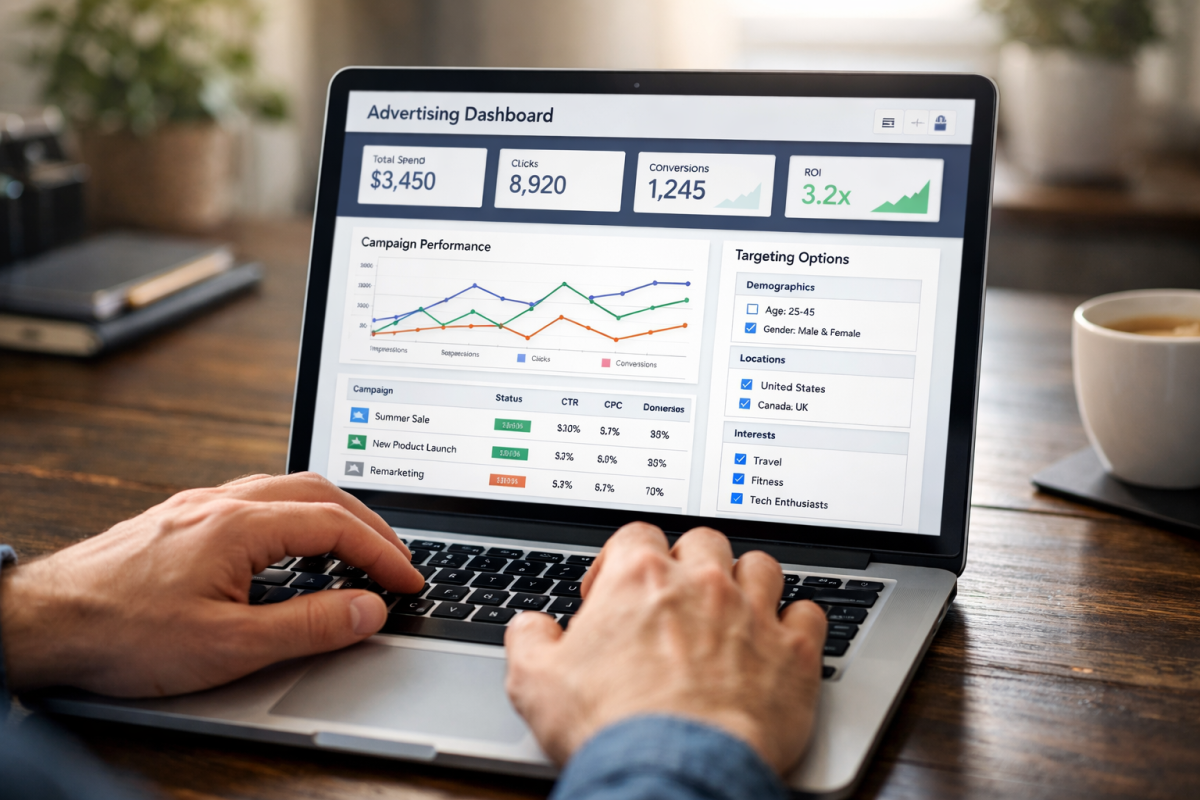
Creating a campaign is straightforward. If you've used any other advertising network before, the dashboard will feel familiar from the moment you log in.
Click the new campaign option in the left column to open the campaign creation pane. Fill in your campaign name, destination link, title, message, image, icon, and targeting details. For targeting, you can select by country, device type, and operating system. You can also target by IP range, traffic feed, and ISP. Demographic and interest-based targeting options are not available, which is a notable limitation compared to more mature platforms.
Campaign images should be sized at 492 x 328 pixels for best results. This is worth noting if you're preparing creative assets in advance.
This is also where one of the inherent limitations of push notification advertising becomes clear. Push notifications are, by design, very short. You only get 30 characters for your title and 45 characters for your description - that's barely enough room for a concise sentence. Emoji are supported and can help convey meaning within that tight space, but the constraint is real and requires disciplined copywriting.
This limitation is baked into the format itself, dictated by how push notifications are rendered at the operating system level across iOS and Android. Until Apple and Google change how notifications are displayed natively, this ceiling isn't going anywhere.
Once your ad is configured, submit it for review. Moderation typically takes around half an hour, after which your ad is either approved or rejected. MegaPush maintains a high acceptance rate, primarily checking for violations of their stated rules. That said, accumulating three violations will result in account closure, so it's worth staying within the guidelines from the start.
Drawbacks, Warning Signs, and Problems

Push notification advertising has matured, but that doesn't mean MegaPush is without its weaknesses. There are a few things worth keeping in mind before committing significant budget.
The case studies featured on their homepage remain a mixed bag. Many showcase low-budget tests in third-tier countries with offers in verticals like dating and sweepstakes, often with underwhelming results. These aren't exactly inspiring examples for advertisers running mainstream offers or trying to reach higher-quality audiences. Some appear to exist primarily as a backlink exchange rather than as genuine performance showcases.
The quality of the platform's written documentation - rules pages, FAQs, and help content - has also been a long-standing criticism. It reads as though it was written by non-native English speakers and hasn't seen consistent editorial attention over the years. For advertisers used to polished, well-documented platforms, this can feel like a rough edge.
Traffic quality remains the most significant ongoing concern with any push notification network, MegaPush included. The format has historically attracted bot traffic and low-engagement users across the industry, not just on this platform. Feed-level optimization (discussed more below) is essentially mandatory if you want to avoid burning budget on poor-performing sources.
It's also worth noting that the competitive landscape has shifted dramatically since MegaPush launched. Established networks like PropellerAds, RichAds, and others now offer push notification formats alongside their existing inventory, with more robust targeting options, stronger fraud filtering, and larger verified publisher bases. MegaPush's primary advantage at this point is its low entry cost and the $0.001 minimum CPC, making it accessible for testing on minimal budgets. For serious scale, however, many advertisers have gravitated toward larger, more established platforms.
Get the Most Out of MegaPush
If you're determined to make use of MegaPush - and it's not a bad idea, particularly for testing push notification creatives on a very tight budget - there's meaningful room to optimize your campaigns if you approach it methodically.
The first and most important optimization lever is feed-level targeting. MegaPush has over 70 individual traffic feeds, but without tracking the {feedID} parameter in your campaigns, all traffic is reported as a single undifferentiated block. That makes optimization nearly impossible.
The process is simple: run your initial campaigns with no feed restrictions and let the data accumulate. Then identify the top-performing feeds and create new campaigns targeting only those. Alternatively, edit existing campaigns to suppress the feeds that consistently underperform. This single step can dramatically improve your return on spend.
Device targeting is the other major lever. Push notifications originated on mobile and still perform best there. Desktop push notifications exist but require an explicit browser opt-in from users, making the audience smaller and often less engaged. In practice, desktop push traffic tends to convert at a lower rate than mobile. At a minimum, run separate campaigns for mobile and desktop so you can evaluate and optimize each independently rather than letting one drag down the other's performance. It's also worth ensuring your landing pages are properly optimized for mobile traffic before scaling up.
Finally, keep your creative testing systematic. With only 30 characters for a title and 45 for a description, small wording changes can have an outsized impact on click-through rate. Test one variable at a time - headline versus headline, or one image against another - and let the data guide your decisions before scaling anything up. If you need inspiration for compelling titles, a good content title idea generator can help spark ideas even for ad copy.
Have you used MegaPush? Have you experimented with push notification ads on other platforms? Let me know in the comments how your experiences have gone. I'd be curious to hear whether the feed optimization approach made a meaningful difference for your campaigns.
2 responses
Thoughtful replies only - we moderate for spam, AI slop, and off-topic rants.
Hi,
Is this traffic for pharmaceutical and anti-aging products?
Kind Regards
Ronald
Hi Ronald! Great question. MegaPush does support a wide range of niches, and pharmaceutical and anti-aging products can potentially work on their network. However, we'd strongly recommend checking their specific advertising policies and guidelines directly, as certain health-related products may have restrictions depending on the geo-targeting and regulations involved. Always good to verify with their support team before launching a campaign. Hope that helps!