





Google's AdSense program is a fantastic way to make some pocket change from a mid-sized site, but there are a lot of possible pitfalls. In addition to needing an appropriate level of traffic to actually make real money, you need to make sure you're meeting all of the eligibility requirements.
Google only has a few specific, real eligibility requirements for AdSense. I'll list them here, but what I'm more concerned about are the "unofficial" eligibility requirements, the ones that don't necessarily bar you from the program, but make profiting from the program possible.
Google's Official AdSense Eligibility Requirements

First, let's start with the official requirements. You can find these on Google's help center here, though some of the information will be scattered around on other pages and may be trickier to track down. That's why you have me to do the legwork for you, eh? If you're also wondering about how many AdSense ads you can safely have on a page, that's worth checking out too.
1. You Must Be Over 18 Years of Age
This is a very simple one. According to Google's terms and conditions, which pretty much no one has ever read in the history of the planet, in order to be eligible to use AdSense, you need to be over the age of 18.

This is annoying for those precocious 16 year olds who make a hit site and have no way to monetize it, I guess? Frankly, if you're creating a site good enough to be worth monetizing, you can use your parents' information to register the account until you age up enough to get one of your own. This won't be an issue for the majority of you reading this, so I'm not going to write much more about it. Just get older! If you're looking ahead, check out our ultimate guide to monetizing your blog for when you're ready.
2. You Must Own and Control Your Site
In general you have to at least have control over the content on your site. If you publish content that isn't yours, you'll be in violation of the Google terms of service and possibly of copyright violations.

There are some exceptions to this. For example, if you're a site that has syndication rights to re-publish content from select other sources, you can still monetize that content. Keep in mind, though, that article syndication can be a terrible idea for SEO.
As far as "control" your site, it primarily means you need access to the source code of your site. AdSense doesn't work if you can't add the ad code to the site, right? This, also, has some exceptions. For example, sites like HubPages allow users who write for the site to add their own code and displays ads in rotation between their own and the author's on that person's content. Conversely, you can sign up for AdSense for YouTube and monetize a YouTube account without ever having to mess around with code, because it's already there.
3. Your Site Must Have Unique and Interesting Content
This one, and the next one, are locked up in a sub-page called "make sure your site's pages are ready for AdSense." Basically it's another rule about how your site needs to have content worth monetizing. If Google finds your site is just full of thin pages, stolen or scraped content, content that doesn't make sense, or content that provides no value to a reader, they're probably going to decline your application.

This is some pretty general SEO stuff, to be honest. As long as you're writing your own content and it's aimed at something people actually want, you're probably fine. The bar is pretty low. This is mostly just meant to cut out the spam sites, PBNs, content thieves, and other such sites.
4. Your Site Must Have Clear Navigation
Navigation is important for users to know their way around your site, and Google needs to have their team review a site, so if that team can't navigate, you can't get approval.

Here's what Google says your site should have:
- A menu or navigation bar that is easily accessible.
- Elements of your menu bar that are lined up correctly.
- Text on your bar that is easy to read.
- Elements, drop-downs, and links that all work properly.
Google doesn't enforce the "standard" web design you see everywhere these days, of course. You can use a sidebar, an inverted sidebar, or even footers that hover for your navigation if you really want, so long as it's clear and functional. Users might not like it, though. Also, keep in mind that this, like most Google policies, applies to both desktop and mobile versions of the site. If you're unsure how your site stacks up visually, it may help to submit your site to design galleries for feedback, and if you're curious how long it takes to get accepted to AdSense, the answer depends largely on how polished your site appears to reviewers.
5. You Must Not Circulate Fake Traffic
This is a big one, perhaps one of the biggest AdSense policies out there, but it's also not something you can necessarily test or determine prior to getting approval for the program. Rather than causing you to be rejected, it's more likely to lead to you being banned from the program later.
As Google says:

"Clicks on Google ads must result from genuine user interest. Any method that artificially generates clicks or impressions on your Google ads is strictly prohibited. These prohibited methods include, but are not limited to, repeated manual clicks or impressions, automated click and impression generating tools and the use of robots or deceptive software. Please note that clicking your own ads for any reason is prohibited."
Google will sample your traffic and your clicks, and if they find indications that you are referring fraudulent clicks or impressions to your AdSense ads, they will not hesitate to ban you. It's worth understanding whether buying website traffic is safe for Google AdSense before considering any third-party traffic sources, and you should also know how to get more safe clicks to your AdSense ads through legitimate means.
6. Your Content Must Comply with Google Content Policies
Google has a lot of restrictions on the kind of content that can be on a site they monetize. Your site cannot contain things like adult content, pornography, shock content, threats, excessive profanity, hacking content, malware, drug content, weapon sales, and so on.

There's a lot more than what I just wrote here, in fact. You can read the entire section on content policies here. For the most part, it's "anything obscene, illegal, adult, violent, hateful, or damaging" is not allowed. Make sure your site complies with all of their rules before you apply. If you're also running paid traffic, it's worth knowing what types of content Google Ads allows to avoid any compliance issues across your monetization efforts.
7. You Cannot Circulate Copyrighted Content
All content you display on your site, from images to text to videos, needs to be something you are allowed to use or share according to copyright law.
For example, your pages should contain blog writing you created yourself, images you created yourself, a logo you paid to have created for you, and other such elements.
Conversely, your page should not include content stolen from another page, images plucked from Google image search with no license to use them, or video someone else made that you present as your own.
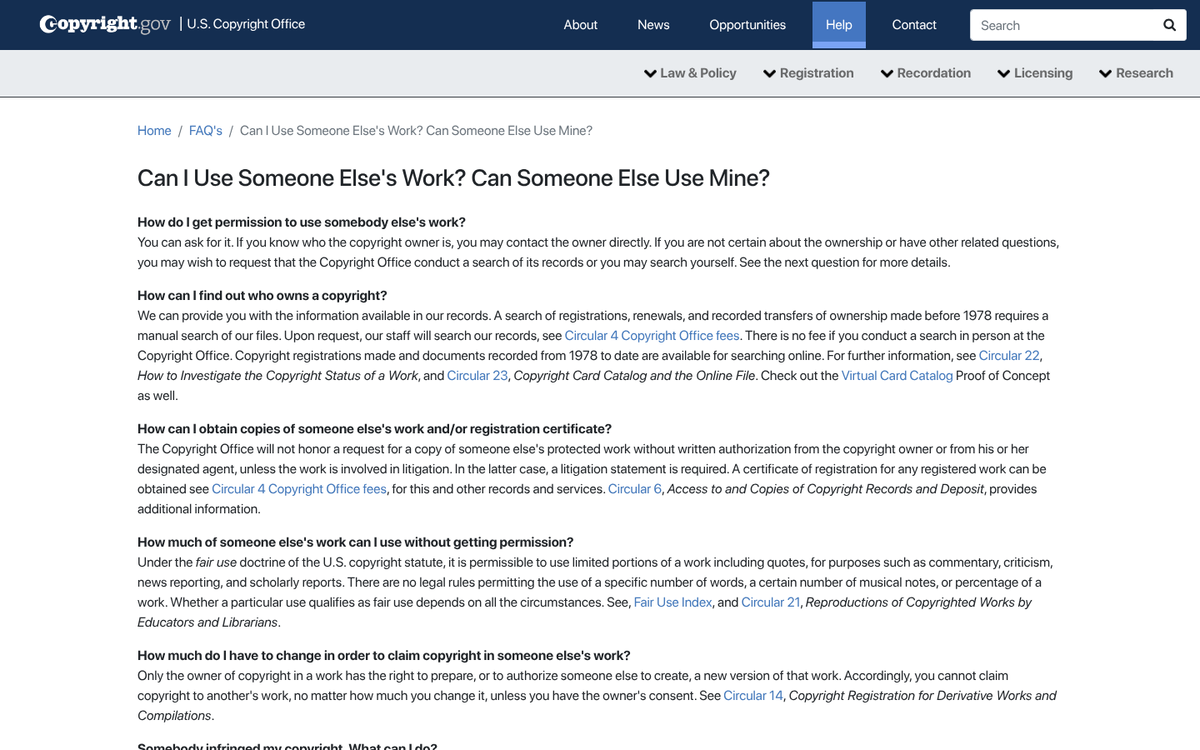
In some cases, you can legally use content you didn't create. For example, embedding a public social media post or YouTube video - so long as you aren't claiming you created it when you didn't - is fine. You may also be expected to add surrounding, unique content to add value. Images you didn't create can be used so long as you have the license to use them, such as from a stock photo site.
Copyright is a huge, tricky body of law, so it's best to err on the side of caution here.
8. You Must Use a Supported Language
Unfortunately, Google doesn't support every single language in the world for AdSense. They want to make sure they're displaying ads that are readable to the people viewing the ads. Your site can be bilingual with content in an unsupported language, so long as the majority of the content on the site is in a supported language. If you're wondering whether you should blog if English isn't your first language, it's worth considering which languages AdSense supports before you start.
The supported languages as of the time of this writing - you can check here - are:

Arabic, Bengali, Bulgarian, Catalan, Chinese (Both simplified and traditional), Croatian, Czech, Danish, Dutch, English, Estonian, Filipino, Finnish, French, German, Greek, Hebrew, Hindi, Hungarian, Indonesian, Italian, Japanese, Korean, Latvian, Lithuanian, Malay, Marathi, Norwegian, Polish, Portuguese, Romanian, Russian, Serbian, Slovak, Slovenian, Spanish (both traditional and Latin American), Swedish, Tamil, Telugu, Thai, Turkish, Ukrainian, Urdu, and Vietnamese.
Note that some of those languages are supported for AdSense display ads, but are not supported in the AdSense dashboard. Additionally, Google may introduce support for other languages at any time. If you're exploring your options beyond AdSense, check out these website monetization alternatives that may better suit your needs.
9. Your Site Must Not Have an Abusive Experience
A site with an "abusive experience" is a site with a defined set of manipulative, harmful, false, or misleading practices that Google bans.

- Page elements that resemble chat apps, system warnings, or other dialogue boxes the user would want to click on.
- Areas of the page that are clickable when nothing indicates they should be.
- Misleading buttons, such as a "next page" arrow that leads to a landing page instead.
- Scripts that manipulate browser history to prevent using the "back" button.
- Anything using social engineering or phishing to steal information.
- Elements that make it look like the user is clicking to manipulate a user into clicking.
- Malware of any sort present on the site.
Basically, anything that makes a page look like it's trying to scam users, steal information, deliver malware, or otherwise commit some kind of fraud is banned. This is similar to why buying traffic from Fiverr is harmful - deceptive practices put your entire site at risk.
Unofficial AdSense Eligibility Requirements

The last few requirements are not stated anywhere in Google's documentation, but they can be a reason why your site is rejected when you apply, or they may be a reason why you got accepted but aren't getting much of anything out of the program. It's a good idea to check off these boxes before you try to apply, to have the best experience possible.
10. You Should Have Technical Pages
Google doesn't really say this anywhere, but a page is much more likely to be rejected from the program if it doesn't have technical pages that establish trust in a brand. Technical pages, in this case, are the Three Big Pages: the Privacy Policy page, the About Us page, and the Contact Us page.

Now, these don't necessarily all need to be separate pages. It's usually a good idea to separate the privacy policy into another page if it's complex, but a simple "we don't harvest any information" disclosure is enough in some cases. Likewise, an About Us and a Contact page are often the same page.
The presence of an About page helps users trust that you are who you claim to be, and that there's some level of legitimacy behind your brand. Likewise, a contact page with information like an address and phone number makes you more trustworthy than a brand that can't be contacted.
11. Your Site Should Be At Least Six Months Old
This is another "unwritten" policy that's not really a policy, but can affect large numbers of applicants.
Basically, when AdSense first started out, it was easy to apply and get approval. Eventually, Google realized they had a problem with tons of new, low quality sites that were eating up money in bulk, so they started raising their standards. Pretty much every rule above is something they've encountered and had to ban.

One way Google has prevented some level of abuse on their site is by restricting who can be approved. Specifically, if a page is younger than six months old - such as if you just created your site last week - you may find it harder to get approval.
This is not applicable all the time. If you've owned successful sites in the past, Google may allow a brand new domain. Additionally, this rule may not apply to the United States and other primarily English countries. Why not?
A brand new site likely has very little traffic, which means it's going to make very little money. Trying to create new sites, monetize them quickly, and dump them when they're banned won't get anyone much money to live on in the USA. On the other hand, in a country like Bangladesh or Pakistan, where the cost of living is much lower, this kind of abuse might be much more lucrative. Thus, Google tends to have a waiting period for new sites based in such areas.
12. You Need Sufficient Traffic
Google doesn't necessarily reject a site for not having enough traffic, though they might. If you don't have enough traffic, though, you won't be earning enough money to even cash out. How much traffic do you need to make a reasonable amount of money? That's its own discussion. You might also want to think about how to turn your site's traffic into money once you do start seeing visitors come in.

So there you have it: the typical eligibility requirements for AdSense success. How do they line up with your own experience?


24 responses
Thoughtful replies only - we moderate for spam, AI slop, and off-topic rants.
It was a nice article, but I have a question that,like I have a quiz website, so answers to these quiz questions are always the same as they are published by Amazon, so I can't make changes in that. Now what to do, for taking AdSense approval on that
Hey Tanish! That's a valid concern. Since your quiz answers are fixed, focus on adding original content around them - like explanations, tips, or context for each answer. You can also create blog posts, guides, or additional pages on your site that are completely unique. AdSense reviewers look at your overall site content, not just one section. As long as a good portion of your site has original, valuable content, you should be in a better position for approval. Good luck! 😊
Dear James,
My blog was started in 2018, i posted only one article then not active in blogging.During kovid -19 from march-5 onwards geared up to blogging nd bought a domain two months ago. Till now i made 60 posts. Applied for adsence but got the reply. disapproved by saying that.
Thank you for your interest in AdSense. After reviewing your application, our specialists have found that it does not meet our program criteria. Therefore, we are unable to accept you into our program.
Our AdSense program policies are designed to ensure the effectiveness of Google ads for our publishers as well as for our advertisers. We review all publishers and we reserve the right to decline any application. If you are able to make changes to meet our program criteria, you may reapply for AdSense in the future.
Please note that we may not be able to respond to inquiries regarding the specific reasons for our decision. Thank you for your understanding.
Kindly lookin to this and do the needful...
Awaiting for u r valuable suggestion.
Thank u , Have a great day...
Hi Shaik! Thanks for sharing your situation. With only 2 months of activity and 60 posts, Google may see your site as too new. We'd suggest waiting at least 3-6 months before reapplying. Also, check that your content is original and high-quality, you have essential pages like About, Contact, and Privacy Policy, and your site has decent organic traffic. Sometimes fewer, well-written posts outperform many rushed ones. Review Google's program policies carefully, make necessary improvements, then reapply. Don't get discouraged - many bloggers face initial rejections. Good luck!
Hi James, I launched my website almost 2 months ago and I have 4 blog posts so far.
Almost all my posts have more than 100 FB shares. Am i eligible or likely get approval for Google Adsense ?
Hey Shishu! That's great that your posts are getting solid social engagement - 100+ Facebook shares shows people love your content! However, 4 blog posts is quite thin for AdSense approval. Google generally looks for a well-established site with a good amount of quality content. We'd recommend publishing at least 20-30 solid posts before applying. Keep writing consistently, focus on original and helpful content, and give your site a few more months to grow. You'll have a much better shot at approval then! Keep up the great work! 😊
Thanks a lot for the information 🙂.It's very helpful and useful for a 15 year old. However I still need 3 years for approaching the eligibility criterias.
That's awesome that you're already researching AdSense at 15, Piyusha! 🙌 The fact that you're thinking ahead puts you in a great position. Use these next 3 years wisely - focus on creating quality content, building your audience, and learning the basics of blogging and SEO. By the time you're eligible, you'll be way ahead of most beginners. Keep that enthusiasm going!
Sir,
Can i apply for AdSense From other gmail id
I mean my blog is others id and i apply for AdSense from other id it is good.
Hi Imtiaz! It's best to apply for AdSense using the same Gmail account that owns your blog. Using a different ID can cause verification issues and may lead to rejection. If the blog belongs to someone else's account, either transfer ownership to your account first, or have the actual owner apply for AdSense directly. This avoids complications down the line. Good luck!
I use another person YouTube video on my blog
Hey Hina! Using someone else's YouTube video on your blog can be a red flag for AdSense approval. You'd need proper permission from the video owner to use their content. Without that, it could be considered copyright infringement, which violates AdSense policies. Try creating your own original video content or using copyright-free videos instead. This will definitely improve your chances of getting approved!
Sir it is necessary to create table of contents in article for adsense approval
Hi Kundan! No, creating a table of contents is not a mandatory requirement for AdSense approval. It can be helpful for user experience and navigation, especially in longer articles, but Google doesn't specifically check for it during the approval process. Focus more on having quality original content, a proper privacy policy, about page, and sufficient content on your site. Good luck!
Thanks, sir/mam this post is very helpful for me and I learn a lot from it. Love from India.
Thank you so much, Vikash! We're really glad the post was helpful to you. It's always wonderful to hear that our content is making a difference. Sending love right back to India! 😊 If you have any questions while going through the AdSense application process, feel free to ask in the comments. Best of luck with your AdSense journey!
Six months old is just a myth. I got approved website on google adsense with just 9 posts and domain was 1 month old
That's awesome, Hamza! Thanks for sharing your experience. You're right that the six-month rule isn't set in stone - Google actually only enforces it strictly in certain countries like India and China. For most regions, there's no official waiting period. Quality content and a clean site can get you approved much faster, as your case proves!
Does videos or gifs into the blog change the chance of getting in
Great question, tenzenn! Videos and GIFs can actually work in your favor - they make your content more engaging and show Google that you're putting effort into your site. Just make sure they're relevant and don't slow down your page speed significantly. AdSense reviewers care a lot about user experience, so anything that keeps visitors on your site longer is generally a good thing!
Hi
could you please help us to review our website why its not getting approved for ad sense.
Hi Imran! We'd love to help you figure out why your site isn't getting approved. A few common reasons include insufficient content, a relatively new domain, missing essential pages like Privacy Policy or About Us, or traffic concerns. Could you share more details about your website, like how old it is and how much content you have? That would help us point you in the right direction!
Really very amazing and informative conetent about Google adsense approval condition.
Thank you so much, Roki! We're glad you found the AdSense eligibility criteria helpful. Understanding these conditions before applying can really save you a lot of time and frustration. If you have any questions about any specific criteria or need further clarification, feel free to ask in the comments. Good luck with your AdSense application! 😊