





Key Takeaways
- Re-uploading videos sits in legal gray territory; YouTube's reused content policy can demonetize your entire channel.
- Only Creative Commons or public domain videos can be legally reused; many CC licenses prohibit commercial use entirely.
- Simple reproduction rarely outranks originals; remixing with original narration and perspective offers stronger algorithmic and legal standing.
- Using repurposed videos to drive traffic to affiliate offers or landing pages is safer than direct AdSense monetization.
- The article recommends treating this method as a temporary starting point, ultimately transitioning to fully original content.
Creating Your Own Videos vs. Remixing Existing Content
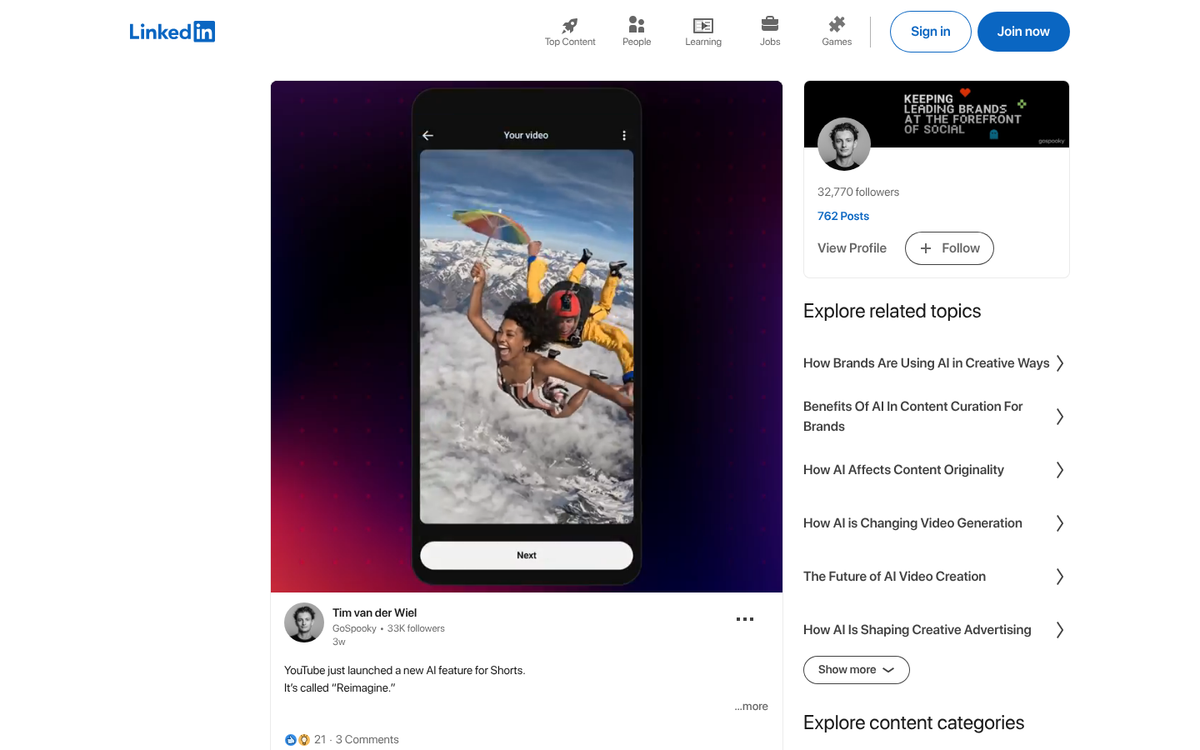
The primary way to use YouTube for marketing is to create videos representing your own content. You can take a blog post and convert it into a topic you can cover in a video, and do it in a compelling way. Even if you're not big into video production, you can use AI-generated visuals, screen recordings, animations, or a simple slide deck with a voice-over. Tools like Descript, Canva, and CapCut have dramatically lowered the barrier to entry compared to just a few years ago.
The problem with fully original video production is that it's either slow, expensive, or both. You need to come up with the concept, write the script, produce the video, handle the audio, edit everything into a compelling final cut, and then upload it - all before you've earned a single cent or gained a single subscriber.
Any part of that process can be sped up by investing money into it. At a moderate professional level, short-form video production can still run anywhere from $3,000 to $15,000 per video. AI tools have helped bring some of those costs down, but high-quality, brand-driven video production remains expensive.
There's a method, however, that some marketers use to cut costs and time investment. I'll tell you all about it, but first, I have to warn you - and this warning is more serious in 2026 than it's ever been.
The method I'm going to describe sits firmly in gray territory, and YouTube has gotten significantly stricter about enforcing it. It can be abused, and it can cross into genuinely illegal territory. More importantly, YouTube's monetization policies have evolved to specifically target this approach, which means the risk-reward calculation looks very different today than it did even a few years ago.
I wouldn't recommend using this method for any business you're serious about growing. It's more relevant to smaller affiliate marketing plays or content experiments - and even then, proceed carefully. It doesn't scale well when you're trying to build a real brand, because it's not the kind of content you want your name attached to.
You'll see exactly why below.
The Method Described
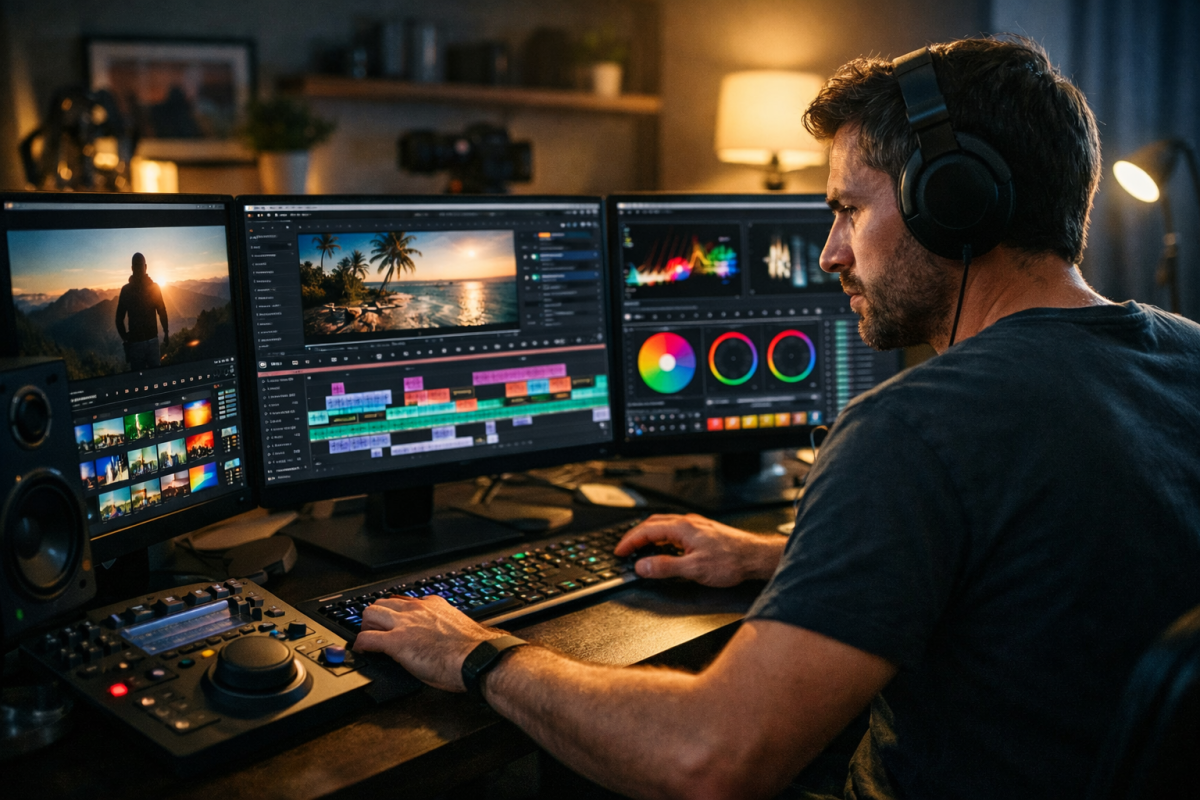
The method is straightforward in concept. The idea is to find videos that are free to use and remix, and actually use and remix them. You upload them to your own YouTube channel and attempt to drive traffic from them. At the most basic level, you find an existing video, download it, upload it to your channel, and add your own description, title, and call to action. At a more sophisticated level, you splice multiple videos together, overlay your own narration or commentary, and create something that functions as a remix or a new piece of content.
Now, here's where it gets important in 2026: YouTube has a formal reused content policy that directly targets this approach. If YouTube cannot clearly determine that you created the content, or if your videos are flagged as reused without significant original value added, monetization can be stripped - not just from individual videos, but from your entire channel. That's a meaningful risk, and worth understanding before you consider how you grow your YouTube channel using this method.
Finding Videos
If you're going to put this method to use, the first and most important thing is understanding which videos you're actually allowed to use. Taking any video without permission is content theft and a violation of intellectual property law. Three copyright strikes on your channel result in full termination and a permanent platform ban. Copyright strikes do expire after 90 days, but getting three before they clear ends everything.
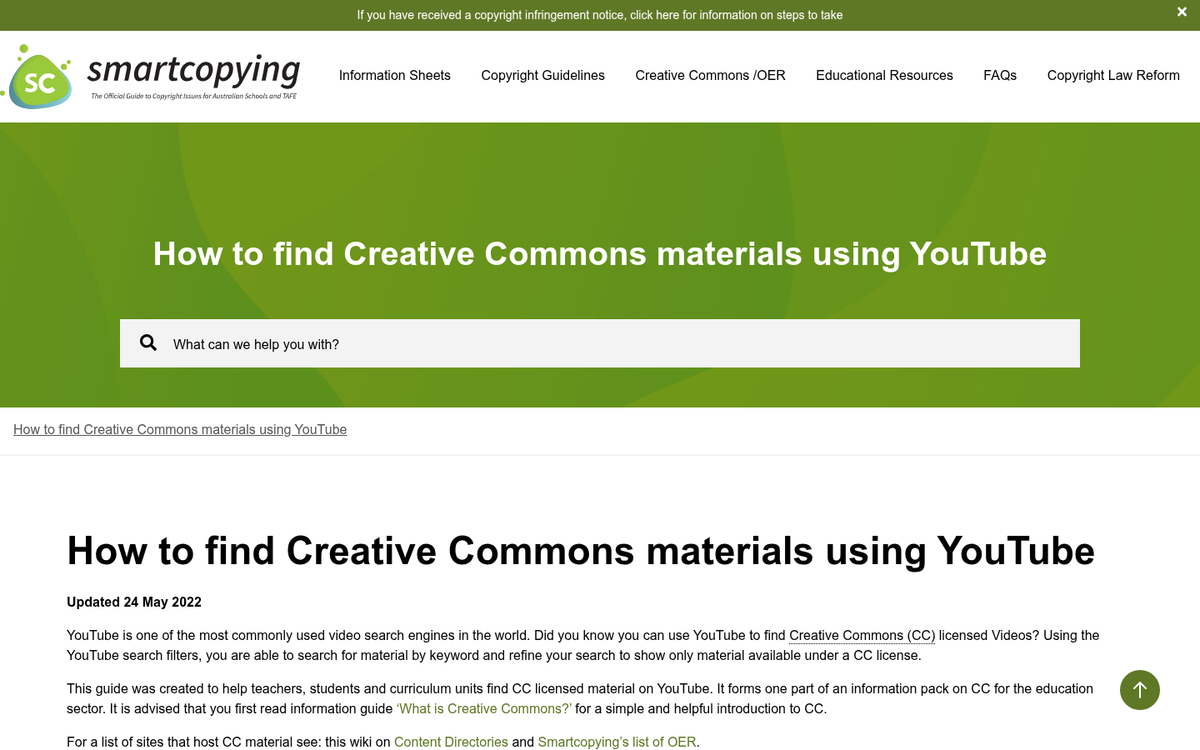
What you're looking for is Creative Commons licensed video. You can filter for these directly in YouTube search by applying the Creative Commons filter under the license options. Anyone with a channel in good standing can publish their videos under a Creative Commons license. It's also worth knowing that embedding YouTube videos carries its own set of rules worth reviewing.
There are several variations of the Creative Commons license, and the differences matter enormously here. Some allow commercial use. Many do not. Some allow modifications and remixes. Others restrict that as well. Before using any video, read the specific license attached to it. You can learn more at the Creative Commons website.
Public domain video is also available, though it can be harder to track down in meaningful quantities. Archives like the Internet Archive host a large collection of older public domain footage that some content creators use as b-roll or backdrop material. If you're also exploring ways to increase views on your YouTube videos, understanding what content you can legally repurpose is a smart starting point.
Deciding a Path
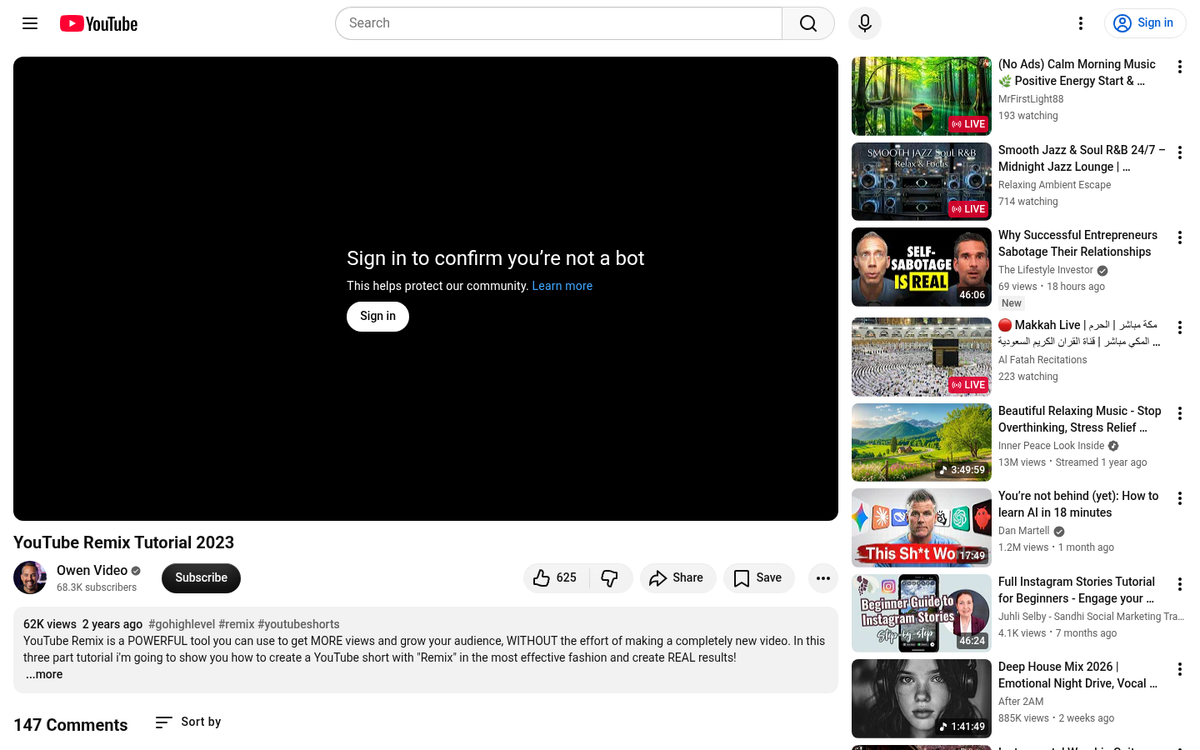
You have two broad approaches, though it's more of a sliding scale than a binary choice. On one end is reproduction. On the other end is remixing.
Reproduction is the simpler approach. Find a video you like, download it, re-upload it, and add your own title, description, and call to action. However, this is the approach YouTube's reused content policy most directly penalizes. Duplicate content with minimal added value is exactly what the policy targets, and ranking against the original video - which has more history, engagement, and authority - is genuinely difficult.
At the remix end of the scale, you're doing real creative work:
- Come up with a topic you want to cover.
- Write a script that provides genuine information and a clear angle or point of view.
- Find 3-5 Creative Commons videos that relate to the topic.
- Edit them together into a coherent flow that supports your narration.
- Record and layer your own voiceover on top.
- Render and upload the final video with a fully customized title, description, and tags.
This approach takes significantly more effort, but it also has a much stronger case for being considered original content with added value - which matters both for YouTube's policies and for your actual audience.
Monetization - Read This Carefully
This is where things get complicated in ways that weren't fully appreciated when this strategy first circulated.
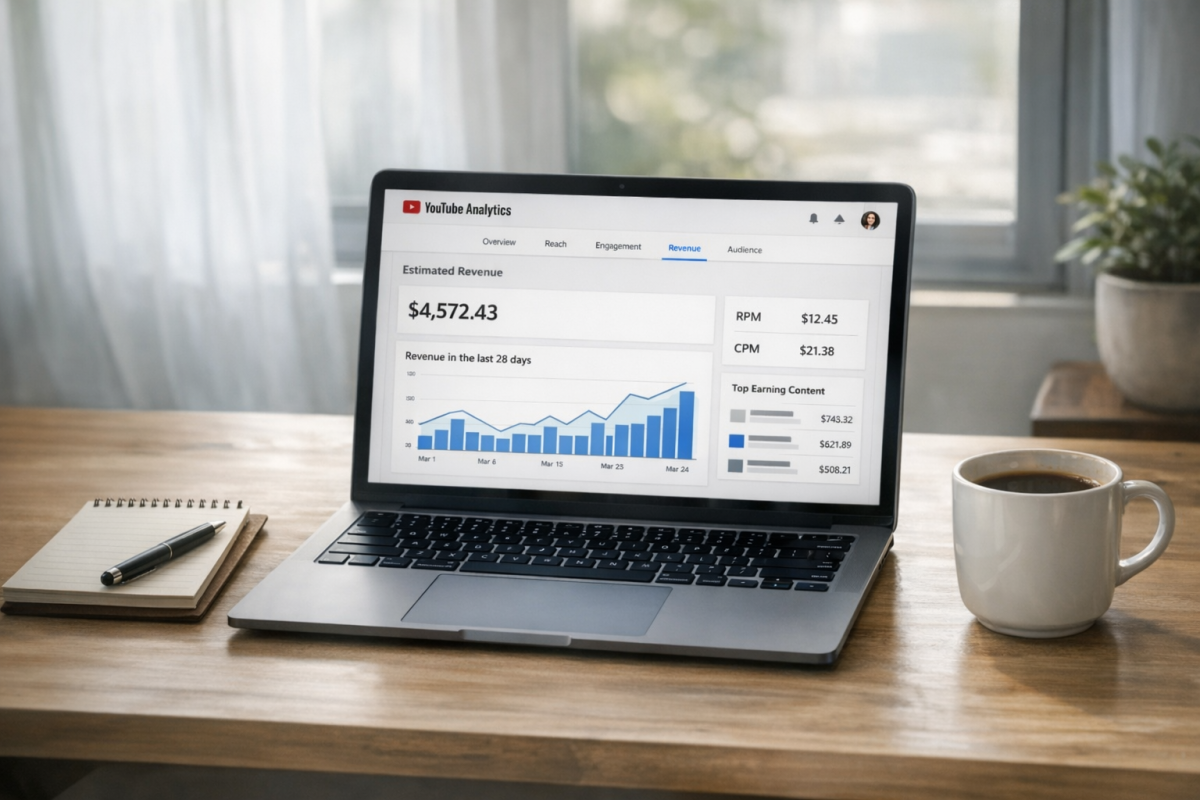
To even qualify for YouTube's Partner Program in 2026, you need 1,000 subscribers and either 4,000 valid public watch hours in the last 12 months or 10 million valid public Shorts views in the last 90 days. Once you're in the program, Google keeps 45% of ad revenue and you receive 55%. Average earnings run approximately $18 per 1,000 views across most niches, though this varies widely.
Here's the critical issue: YouTube's reused content policy can remove monetization from your entire channel if your videos are flagged as reused or if the platform determines your content doesn't meet originality standards. Many Creative Commons licenses also explicitly prohibit commercial use, which means enabling AdSense on those videos puts you in violation of the license itself, not just YouTube's policies.
The safer application of this method isn't monetizing the videos directly at all. Instead, use the videos to drive traffic to a landing page, an affiliate offer, or your own website. The video itself functions as a discovery and traffic mechanism, not as a direct revenue source. This keeps you further from the monetization policy violations while still extracting value from the content.
That said, this approach has real limits. If you're an affiliate marketer using Creative Commons video to funnel traffic, you're competing for attention against creators who are producing genuinely original, high-quality content - and YouTube's algorithm increasingly rewards the latter.
Recommendations for Success
Here's what I actually recommend: treat this method as a starting point, not a destination.
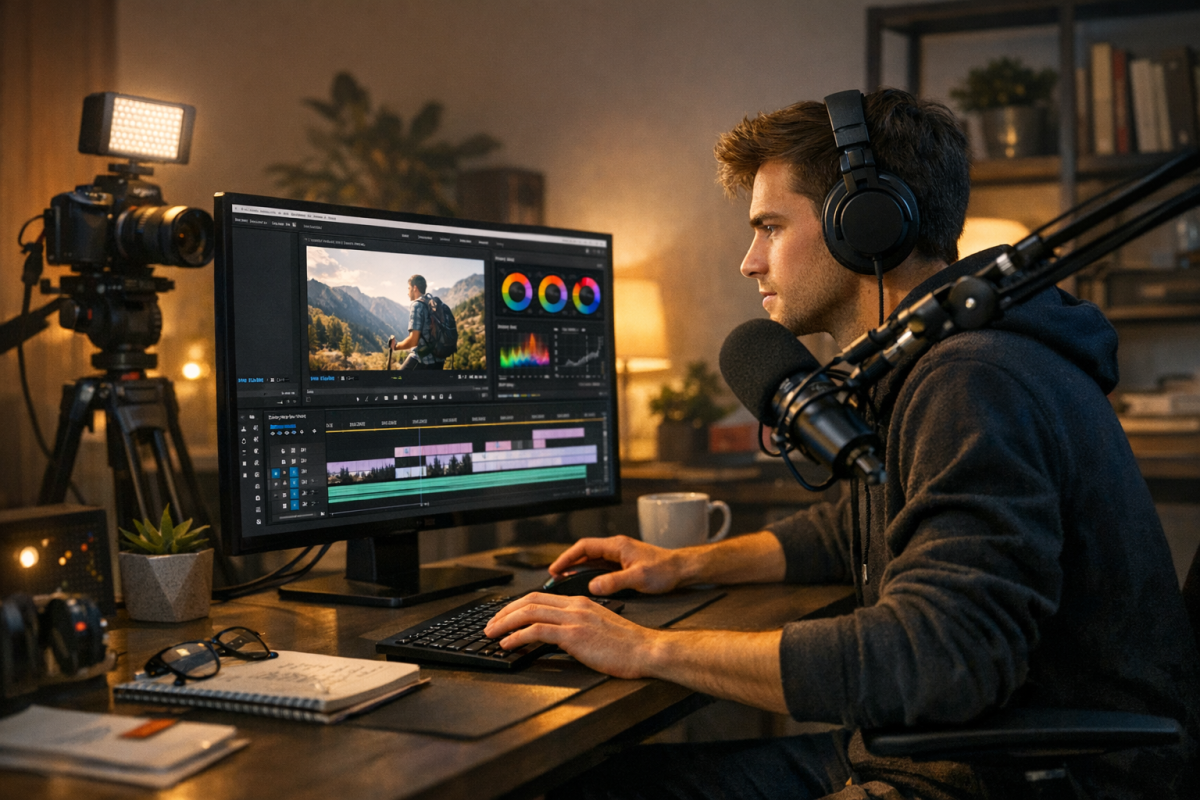
If you use Creative Commons video at all, use it the way film students use stock footage - as b-roll, as a backdrop, as supplementary material beneath your own original narration and commentary. The more of yourself you put into the video, the stronger your position is both legally and algorithmically.
Reproduction with minimal changes is genuinely a low-ceiling strategy in 2026. You're unlikely to rank above the original. You're at constant risk of policy enforcement. And the audience you build on the back of someone else's content rarely transfers when you eventually try to produce your own.
Remixing with a strong original angle is where the actual value is. Done well, it's a legitimate creative process - the same one documentary filmmakers and video essayists use every day. The difference between gray-hat and legitimate content creation at this level often comes down to how much original perspective and value you're adding.
Once you have a few pieces of remixed content performing reasonably well, reinvest that energy into producing fully original videos. At that point, you unlock full monetization eligibility, you own your content outright, and you're building something that compounds over time rather than something that could be flagged and demonetized at any moment.
The real play in 2026 is original content, even if it starts small, scrappy, and imperfect. The tools available today - AI voiceovers, affordable editing software, text-to-video tools, and freelance marketplaces - mean that producing original video content is more accessible than it's ever been. That's where your energy is best spent.
14 responses
Thoughtful replies only - we moderate for spam, AI slop, and off-topic rants.
Awesome stuff here, you gave me some nice ideas ...
90% of the CC videos are actually under copyright law. It's the youtube user who posts it as copyright, doesn't mean it's not owned 🙂
Nice share, but after reuploading the videos the end result videos will be Creative commons video or will be just for me?
This doesn't seem to work. Perhaps Youtube put in measures recently to stop it? Every time I try to upload a video (and yes, I've made 110% sure they're CC licensed videos - I've followed all the steps explained above, and have checked, double-checked and re-checked that I'm doing it just as described) Youtube gives me a copyright violation notice at about the 90% mark when it's processing the uploaded video, scraps the upload, and wont let me continue or publish the video.
Hello sir
I want an information about creating and uploading creative commons video and monetization of animation clips without any copyright claim of successful method.
Hey Kiran! Great question. For Creative Commons videos, make sure you filter YouTube's search by CC license before downloading and re-uploading. For animation clips, use royalty-free sources like Pixabay or OpenGameArt. To monetize safely, always verify the exact CC license type - some allow commercial use, others don't. Avoid CC-ND (No Derivatives) licenses if you plan to edit. Hope this helps you get started!
So this fails?
What succeeds ???
Great question, Norm! Re-uploading others' content typically gets your channel struck or banned. What actually works is creating original content, even simple stuff like tutorials, vlogs, or commentary videos. You can also do reaction videos or compilations using royalty-free content. The key is adding your own voice and value. Consistency and finding your niche matter more than shortcuts!
I can't find the download option on any of these Creative Commons videos, is this option still available?
Hey Donny! The download option can be a bit tricky to find. On YouTube, look for the three-dot menu (⋮) below the video - if the creator has enabled downloads for their Creative Commons content, you'll see the option there. Alternatively, try searching for the videos directly on platforms like Vimeo or the Internet Archive, where downloading is often more straightforward. Hope that helps!
Bro please help me out. I uploaded creative commons videos that I downloaded from YouTube and all the videos have watermark on it. I jointed the videos with a video from a different Channel before I upload them. So that it should be unique.
I have over 500 watch hours now, Please what do you think I can do from here or for now. I believe I still have a little chance of surving please help me.
I am thinking of correcting my mistake by downloading new videos in a way they won't have watermark on it and also to upload as many as possible, so that when YouTube are checking my channel for monetization they should not reach the once I already uploaded with the water mark. Please what do you think I can do now. I just watch your videos now before I realized that.
Please help us. I and my sister made the same mistakes. The only thing we did was that we joined the video with a video from another Channel before it was uploaded.
Please I am waiting for your feedback as song as possible.
Hey Gina! Don't panic - you still have time to fix this before applying for monetization. I'd suggest removing or unlisting the watermarked videos now rather than trying to "bury" them. YouTube reviewers check your entire channel, not just recent uploads. Download fresh Creative Commons videos properly (without watermarks) and focus on building quality content. You and your sister are on the right track by catching this early! 😊
Bro please help me out. I uploaded creative commons videos that I downloaded from YouTube and all the videos have watermark on it. I jointed the videos with a video from a different Channel before I upload them. So that it should be unique.
I have over 500 watch hours now, Please what do you think I can do from here or for now. I believe I still have a little chance of surving please help me.
I am thinking of correcting my mistake by downloading new videos in a way they won't have watermark on it and also to upload as many as possible, so that when YouTube are checking my channel for monetization they should not reach the once I already uploaded with the water mark. Please what do you think I can do now. I just watch your videos now before I realized that.
Please help us. I and my sister made the same mistakes. The only thing we did was that we joined the video with a video from another Channel before it was uploaded.
Please I am waiting for your feedback as song as possible.
Hey! Don't panic just yet. The watermark issue is a real concern, but here's what I'd suggest - go back and replace those watermarked videos with clean downloads as soon as possible. YouTube reviews your whole channel, so the more clean content you have, the better. Also, simply joining videos doesn't make them truly unique. Focus on adding your own commentary or edits going forward. You've got this! 💪