Every website has a goal, and in all but a few tiny exceptions, the means to that goal is exposure. You need more traffic, regardless of your stated goal. The quality of that traffic is important, but you can't be picky if you don't have any to begin.
The other reality of running a website is that it can be quite expensive. Even discounting web design, you have fees for hosting and domain registration, hiring social managers and content producers, and more. This can stretch a budget to its limits, and then it comes time to build traffic only to find the best methods require paying for ads and exposure. It's just too much.
Thankfully, you can still earn traffic without paying a cent, it just isn't as fast or as targeted as it could be. Try out these ideas and see if they get you started.
Key Takeaways
- SEO remains the most valuable free traffic channel, accounting for roughly 53% of all website traffic across the internet.
- Guest posting on industry sites builds relevant backlinks and drives targeted traffic from established audiences in your niche.
- Deep, detailed content of 1,500-2,000+ words consistently outperforms thin content in search rankings and visitor retention.
- Social media drives only around 4% of website traffic, so it's better suited for brand awareness than primary traffic generation.
- Email lists give you a fully owned channel unaffected by social algorithm changes, making them increasingly valuable in 2026.
1. Implement Detailed SEO

The best possible SEO probably requires hiring an SEO firm to go over all of your content and all of your pages, but this is a list for free traffic generation, which means hiring a firm is out. You're just going to have to make an SEO checklist and go over it each time you post content.
- Site factors: make sure your site loads quickly, is secure (HTTPS), and the user experience is unhampered by poor design decisions. Core Web Vitals remain a significant ranking factor in 2026.
- Linking: each piece of content should link out to a relevant source, and should link to one or two other pieces on your site. Internal links help distribute authority and improve crawlability.
- Keywords: research the primary and long-tail keywords for each article you post, and include them naturally. In 2026, focus on search intent above all else - Google's algorithms are sophisticated enough to reward genuinely helpful content over keyword-stuffed pages.
- Meta: optimize your meta titles and descriptions for best visibility and click-through rates in the search results. With AI Overviews now appearing prominently in Google results, well-structured content that answers questions clearly also has a better chance of being featured.
Keep in mind that organic search still accounts for approximately 53% of all website traffic, making SEO the single most valuable free traffic channel available to you.
2. Guest Post on Industry Sites
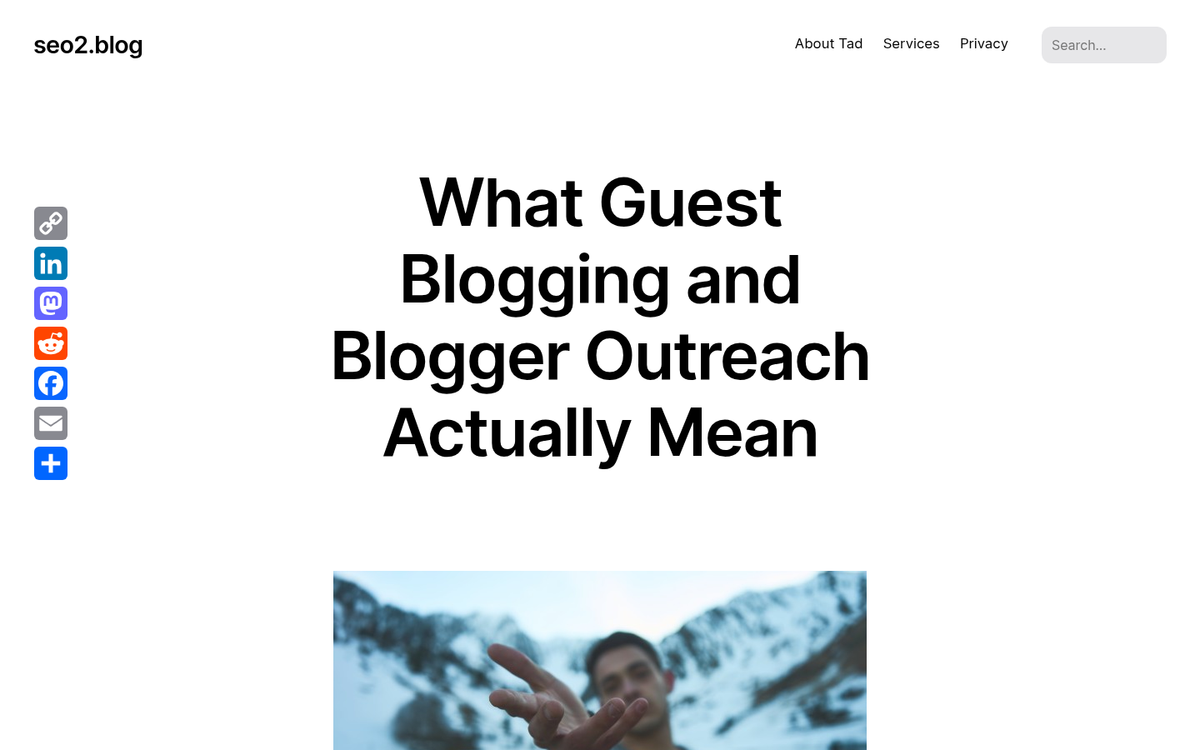
If your site is in a position where it needs to build traffic manually and can't attract it based on its own critical mass, you're likely a new site. This means there are likely a few other sites in your niche with larger audiences than yours. Approach those sites and ask about guest posting opportunities. Posting on those sites with a link back to your site will help draw their traffic to your page. Since their site is in the same industry, chances are they will be interested users. Just avoid paying for guest posts, which defeats the purpose of free traffic creation.
Guest posting also remains one of the most reliable ways to earn quality backlinks, which continue to be a strong ranking signal. According to WordStream, companies that blog actively receive 97% more inbound links than those that don't.
3. Use and Engage Through Social Media - Strategically
Social media is free to use in terms of money, but it's worth setting realistic expectations going into 2026. Social media as a whole drives only around 4% of website traffic across the industry, so while it's a valuable tool for brand awareness and community building, it shouldn't be treated as your primary traffic engine.
That said, platforms like Instagram, LinkedIn, TikTok, Pinterest, and X (formerly Twitter) all offer opportunities to reach new audiences organically. LinkedIn in particular has seen strong organic reach for B2B content, while short-form video on TikTok and Instagram Reels can generate bursts of referral traffic. Note that Google+ was shut down in 2019, so that's no longer an option.
It's important when you're using social media that you don't use it purely as an advertising platform. You're there to humanize your brand and engage your audience, not to post billboards. Prioritize genuine interaction and community participation over broadcasting.
4. Create Deep, Detailed Content

Of course, you can't draw users to your site and expect to keep them without strong content. The best content - that which tends to dominate search results - is detailed, in-depth, and provides genuine value that can't easily be found elsewhere. Aim for at least 1,500-2,000 words for competitive topics, digging deep and providing insight, original data, or practical guidance.
Businesses that blog consistently get 55% more website visitors than those that don't, and marketers with active blogs are 13 times more likely to generate positive ROI. A realistic goal for a growing site is 10-20% monthly traffic growth, so consistency matters more than occasional home runs.
With AI-generated content now flooding the web, genuinely original perspectives, first-hand experience, and expert insight are more valuable than ever. Google's Helpful Content guidelines explicitly reward this type of content.
5. Create Video Content
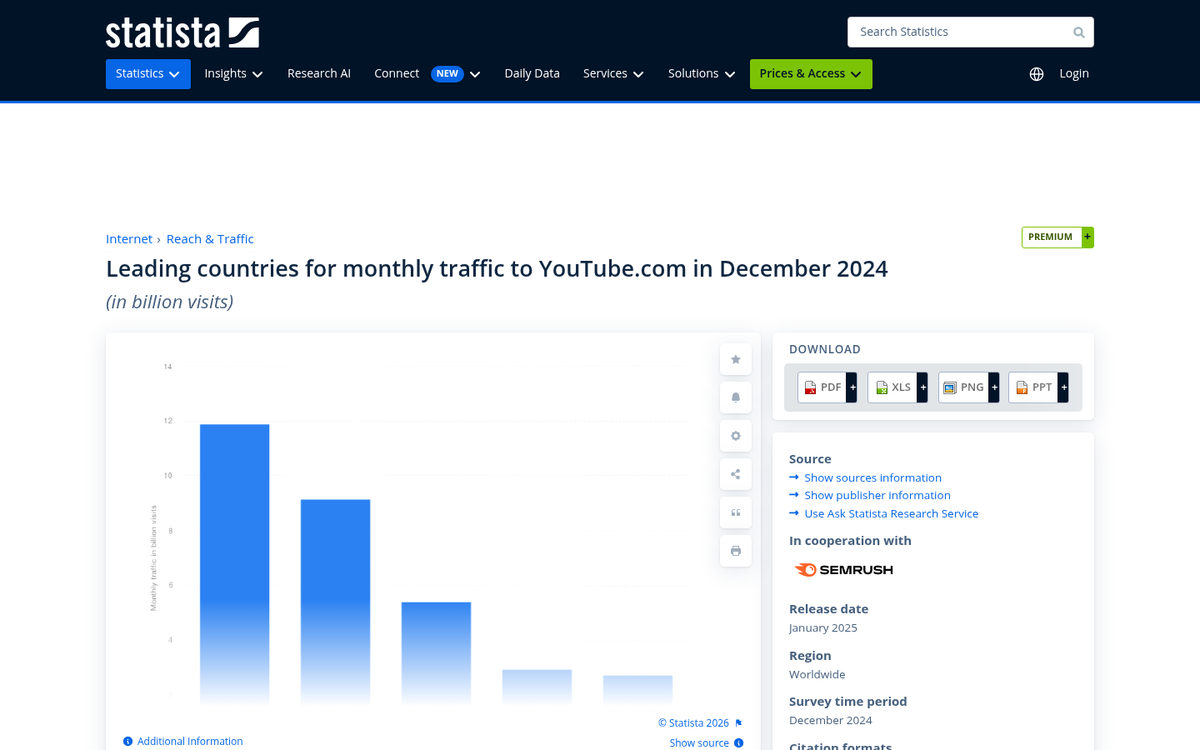
Video content remains one of the most powerful free traffic tools available, and its importance has only grown.
First, YouTube is still the second-largest search engine in the world and a significant source of referral traffic. Optimizing your video titles, descriptions, and tags makes your content discoverable to an entirely new audience.
Second, short-form video - through platforms like TikTok, Instagram Reels, and YouTube Shorts - has become a major organic discovery channel in its own right. Even simple, informative short videos can generate substantial reach without any ad spend.
Third, video content in traditional search results still tends to earn prominent placement, including rich snippets with thumbnails, which stand out visually and attract higher click-through rates.
The barrier to creating video has also dropped considerably - a smartphone and decent lighting are often all you need to get started.
6. Optimize for Mobile and Core Web Vitals
Mobile users now account for the majority of global web traffic, and Google has used mobile-first indexing as its default for several years. If your site isn't fully responsive and fast on mobile, you're actively losing both rankings and users.
Beyond basic responsiveness, make sure your Core Web Vitals scores are strong - these measure loading performance, interactivity, and visual stability, and they directly influence your search rankings. Tools like Google Search Console and PageSpeed Insights are free and will tell you exactly where your site stands and what to fix.
7. Build and Leverage an Email List
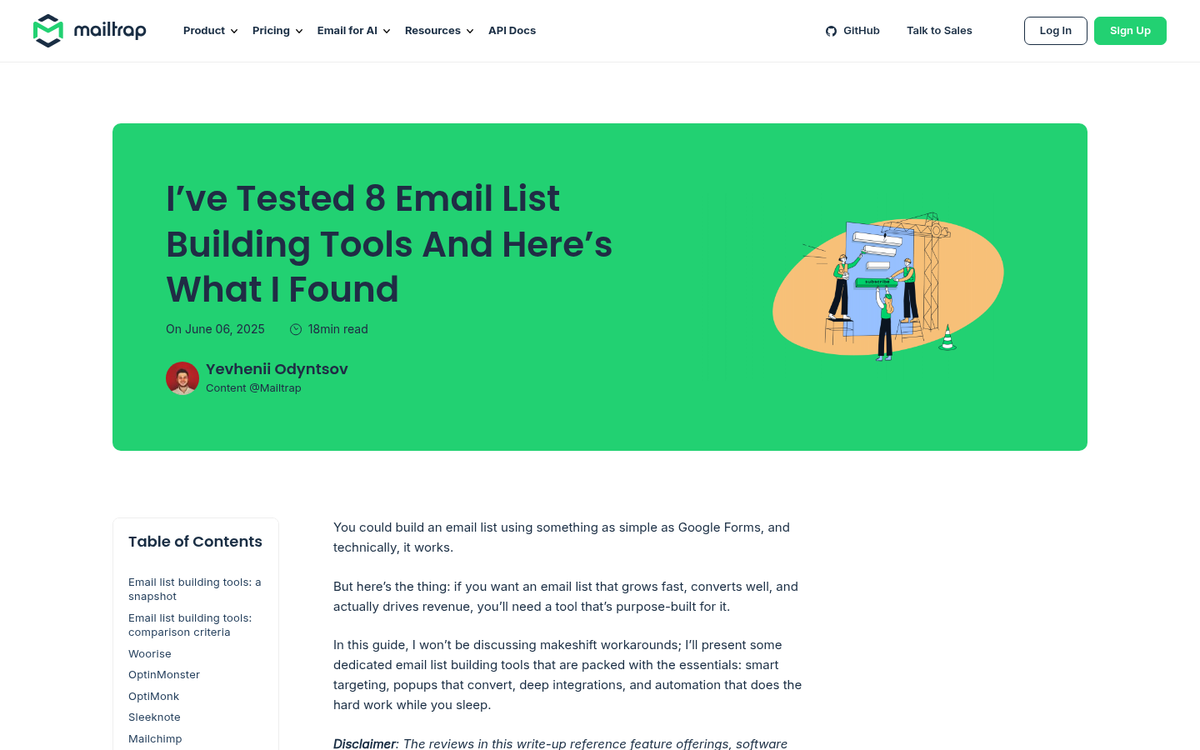
An email list isn't necessarily going to get you brand new users on its own - you still have to attract people to get them to sign up in the first place. What it does, however, is let you put new content and new platforms in front of an already-interested audience. These subscribers can share your content, follow your new profiles, and help you build momentum on new channels from day one.
In an era where algorithm changes on social platforms can wipe out your organic reach overnight, an email list is one of the few owned channels you fully control. That makes it more valuable in 2026 than ever before. If you're just getting started, it helps to compare the most popular email list builder services to find the right fit for your needs.
8. Claim and Optimize Off-Site Profiles

Most businesses end up having profiles on review sites and other aggregators, populated from industry directories or user submissions. Local businesses with physical locations have the most exposure here, with platforms like Yelp, Google Business Profile, and industry-specific directories all playing a role.
Search for your business name and look for any site that has a profile for your business. Claim those profiles, fill them out completely, and treat them as off-site advertisements you fully control. A well-optimized Google Business Profile in particular can drive meaningful local traffic entirely for free.
9. Create and Give Away Free Content
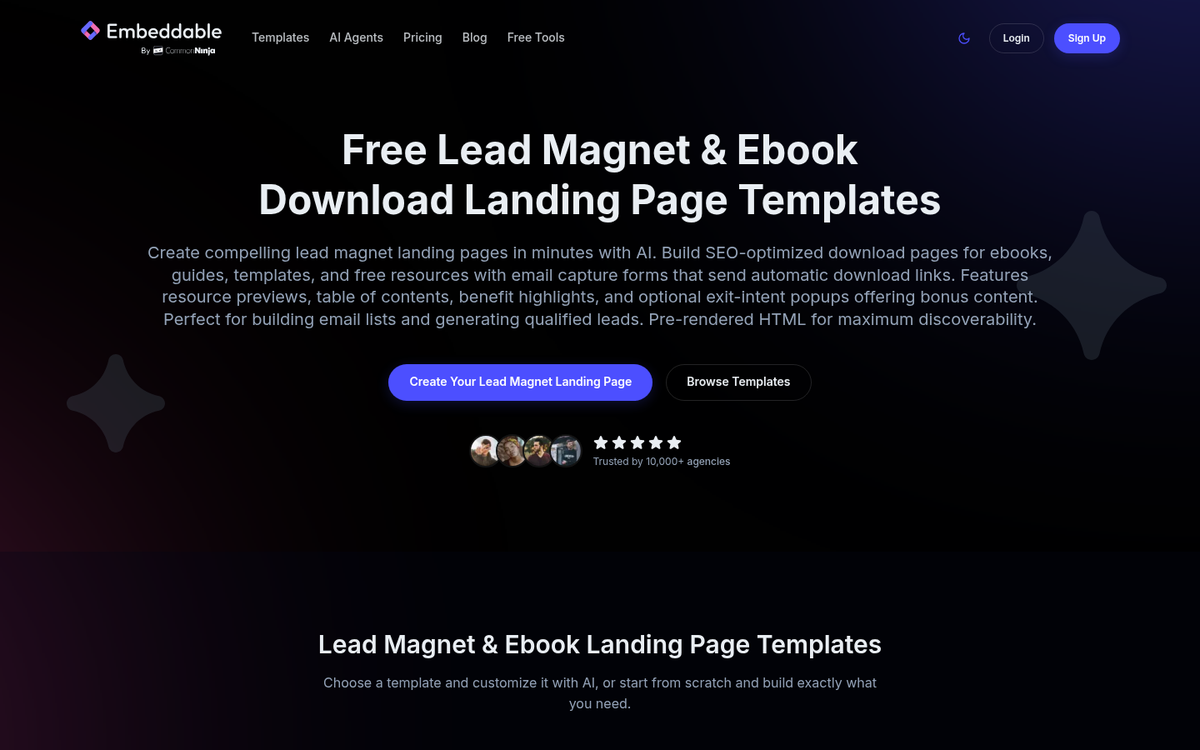
After you've been running a blog for a while, you can take your most popular posts and convert them into longer, more detailed resources - ebooks, guides, templates, checklists, or toolkits. Offer these as lead magnets in exchange for an email address or a social share. Word of genuinely useful free resources spreads quickly, especially in tight-knit industry communities.
If you have development resources available, consider building a free tool or calculator relevant to your niche. Free tools can become significant long-term traffic assets, attracting both direct users and inbound links from other sites that reference them.
10. Interview Industry Veterans and VIPs
Users trust you more when you publish interviews with recognized names. The concept works because you're borrowing credibility - when a respected figure in your industry agrees to speak with you, it signals to your audience that you're worth paying attention to. Learn more about trust signals you can add to your site to further build that credibility.
When you interview popular veterans and important figures in your industry, you're generating valuable content with relatively little effort. If your interview is compelling enough, the person being interviewed may well share it with their own audience, funneling new traffic to your site. This is especially effective on LinkedIn and in niche industry newsletters, where a single share from the right person can send a meaningful spike of highly relevant visitors your way.
11. Prepare for AI-Driven Traffic
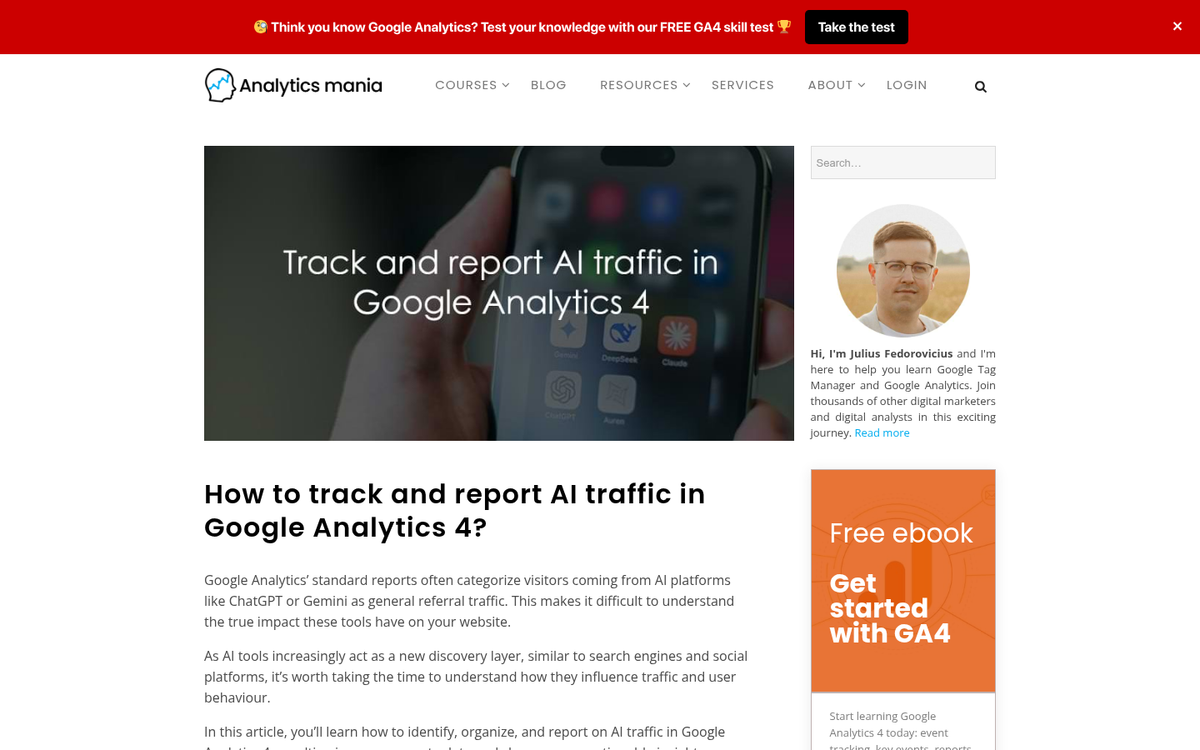
This is a new reality worth paying attention to in 2026. AI chatbots and assistants - including ChatGPT, Gemini, Perplexity, and others - currently account for less than 1% of total website referral traffic, but that number is growing. Semrush projects that AI sources could surpass traditional search engines as a traffic driver by 2028.
To position your site for this shift, focus on becoming a citable, authoritative source in your niche. This means publishing original research, expert opinions, and well-structured factual content that AI systems are likely to reference and link back to. Structured data markup can also help AI crawlers understand and surface your content correctly. It's early days, but building these habits now puts you ahead of the curve - and if you're still getting your fundamentals right, it also helps to understand why your blog content still isn't ranking well.