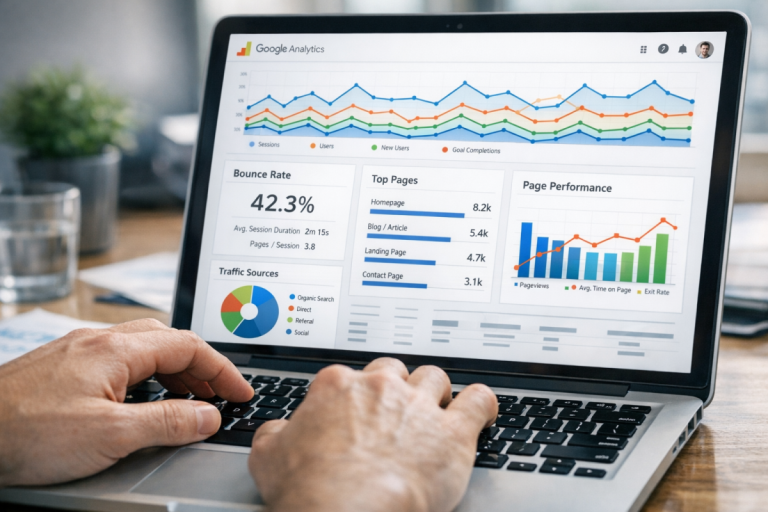
Your bounce rate is a measurement of the number of people who visit your site but don't click around to other pages. Most webmasters consider this to be a thoroughly negative metric, but the reality is that it's not always bad. According to Databox (September 2024), the median bounce rate across all industries sits at 44.04%, with blog posts ranging as high as 65-90% and e-commerce sites typically falling between 20-45%. Context matters enormously. There are three types of traffic that add to your bounce rate:
- Real bounces: users who land on your page from clicking a link, either on another website or through search, and who then leave because they are dissatisfied with the content.
- Satisfied bounces: users who land on your page from clicking a link, either on another website or through search, and who are satisfied with your content having answered their question. They leave because they have no need of further information.
- Bot traffic. Bot traffic will often only hit your homepage and will ignore other pages. This is particularly true of purchased traffic, which raises your hit count without giving you any value.
The third type of traffic can be filtered out of your analytics, removing it from consideration. It's not a problem. The second is also not a problem, per se, but it's an opportunity for you to improve your pages to encourage users to click through. The first is a bit more of a problem. What reasons cause the first type of traffic to bounce?
Key Takeaways
- Bounce rates aren't always negative; satisfied users and bot traffic also contribute, so context matters before drawing conclusions.
- Slow load times, bad mobile design, and poor usability quickly drive visitors away, often within just seconds.
- Mismatched keywords and misleading external links send irrelevant traffic, causing visitors to leave immediately upon arrival.
- Intrusive pop-ups and uninteresting, outdated content reduce engagement and push users to exit without exploring further.
- Internal links, related content widgets, and external links opening in new tabs help retain visitors and reduce bounces.
1. Your web design is bad and you're driving away users.
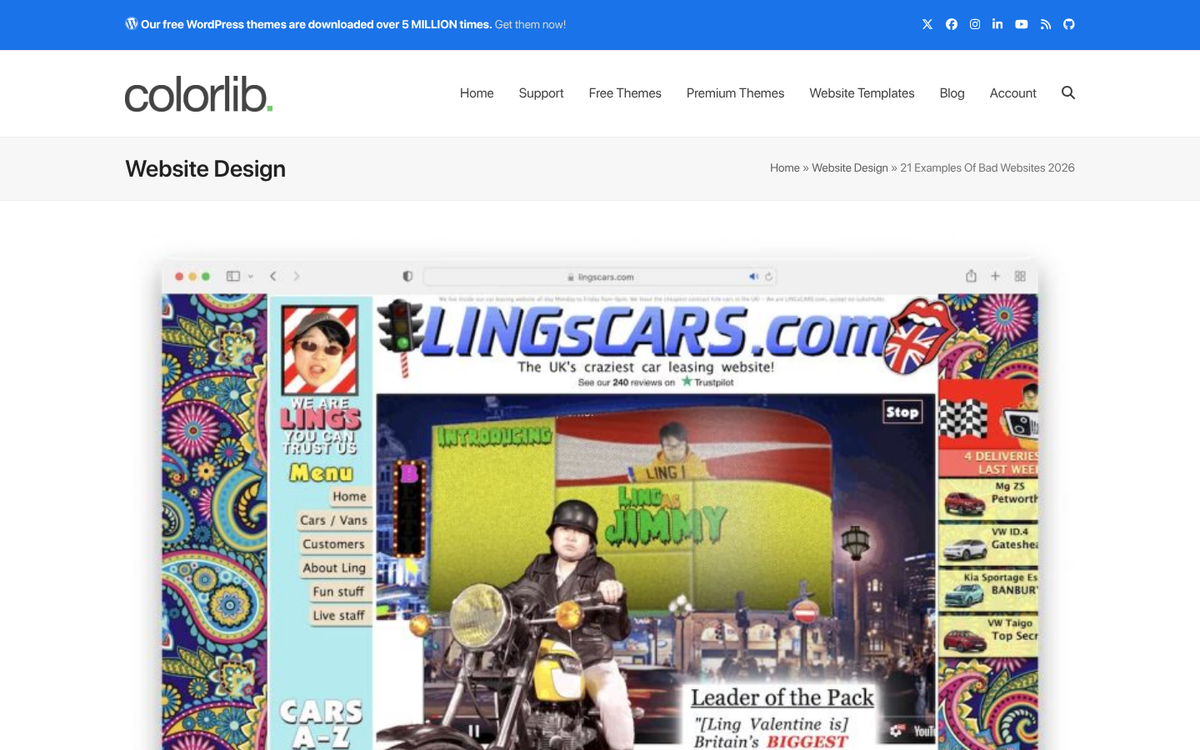
This might be your choice of colors clashing or making your text hard to read. It might be the use of some kind of startling autoplay audio or video. It might be poor mobile rendering, broken layouts, or cluttered navigation. It might be any number of usability reasons. First impressions happen fast - research shows 61% of visitors will leave a website if they don't find what they're looking for within just 5 seconds.
2. Your site design doesn't encourage users to explore.

If a user visits your site and finds the content they want, they have a choice; they can either leave immediately or stick around to explore other content. If they can't see any content from where they land, they're probably going to leave. That's why related article widgets are so popular. It's also why you should strive to fill every article with internal links to other posts on your site. It's easy enough to add a widget to your blog, or even manually create a related article list at the end of each post, under "further reading."
3. Your content is somehow attracting users with the wrong keywords.

You need to make sure every piece of content you're writing is targeted towards the right keywords. This includes the meta title and description, as well as your headline. If you're not using the keywords you want to rank for, you're not going to pull in the right traffic. Your content exists regardless, which means search engines will index whatever keywords they find. If those keywords differ from your intended targeting, you're going to lose users - in essence, you're answering a question other than the one they asked. How many times you include keywords in your post also plays a role in making sure you're attracting the right audience.
4. Someone else is linking to your site in a misleading way, sending traffic to posts unrelated to what they think they're going to see.
This can happen accidentally or maliciously, as part of a negative SEO attack. Most of the time, you'll be able to ignore the link. Sometimes, you can contact the webmaster and ask them to revise or remove the link; it's possible the traffic could become legitimate if they knew what they were getting into. In the case of a spam link or negative SEO attack, you can use Google's disavow links tool to make sure that link isn't counting against you.
5. Your site takes too long to load.
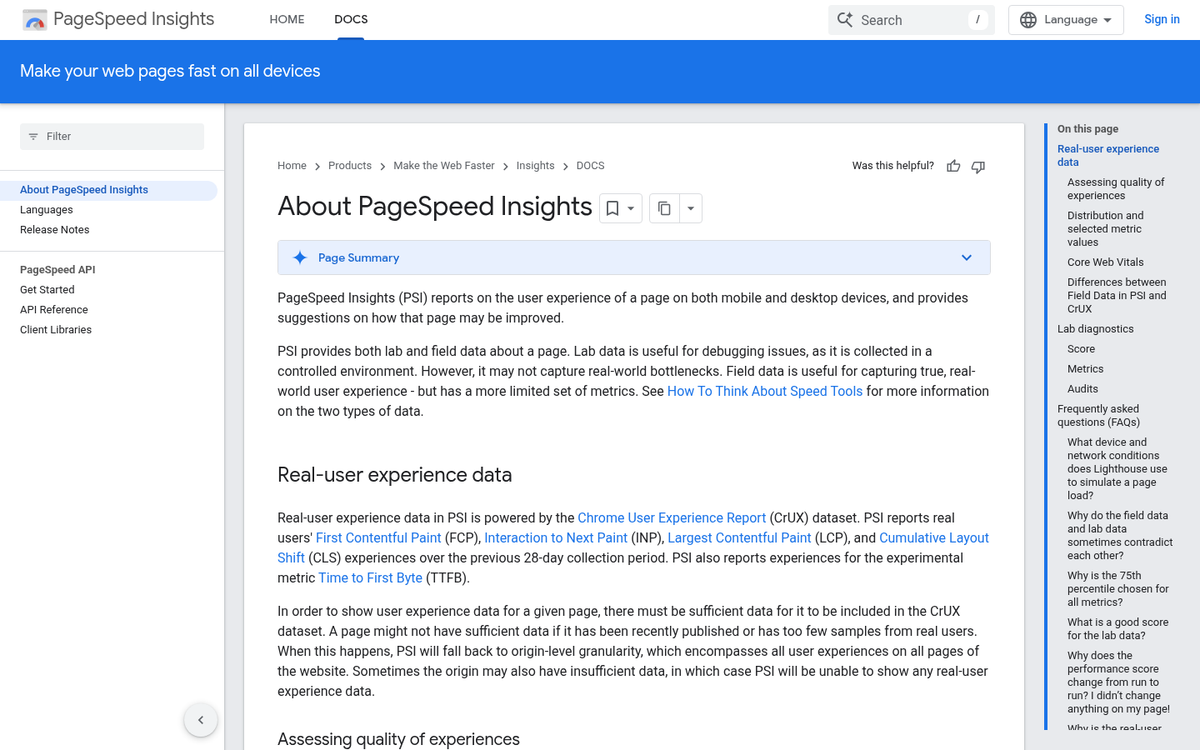
Speed is critical. According to Search Engine Journal, pages taking longer than 2.5 seconds to load risk losing visitors - and the data backs that up hard. A full 25% of visitors will abandon a page that hasn't loaded within 4 seconds. Unless you're using asynchronous code loading, one of the first things to load on your website is your analytics tracking code, which means slow load times are being tracked. Internet users have notoriously short attention spans, and unlike flipping a TV channel or turning a page in a book, every second of load time is a second they're actively waiting. Compress your images, leverage browser caching, use a CDN, and regularly audit your Core Web Vitals in Google Search Console.
6. You have a site pop-up that obscures your content.

Some sites use pop-ups very effectively, triggering them to appear on exit or exit intent. The goal with this timing is to catch users right when they're about to leave, to give them one more chance to do something that benefits your site. Unfortunately, the more intrusive that pop-up is, the more people it's going to drive away. Some users will leave the moment they see one. Others will be less inclined to click around and explore when you're interrupting them reading your content. It's also worth noting that Google has penalized sites for intrusive interstitials on mobile since 2017, and that guidance remains in effect - so aggressive pop-ups can hurt your rankings as well as your bounce rate.
7. Your content is just plain not interesting.
Long articles full of long paragraphs and small, bland text do nothing to help keep your readers' attention. You need skimmable formatting. You need vibrant graphics. You need a clean site design. You need to minimize your blatant advertising and limit it to a few choice calls to action. You need to capture their attention and keep it through your entire piece. With AI-generated content flooding the web in 2025 and 2026, users have become quicker than ever to abandon content that feels generic or padded - original insights and genuine expertise matter more now than at any point in recent memory.
8. Your content is no longer applicable.
Everyone strives to either be the first resource or the best resource on the web. The older your content is, the more likely it's out of date. As soon as a user encounters a piece of information they know is incorrect, they're going to disregard you as an authority and leave immediately. It's in your best interests to keep your content up to date and revisit older posts regularly. There's also the ranking dimension - search engines give preference to fresher content when all other factors are equal, and stale posts tend to lose ground over time.
9. Your website doesn't work, or works poorly, on mobile devices.
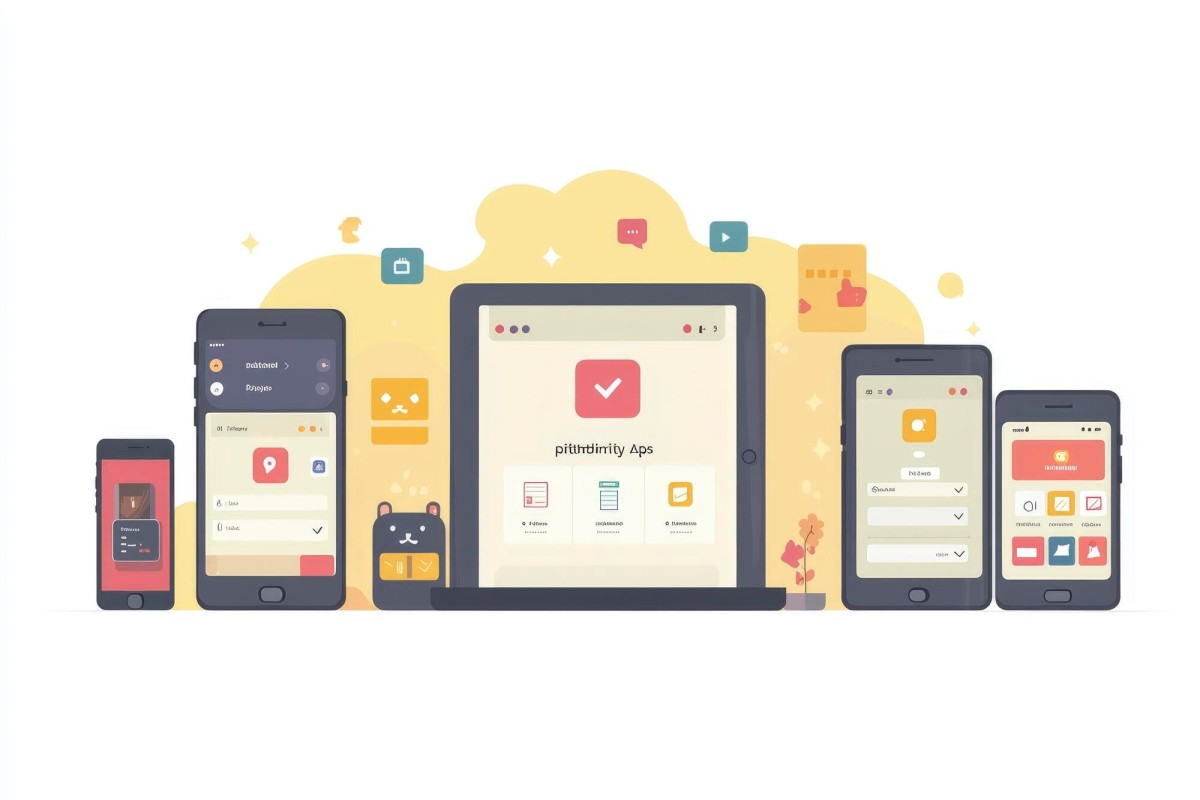
Mobile devices now account for more than 50% of all global web traffic, according to Statista (2024), and that share continues to grow. If a user tries to visit your site on a smartphone or tablet and gets a poorly scaled, slow, or broken experience, they're gone. Google has used mobile-first indexing as its default for years now, meaning your mobile experience isn't just a user experience issue - it directly affects how your site ranks. Responsive design isn't optional in 2026; it's a baseline requirement.
10. Your links to external websites open in the same window.
Unless a web browser overrides this decision, linking out without setting the target to open in a new tab is going to drive users away. Many users want to click your links and save them for later reading without losing their place. If you force them to load a new page in the same window, it counts as a bounce and significantly decreases the chances of that user returning to finish reading your content. It's a simple fix - make sure all external links include target="_blank" - and it's one of the easiest bounce rate improvements you can make.