





Key Takeaways
- Traffic generators range from low-quality bot services to legitimate human-powered exchanges, with quality varying dramatically between platforms.
- EasyHits4U and 10KHits are among the longest-running legitimate traffic exchanges, using real humans rather than bots.
- Traffic exchange visitors are real people but primarily credit-seeking, making conversions lower than organic traffic.
- Bot traffic offers minimal commercial value in 2026, as most ad networks have significantly improved invalid traffic detection.
- Tools like Similarweb help verify whether traffic generators actually deliver promised results beyond vendor-reported dashboards.
The Internet's Best Traffic Generators in 2026
The Internet is positively riddled with traffic generators. They range from low-quality autorefresh bots using proxies to appear as though they come from around the world, to sophisticated traffic exchange systems powered by real people and real advertising. Ideally, you'll strike upon the most valuable of these networks when you're searching, but there are a few problems.
For one thing, legitimate traffic exchanges are few and far between. The services we sell are far from typical, and they work because we put a lot of time and effort into them. We don't use low-quality bots like you'd find on Fiverr.
For another thing, the Internet has somewhere in the neighborhood of two and a half decades worth of traffic bot programs littering the digital ground. Some have gone through upwards of a dozen name changes and rebrands, moving from one site to another. They disappear, leaving existing users in the lurch, never to receive support or updates when the program stops working. Then identical software comes out under a new name, charging anywhere from $5 to $250, scamming people out of their cash with the same back-end software.
Finally, of course, there's the issue of what exactly an automated traffic generator typically is and does. More on that later. For now, why not take a look at a list of the best traffic generators we can find?
1. EasyHits4U
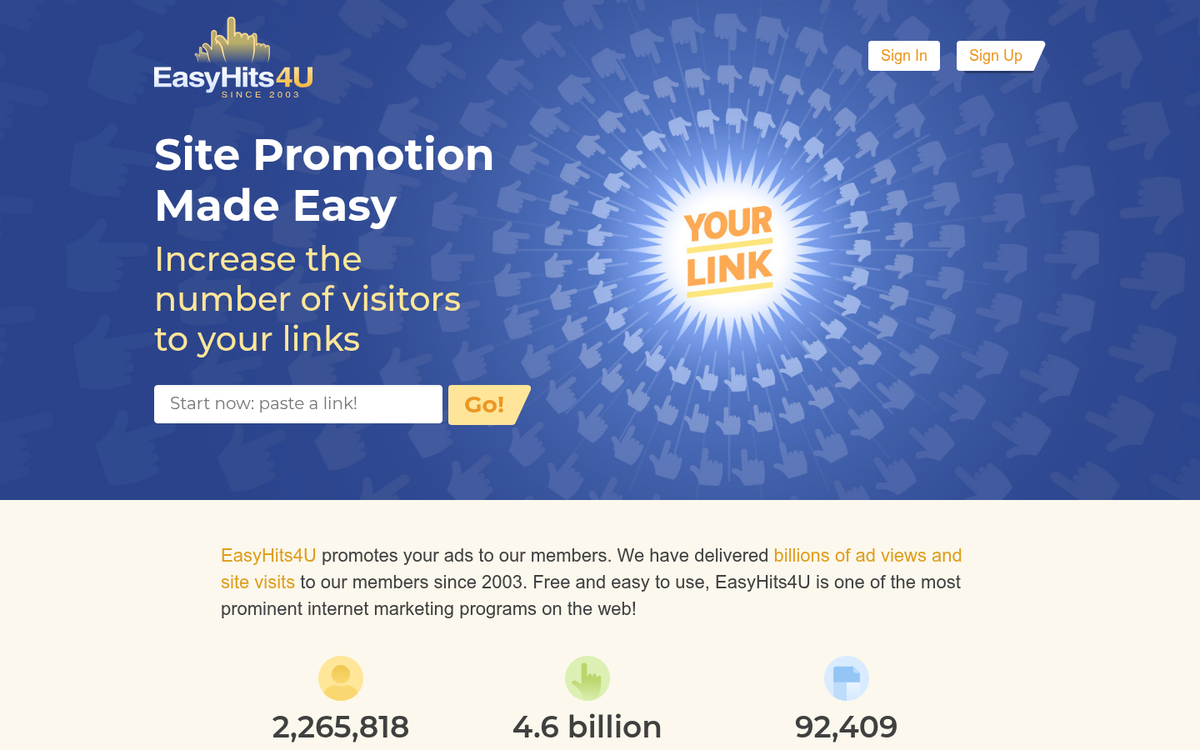
EasyHits4U has been around since 2003, making it one of the longest-running traffic exchanges on the web, and it has the numbers to back up that longevity. The platform has generated billions of ad impressions and site visits over its lifetime, which is a genuinely impressive track record for a space littered with fly-by-night operations. It operates as a manual traffic exchange, meaning real human beings are clicking through and viewing your site rather than bots padding your analytics.
The referral structure is straightforward: you earn 10% of the traffic generated by your direct referrals, which gives you a solid incentive to spread the word. Free accounts are available, and premium upgrades unlock faster credit ratios and additional promotional tools. If you're looking for a traffic exchange with staying power and a legitimate user base, EasyHits4U is one of the few that has genuinely earned its reputation.
2. 10KHits
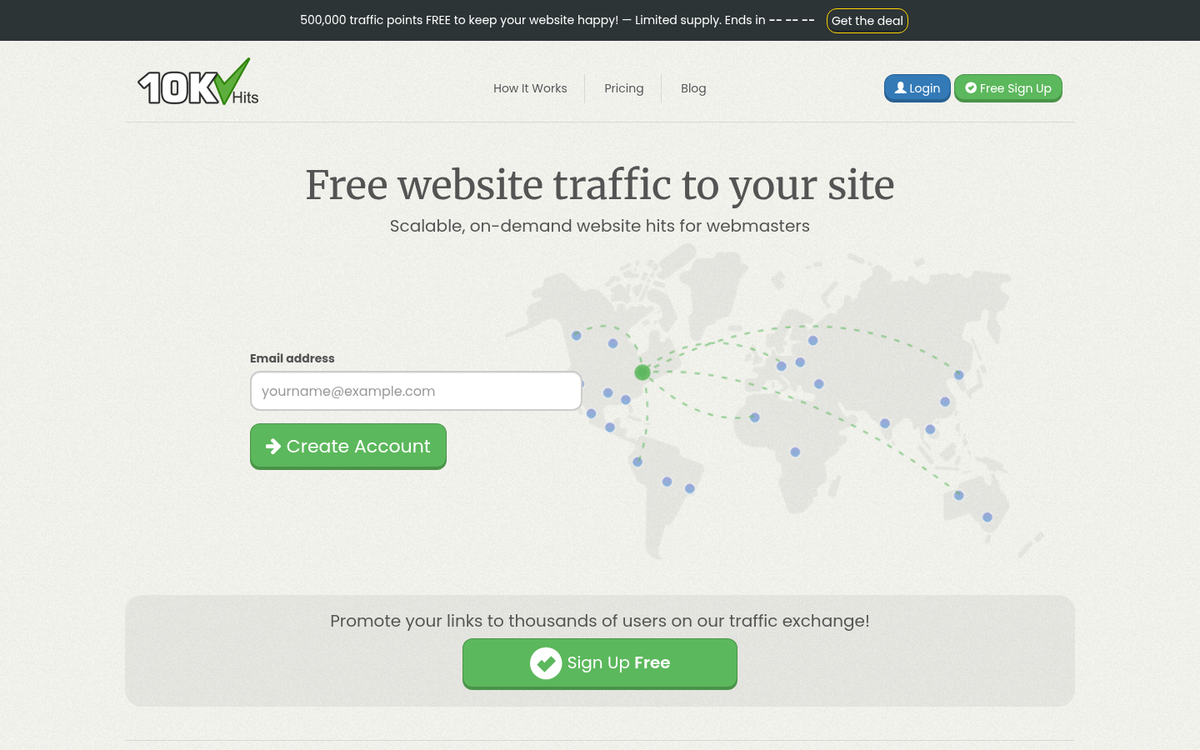
10KHits has been a recognized name in website traffic exchange circles since 2011, which in this industry is practically ancient history. It operates on a credit-based system where you visit other members' sites to earn credits, then spend those credits to send visitors to your own. The interface is clean and relatively intuitive compared to many of its competitors, and the platform has maintained a reasonably active user base over the years.
It's worth being clear-eyed about what you're getting here: traffic exchange visitors are real people, but they're browsing with the primary goal of earning credits, not necessarily engaging deeply with your content. That said, for building brand familiarity, testing landing pages, or simply getting eyes on a new site, 10KHits does what it promises without a lot of smoke and mirrors.
3. SparkTraffic
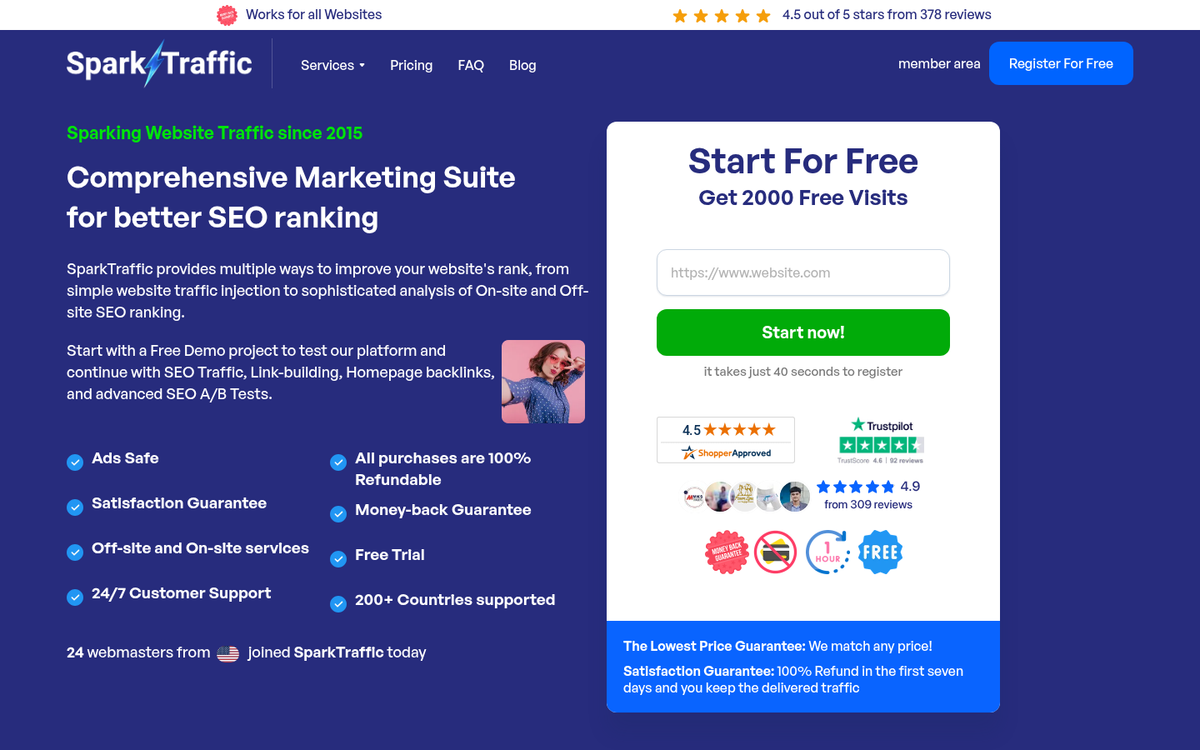
SparkTraffic sits in an interesting middle ground between traditional traffic exchanges and more modern bot-assisted traffic tools. It offers a free trial that includes 2,000 free visitors, which is a reasonable way to test the waters before committing any money. Paid plans scale up considerably from there, offering traffic from targeted geographic regions and various device types.
One thing SparkTraffic does reasonably well is presentation. The dashboard is modern and gives you a clearer picture of what traffic is being sent and from where. As always with tools like this, temper your expectations around conversions - this isn't organic search traffic, and it shouldn't be treated as a replacement for it. But for testing, warming up a new domain, or supplementing other traffic sources, it's a cleaner option than many of the dated tools that still float around in this space.
4. TrafficPeak
TrafficPeak is one of the more feature-rich options available in 2026 if you're looking for granular control over your traffic. The platform allows up to 25,000,000 page visits per month, pulls visitors from 120 countries, and lets you adjust your bounce rate anywhere from 0% to 80%. That last feature is particularly notable - bounce rate manipulation is something a lot of tools in this category ignore entirely, but it matters if you're trying to make your analytics look plausible or if you're specifically testing how bounce rate changes affect other metrics.
The geographic targeting is also genuinely useful. Rather than a blunt flood of traffic from wherever the network happens to be concentrated, you can direct visits toward specific regions that actually make sense for your audience. As with any tool in this category, use it with a clear understanding of what the traffic is and isn't - but as a feature set, TrafficPeak offers more levers to pull than most.
4. TrafficPeak
TrafficPeak is one of the more feature-rich options available in 2026 if you're looking for granular control over your traffic. The platform allows up to 25,000,000 page visits per month, pulls visitors from 120 countries, and lets you adjust your bounce rate anywhere from 0% to 80%. That last feature is particularly notable - bounce rate manipulation is something a lot of tools in this category ignore entirely, but it matters if you're trying to make your analytics look plausible or if you're specifically testing how bounce rate changes affect other metrics.
The geographic targeting is also genuinely useful. Rather than a blunt flood of traffic from wherever the network happens to be concentrated, you can direct visits toward specific regions that actually make sense for your audience. As with any tool in this category, use it with a clear understanding of what the traffic is and isn't - but as a feature set, TrafficPeak offers more levers to pull than most.
5. Pro Builder Plus
PBP is sort of a cross between a traffic generator and a multi-level marketing scheme, only without the more predatory elements that MLM traditionally entails. You're not absolutely required to sign up under someone, though the program does cost money on a monthly basis. You're granted access to traffic generation tools, as well as other promotional information and training. The referral commission structure is where it starts to resemble MLM, and many members lean on that more heavily than the marketing tools themselves. There's a sizable commission for enrolling new members, as well as seeing them succeed.
6. TrafficWave

TrafficWave is not quite a traffic exchange in the traditional sense. Rather, it's a valuable tool to use alongside traffic you've already attained. It's a fairly sophisticated autoresponder for email lists, with a 30-day trial and a suite of tools designed to help you craft effective automated email sequences. Use it in conjunction with any of your affiliate or referral programs for a meaningful boost in follow-up and retention.
7. FFANET

FFANET isn't a traditional automatic traffic generator either. Instead, it's a long-running network built around email lists and free-for-all link exchanges. The idea is to build an audience independent of SEO or Google, which frees you from the constant churn of content marketing. You still need to do the work of generating leads and maintaining a site worth visiting, but FFA gives you a solid toolkit to do it. Notably, the platform allows split-testing of up to 100 variants on a given page, which is a genuinely powerful feature for optimizing your landing pages. The network's age works in its favor - it has a positive reputation and a history of actually being effective, which puts it well above the dozens of flash-in-the-pan tools that have come and gone over the years.
About Bot Traffic and Traffic Quality in 2026
As a final note, you always need to be aware of the difference between high quality traffic, traffic exchange network traffic, and bot traffic - and in 2026, this distinction matters more than ever.
High quality traffic is the best kind, consisting of real people who are genuinely interested in your product and visiting your site to learn more. These are the leads you want to nurture. They're also the hardest to acquire and the most expensive to maintain through paid channels.
Traffic exchange users are comparatively lower quality, but they're still real humans. You're getting real people to view your site; you're just not bringing them in organically the way Google intends. Conversion rates will typically be lower than organic traffic, but it's faster and cheaper than waiting months for SEO to bear fruit. For testing, brand exposure, and keeping a new site from looking like a ghost town, exchanges have legitimate uses.
Bot traffic, finally, is rarely useful in any meaningful commercial sense. Unless you're running display advertising paid on a CPM basis and not monitored closely for invalid traffic, sending bots to your site accomplishes very little. Most ad networks have significantly improved their invalid traffic detection, so even the CPM angle is riskier than it used to be. Use fake traffic for controlled server load testing if you must, but don't expect it to move the needle on anything that actually matters.
It's also worth mentioning that traffic estimation tools like Similarweb have become increasingly important for understanding where traffic is actually coming from - for your own site and competitors'. A SparkToro study found Similarweb to be the most accurate traffic estimator compared to tools like SEMrush and Ahrefs, particularly for sites receiving between 5,000 and 100,000 Google Analytics users per month. If you're evaluating whether any traffic generator is actually delivering what it promises, pairing it with a tool like Similarweb gives you a more grounded reality check than relying solely on the vendor's own dashboard.


24 responses
Thoughtful replies only - we moderate for spam, AI slop, and off-topic rants.
Wow, great list! Thanks
Are these in order of best to worse?
thank you for this list
Thanks for the download links, i have been looking for ways to drive traffic to my website
Which do you think is the best? We're trying to increase the number of daily visitor hits to our blog
Website auto traffic generator ultimate version is awesome
I had trouble with it. It's one guy and he was pretty miffed that I wouldn't spend days downloading MS updates to make it work. I asked him to demonstrate the software sending a small number of test visits to my site. He couldn't. The program dosen't fool analytics. That's all I wanted to do is raise my site's ranking.
thank you for this list
are these tool provide authentic view and are they google safe?
I have been thinking the same. I want to gather traffic for my site.
Fffanet is outdated and redirects itself multiple times to various websites. Give it a check.
Tell me how we can create more traffic on site ?
Bot traffic, finally, isn't very useful at all unless you're selling advertising that earns you money based on pageviews
Bot traffic, finally, isn't very useful at all unless you're selling advertising that earns you money based on pageviews
great list! that's just what i was looking for mate..
Organic traffic is the best and safest way in the long run.
Monster Traffic is a dead site and when you click the link above it takes you to a spam site. Please unlink it, it will potentially cause damage to lots of your viewers.
My site was inactive for about last 1 years, now started working on it, but traffic is not gaining as expecting, very low traffic, around 30 per day. Any suggestion will be highly appreciating.
Thanks in advance
very helpful content
Thank you so much, Mithu! We're really glad you found the content helpful. Traffic generation can be a game-changer for any website, so we wanted to make sure we covered the best options out there. If you end up trying any of the applications mentioned, we'd love to hear how they work out for you. Feel free to drop a comment anytime with your experience or if you have any questions. Happy driving traffic! 😊
Good list
Thanks, Nyabbie! Glad you found the list helpful. There are so many great traffic generator tools out there, and it can be tough to know where to start. If you end up trying any of the ones we mentioned, we'd love to hear how they work out for you!
Can a bot traffic click on your adsense to generate revenue for someone website
Great question, Chima! Technically, bot traffic can click on AdSense ads, but this is actually a very dangerous practice. Google has sophisticated systems to detect invalid and fraudulent clicks, and if caught, your AdSense account will be permanently banned. It's simply not worth the risk. Google only pays for genuine, human clicks from real users. Always stick to legitimate traffic sources to protect your account!