
As a marketing blog writer, I try to keep things on the side of legality as much as possible. I'm not afraid to research and write about the more questionable aspects of the industry, though I do tend to stay away from them as a personal means to an end. I'm sure to let you know when a technique is black hat, gray hat or perfectly legitimate.
What I'm going to talk about today is all firmly in the darker side of gray. Multi-Level Marketing is one of those very polarizing industries. The people who fall into it, either out of desperation or gullibility, will defend it to the death. The people on the outside, more cynical like myself, see it for what it typically is; a way for amoral companies to profit off the backs of people who, themselves, are seeking profit.
What makes an MLM an MLM? What keeps it from being nothing more than a pyramid scheme? I'll take a look. While we're there, I'll give those of you who participate in an MLM a few tips. After all, marketing is marketing, and those tips will be useful regardless of what industry you're in and what you're selling, be it MLM, Affiliate Marketing, or just plain old blog marketing.
Key Takeaways
- Nearly half of all MLM participants lose money, with median annual income just $3,000 according to the Direct Selling Association.
- Most MLM participants lack sales knowledge; applying real marketing skills like SEO and social media significantly improves success chances.
- Personal branding beats competing on MLM company keywords - you won't outrank Mary Kay for Mary Kay terms.
- Building a mailing list creates traffic independent of search engines, capturing returning customers and already-interested prospects.
- Marketing skills learned through MLM - SEO, content, PPC - transfer directly to affiliate marketing or other online business models.
What is MLM?
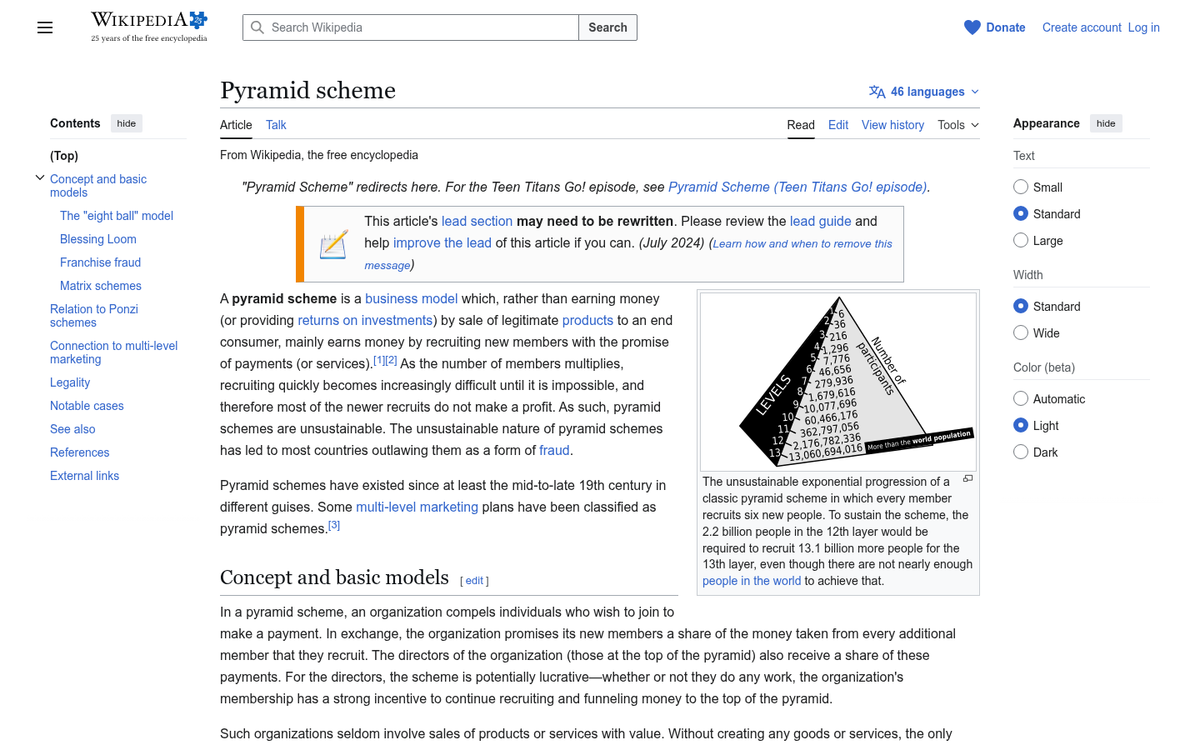
First of all, I'm going to give a bit of a primer on multi-level marketing, and why it has such a bad reputation. The reason is essentially because it's the same setup as a pyramid scheme, which is illegal for a number of reasons.
At the top you have the company, which does something. Some of them import knives, some of them produce vitamins, some of them warehouse cosmetics; the important part is there's a product involved.
The company hires salespeople, who have two goals; sell products, and recruit more salespeople. When the salespeople sell products, they get a commission. In that sense, it's a lot like affiliate marketing. However, the salespeople also get a commission from every unit sold by someone they recruit.
That's where the pyramid scheme comparison comes in. If you were to take away the product, you'd have the same setup as a pyramid; people pay someone to be part of the program, and then they get a cut of the payments the people they recruit make.
Both of these schemes, pyramid and multi-level marketing, are legitimate moneymaking methods for the people at the top. The problem is the people at the bottom. In a pyramid scheme, if you can't find anyone to sign up below you, you've lost money. With multi-level marketing, often times the salesperson has to make an initial investment in the products they want to sell.
Mary Kay, for example, requires that their sales force buys the products they intend to sell. They give representatives a discounted wholesale price, so the salesperson can make a profit from sales, but even then it's a thin margin. After the cuts your referrer and the company takes, there's not much left. The program also includes account activity requirements and minimum purchase thresholds to maintain active status. If you're not a high volume seller - which is hard in a program that has millions of salespeople worldwide - you're not going to break even.
The numbers back this up in a sobering way. The Direct Selling Association reported that the median annual income for MLM participants was just $3,000 in 2022. And while the FTC has long maintained that the vast majority of participants lose money, an AARP study offered a more nuanced picture, finding that roughly 25% of participants made a profit and another 27% broke even. That still means nearly half of all participants are losing money - in an industry that generated $163.9 billion in global retail sales in 2024.
Mary Kay is one of the more legitimate MLMs out there. They have a broad support network, legitimate products, and they've withstood FTC scrutiny over the years. Others, like Equinox International, Metabolife, and TelexFree, have not fared so well - facing shutdowns, lawsuits, and in some cases outright fraud charges.
Avoiding the MLM Scam

So, multi-level marketing is potentially a scam targeting young, gullible people who have no sales experience, very little money to invest, not a lot of time, and a naïve reliance upon the innocence of the world. They tend to invest, get chewed up and spat out, and learn their lesson. Some unfortunate souls just invest more and more, deeper and deeper, or try to go big and get shot down.
You, ideally, are not one of those people. I'll say this right now; if you're relying on MLM sales and referrals to make your rent payments, you need to stop what you're doing and find a more legitimate business. MLM is simply too variable, too prone to collapse, and too reliant upon the benevolence of friends and family to be a successful long-term venture for more than just a lucky few. Chances are good that you won't be among those lucky few.
On the other hand, if you're a marketer looking to put your skills to the test with the crucible of MLM, online is the place to be. By using what you - and I - know about SEO, about affiliate marketing strategies, about PPC ads, and about social media, you can become one of those top marketers. In fact, 82% of network marketers already use social media to promote their business, so the competition online is fierce and knowing what you're doing matters more than ever.
Yes, I know that's beginning to sound a lot like the sales speech someone gives you before they hand over their referral link and get you to sign up and make your first payment into the program. Rest assured, I'm not going to do that. I have no participation in any MLM, and you will find no referral links in this post.
The point is, there's one thing most novice MLM participants lack, and that's sales knowledge and experience. It's an industry that lives or dies on the power of the marketer's sales prowess. If everyone who participated was a marketer, it would all be a lot more successful. The problem is just that most of the people roped into these programs aren't marketers - they're college students, stay-at-home parents, and young adults looking for a side income.
What I intend to give you are the tools and resources necessary to succeed with MLM in an online arena. The reason I feel comfortable giving you these tools is because they're tools independent of MLM itself. If you decide MLM is a scam and you want out, you can bring this knowledge with you. You can use what you've learned to set up with affiliate marketing, or reselling, or even building your own online presence and selling products you create. I'm giving you tools and knowledge that will help in a general sense, and give you skills you can leverage later on down the road. And, hey, if you make yourself into one of those MLM success stories, more power to you.
The Difference Between MLM and Affiliate Marketing

Before we get into it, I'd like to take a moment to discuss the difference between multi-level marketing and affiliate marketing. Both tend to have a bad reputation as scams, usually from people who tried and failed. Others who succeed will boast endlessly about the virtues of the program, regardless of which it is. So what's the difference?
To start with, I've already described how MLM works in detail. So what about affiliate marketing? With affiliate marketing, for one thing, you aren't hired on as an independent sales consultant, or whatever terminology they use. You're an entrepreneur, a marketer, a business owner, or even just a blogger. You don't even have to have a direct relationship with the business in question. Affiliate networks exist for that purpose; to act as a middleman between a marketer and many different affiliate programs at the same time.
Another difference is the product. With affiliate marketing, you don't need to buy the product in order to resell it. Rather, you just refer people to the business that sells the product themselves. There's no initial investment for you, though the corresponding payouts could be lower.
That's not to say that affiliate marketing is free; you need to invest in a website, in traffic, in content, in ads. It's just as easy to fail to break even with affiliate marketing as it is with MLM. It's just arguably much easier to succeed.
There's also very rarely a referral bonus for affiliate marketers. Some affiliate programs do offer a cut of commissions from people you refer, but this is rare; most affiliate programs are just between you, your customers, and the business in question. Take Amazon, for example; their affiliate program doesn't offer a referral commission structure, just product commissions.
Perhaps one of the main draws of MLM over affiliate marketing is the residual income. With MLM, you could potentially just spend a lot of time signing other people up and encouraging those people to be successful. You'd never have to sell a product yourself, and you could reap the rewards of a bunch of talented salespeople in the tree beneath you. With affiliate marketing, you have to work to build the traffic and customer relationships necessary to make that kind of residual income, and it's not self-driving. If you stop putting in the effort, it will stop returning profit over time.
MLM, Affiliates, and Scams
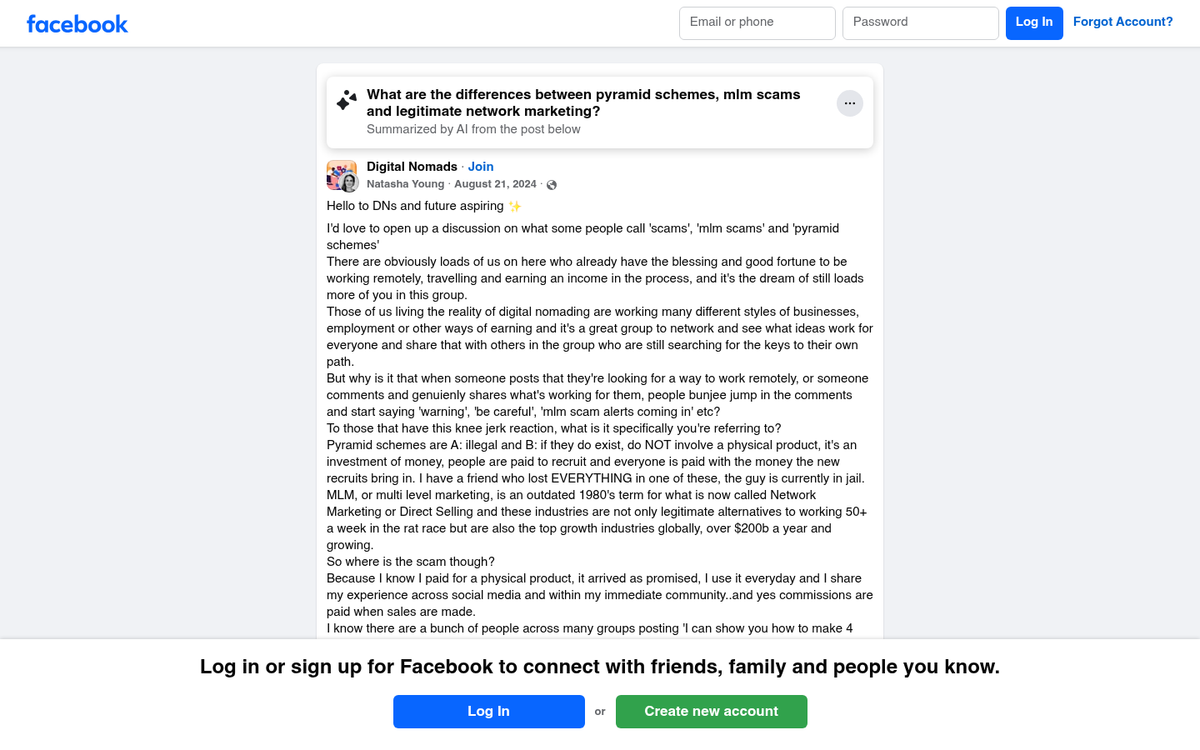
Both MLM and affiliate marketing have a bit of a reputation for being scams, as I mentioned. The reason for this is subtly different in each case, but overall it's the same root cause; inexperienced and ineffective sellers trying to succeed in a saturated market.
With MLM, there's the added level of the initial investment that makes it a much harsher penalty for failure. With affiliate marketing you don't have that investment, beyond what you spend on hosting and ads, which doesn't need to be much. However, there are scams within affiliate marketing involving inaccurate sale tracking, so the company profits on sales that the referrer never gets paid for.
There's also the company level. Some MLMs are scams, just trying to get people to sign up to make their creators a quick buck before they disappear. Likewise, some affiliate programs are scams, with networks never paying out while skimming commissions for themselves. In both cases, though, it's bad apples ruining the reputation of the bunch. There are legitimate affiliate programs, just as there are legitimate MLMs, though the bar to clear with an MLM is considerably lower.
It's worth noting that as of 2026, the MLM sector continues to grow, with Grand View Research projecting a compound annual growth rate of 3.6% through 2028. The industry counts approximately 18.8 million participants in the U.S. alone. The dominant product categories remain wellness products at around 33% of direct sales, followed closely by cosmetics and personal care at roughly 31%. That means if you're in either of those niches, you're swimming in an extremely crowded pool and your marketing skills will be the deciding factor in whether you sink or swim.
Marketing Success Tips
I know you're ready for the list, but let me say one more thing; MLM has one benefit over affiliate marketing, and that's the ability to sell in person. Almost all affiliate marketing is done online, while MLM can be done both online and in person. If you're good with personal sales, MLM is where you can really shine. I'm assuming, however, that you're looking to make your living online. You are, after all, reading a blog on a site about getting more traffic to your websites. All of the tips below consider strictly the online aspect.
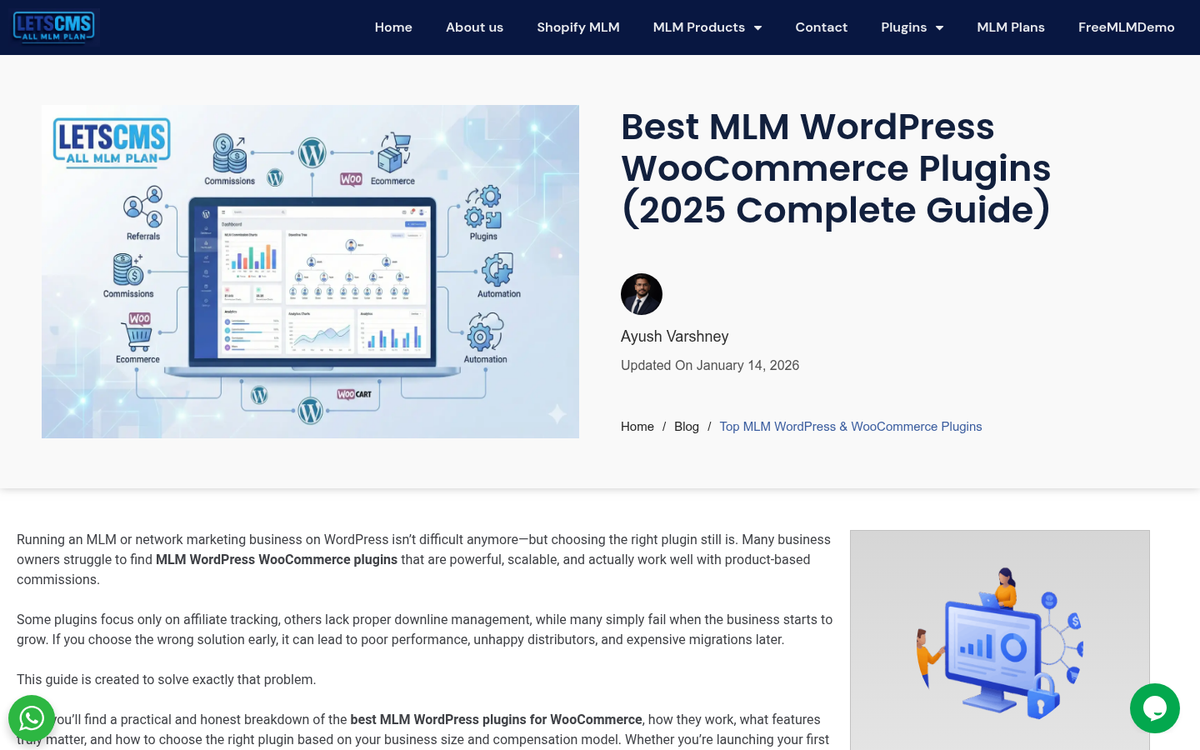
With online marketing, everything centers around your website. You're very much like a traditional store, here; you have a product inventory, you have to consider shipping costs, you need to deal with customer service, and you need to handle payment processing. All of this can be done relatively easily using ecommerce plugins for common site platforms.
You need a domain name and a web host. I recommend going for personal branding rather than trying to compete with the company name of the MLM you're part of. You're not going to out-rank Mary Kay for Mary Kay keywords, so don't even try. Instead, come up with your own business name.
You need a foundational CMS, and I always recommend WordPress. You can do so much with it that it's crazy not to use it. It's also free, though some of the plugins you may want for a storefront are not.
You'll want an eCommerce plugin. WooCommerce remains the dominant choice in 2026 and integrates well with most themes and payment processors. There are other solid options depending on your needs, but WooCommerce is where most people start and many never need to look further.
From there, you can customize everything with other plugins and themes. You'll probably want an anti-spam plugin, a functional blog platform with an editorial calendar, basic analytics, and social media integration. This is all standard for running a business online.
Past the Basics

All of that assumes you're a bit of a novice when it comes to online marketing. If you're a bit more advanced, to the point that you have a site set up, you're selling, and you want to grow, here are the tips I have for you.
You're going to have a few goals as a marketer making product sales. MLM is no different in this respect from marketing any other product you have to sell, with one notable exception; you have the main MLM company to compete with. Mary Kay, for example, essentially fixes prices. There's a price point at which they sell their products directly through their website. You have to price your products competitively if you want to attract people to your site rather than theirs. After all, why would anyone buy from a side seller when they can buy from the source for the same price?
The goals you have are as follows: ranking in search engines, growing your traffic, building a mailing list, optimizing a conversion funnel, and handling customer service.
Ranking in Search

Ranking in search is not easy. You need to pick keywords targeting your business niche, but you can't rely solely on the brand names of the products you're selling, because there's undoubtedly already stiff competition for those terms - including from the MLM company itself.
With SEO in 2026, if you want to rank, you need content that demonstrates genuine expertise and value. That means a blog, and a blog means articles. You're free to write them yourself, or pay someone to write them for you. Longer, well-researched posts in the range of 1,500 to 3,000 words tend to perform better than thin content, and consistency matters more than volume. What do you write about? That depends on your MLM. To continue the Mary Kay example, you might write about how to use various products, how they've improved your life, ingredient breakdowns, or comparisons with competing brands. Get inside the minds of the people searching for such products and figure out what they want to know. Product reviews, tutorials, and how-to guides all perform well.
One thing worth flagging for 2026: AI-generated content is everywhere, and search engines have gotten significantly better at identifying and deprioritizing it. If you're going to use AI tools to help with your content, make sure a real human voice is shaping and editing the final product. Authentic experience and genuine perspective are what will set you apart - and that's exactly what AI-generated content struggles to satisfy under E-E-A-T guidelines.
Growing Traffic
There's no two ways about it; growing traffic will take time. You need to figure out who the right people to target are, and figure out where they spend their time online. Given that 82% of network marketers are already active on social media, you'll need to be strategic about which platforms you focus on and how you differentiate yourself from the crowd.
Content and search ranking will help. Building a social media presence for your brand will help as well. Short-form video content on platforms like TikTok, Instagram Reels, and YouTube Shorts has become one of the most effective ways to build an audience quickly, particularly in beauty and wellness niches. If you're in those categories, that's where your energy should go alongside your written content strategy.
This is also where paid advertising comes in. Using Meta ads or Google PPC is a good way to get targeted traffic to your site, at which point it's up to your conversion funnel to turn them from visitors into customers. Look into remarketing as well, to keep those people coming back and give them more chances to convert.
Building a Mailing List

Building a mailing list is an art unto its own, and it's something that any business is well advised to do. A mailing list is a source of traffic and leads that doesn't rely on referrals or search engine traffic. It's also primarily built out of people who were interested enough to visit or even buy before. It's a source of returning customers, and highly targeted, already-interested prospects.
The two primary ways to get a mailing list going are through a lead capture page and through the purchase process. Make opting in to the mailing list a part of your conversion process, so when people buy your products, they are added to the list. This lets you follow up with them and reach back out when the product they bought is likely running low.
For direct traffic capture, you create a dedicated landing page and send people to it rather than to blog posts or store pages. The sole purpose of that landing page is to get people to sign up for your mailing list. Usually it's a good idea to offer an incentive, like a discount code, a free sample, or a useful downloadable guide related to your niche. That's up to you.
Optimizing Conversions
Optimizing conversions is where your analytics and tracking come into play. You want to see where your users are coming from, where they land on your site, and what those pages are doing to attract and retain visitors. You also want to see what they do once they're on your