Key Takeaways
- Google Ads remains the advertiser benchmark, with average CPAs of $48.96 on Search and $75.51 on Display.
- Meta Ads offer lower costs at ~$21.98 CPL on Facebook, making them strong for B2C advertisers prioritizing efficiency.
- LinkedIn has the highest average conversion cost (~$75) but delivers unmatched B2B targeting by job title and seniority.
- For publishers, Mediavine and AdSense consistently outperform other networks in RPMs, but both require established, quality sites.
- Amazon Associates remains a top publisher monetization option due to high conversion rates and broad product coverage.
Cost Per Conversion by Ad Network: What Publishers and Advertisers Need to Know in 2026
The cost per conversion metric matters deeply to both sides of the advertising equation. Publishers - those who spend countless hours building their sites and audiences - want to earn as much as possible from every view, click, or conversion on the ads they display. Advertisers, on the other hand, want to spend as little as possible per valid, high-quality conversion.
Balancing these two sides of the coin is largely the job of the free market. Each ad network has its own system in place. Some keep costs high by banning low-quality advertisers and spammy publishers while aggressively filtering out fake and fraudulent clicks. Others allow almost anything, which drives costs down for advertisers but leaves publishers earning very little. It all comes down to how many good, high-quality advertisers and publishers a network can attract - and retain.
I've split this article into two parts: one aimed at publishers and one aimed at advertisers. There's naturally some crossover, but the information is focused on what each side actually wants to know. Feel free to skip to whichever section is most relevant to you, though as a general rule, if a network is strong for one side, it tends to be solid for the other as well.
Best CPC Ad Networks for Publishers

As a publisher in 2026, you have more monetization options than ever - affiliate links, display banners, native ads, sponsored content, contextual ads, video pre-rolls, and more. No single format is universally best; it depends on your audience and what they respond to. What I can tell you is which networks are worth your time and trust.
From the publisher perspective, you want networks that are trustworthy, pay a reasonable and reliable amount, and don't have a hair trigger when it comes to dropping underperforming accounts. One bad month shouldn't cost you your spot in a network.
Here are the top networks worth considering from the publisher side in 2026.
1: Google AdSense
AdSense remains the default starting point for most content publishers, and for good reason. Google's contextual targeting is still best-in-class, meaning you'll rarely see wildly irrelevant ads on your pages. Their advertiser pool is enormous, which keeps CPCs competitive, and their filtering systems for fraudulent clicks are among the most sophisticated in the industry.
Google is strict about quality on both sides. Publishers must follow their program policies closely - no encouraging clicks, no prohibited content, no inflated traffic. Sites generally need to be established and have original content to gain approval. The upside is that this strictness keeps advertiser spend meaningful, which flows back to publishers as higher RPMs.
One thing to keep in mind: AdSense has evolved significantly. Auto ads, anchor ads, and multiplex ads have changed how publishers deploy inventory, and Google's shift toward Privacy Sandbox - following years of third-party cookie deprecation - means contextual targeting is more important than ever. If your content is well-defined and niche-specific, AdSense tends to reward that in 2026. You'll also want to think carefully about how much traffic you need to earn meaningfully from the platform before investing heavily in it.
2: Propeller Ads
Propeller Ads has matured considerably from its earlier days and is now a well-established network particularly strong for sites with international or non-English-speaking traffic. They've expanded their ad format offerings significantly and are especially well regarded for push notification ads, interstitials, and popunders - formats that perform well in certain niches even if they're not for everyone.
Their self-serve platform is clean, payments are reliable, and they have solid anti-fraud measures in place. Their standard content restrictions apply - no adult content, hate speech, illegal material, malware, or deceptive advertising. Publishers outside of the US/UK bubble who struggle to monetize through Google alone often find Propeller Ads fills that gap reasonably well.
3: Revcontent
Revcontent operates as a native advertising network - those "recommended content" widgets you see at the bottom of major news and entertainment sites. Their publisher network includes high-traffic properties, and they've tightened up their advertiser content standards over the years after criticism around clickbait and misinformation.
The traffic threshold remains a meaningful barrier. You'll typically need at least 50,000 monthly visitors to get approved, which rules out smaller publishers entirely. For those who qualify, RPMs can be solid depending on your niche and audience geography. Publishers with news, entertainment, or lifestyle content tend to do best here.
4: Amazon Associates
Amazon Associates isn't a display ad network - it's an affiliate program - but it remains one of the most effective monetization tools available to content publishers, and leaving it off this list would be a disservice. There's no minimum traffic requirement to join, and the program covers virtually every product category imaginable.
The long-standing advantage of Amazon's cookie model - where you earn a commission on anything a user buys during their session, not just the product you linked - still holds. Refer someone via a $12 kitchen gadget and they walk out with a $600 air fryer? You see a cut of that. Conversion rates on Amazon links tend to be high because users already trust the platform.
Commission rates have shifted over the years and vary significantly by category, so it's worth checking the current fee schedule before building a strategy around it. That said, for content sites in product-focused niches, Associates remains a top-tier option.
5: Mediavine
Mediavine has become one of the most respected premium ad management networks for independent publishers, and if you qualify, it's worth serious consideration. They handle your entire ad stack - display, video, sponsored content - and are known for genuinely strong RPMs compared to running AdSense alone.
The catch is their entry requirements. As of 2026, you'll need a minimum of 50,000 sessions per month to apply, and they're selective about the sites they accept. They focus heavily on lifestyle, food, travel, and parenting niches, though they've expanded their scope. Publishers who get in consistently report significantly higher earnings than they were seeing with AdSense alone, largely because of their header bidding setup and the quality of their advertiser relationships.
Best CPC Ad Networks for Advertisers
From the advertiser side, the calculus is different. You want competitive pricing, strong targeting, a healthy publisher network relevant to your niche, and robust fraud filtering. Wasted spend on fraudulent or irrelevant clicks is one of the fastest ways to blow a budget without results.
Before diving into the networks themselves, it helps to anchor expectations with some real benchmark data. According to WordStream's 2025 analysis of over 16,000 US-based campaigns:
- The average cost per lead on Google Search is $70.11
- The average CPA on Google Search is $48.96
- The average CPA on Google Display is $75.51
- The average cost per conversion on Google Shopping is $38.87
- Facebook/Meta Ads average a CPL of $21.98 across industries
- Instagram averages approximately $25.00 per conversion
- LinkedIn averages approximately $75.00 per conversion, reflecting its B2B premium audience
- Lower-cost Google Ads industries include Restaurants & Food and Arts & Entertainment at around $30.27 CPL, and Automotive Repair at $28.50
These numbers vary wildly by industry, targeting approach, and ad quality, but they give you a useful baseline when evaluating where to allocate budget.
1: Google Ads
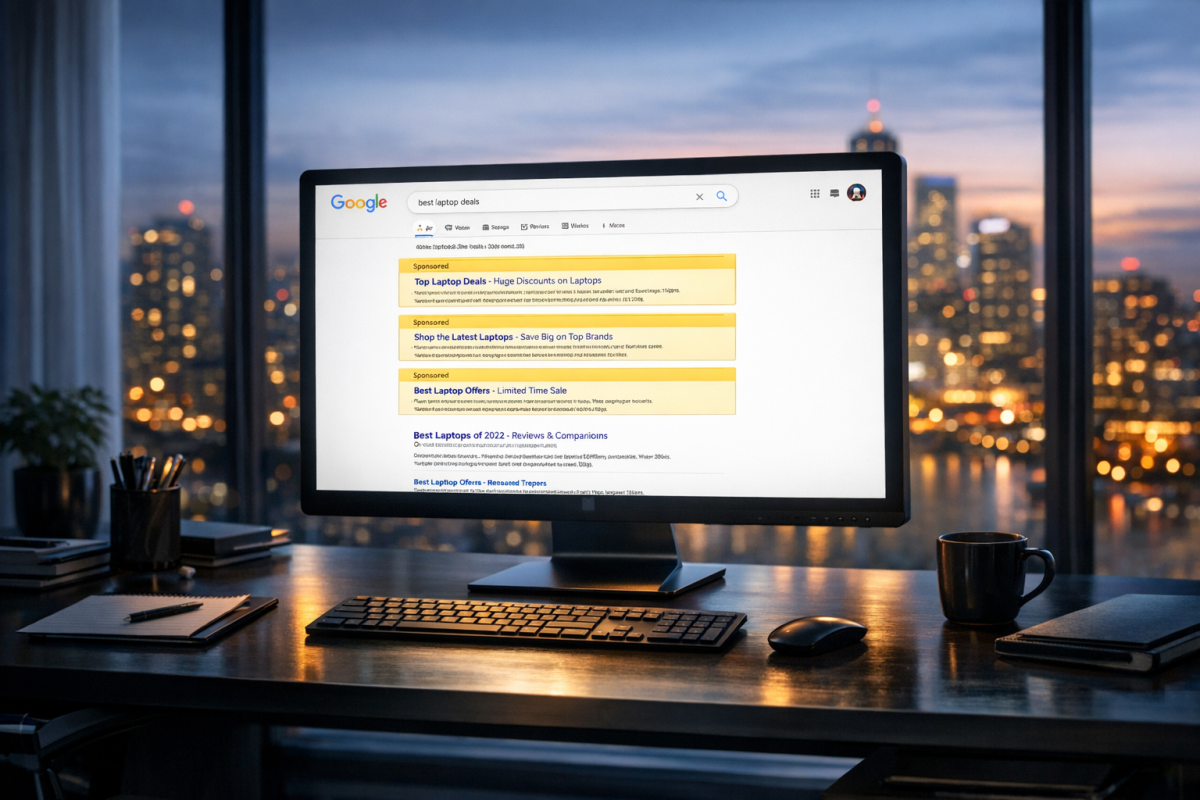
Google Ads remains the dominant force in paid advertising, and for most advertisers, it's the first place budget gets allocated. Search campaigns offer intent-based targeting that's hard to match - you're reaching people who are actively looking for what you offer. Display campaigns extend your reach across millions of publisher sites, though CPAs tend to run higher there as intent signals are weaker.
The platform has evolved significantly with AI-driven campaign types like Performance Max, which automates targeting, creative, and bidding across Google's entire inventory. Results with PMax are mixed depending on who you ask, but for advertisers willing to feed the system good data and conversion signals, it can be effective. Smart bidding strategies like Target CPA and Target ROAS have also matured to the point where they outperform manual bidding for most established accounts.
Average CPAs and CPLs are higher than they were a few years ago due to increased competition, but Google's volume and targeting precision still make it the benchmark everything else gets measured against.
2: Meta Ads (Facebook & Instagram)
Meta's advertising platform covering both Facebook and Instagram is the strongest alternative to Google for most advertisers, particularly those in B2C markets. With an average CPL of around $21.98 on Facebook and approximately $25.00 per conversion on Instagram, costs are meaningfully lower than Google Search - though the intent dynamic is different. You're interrupting users rather than catching them mid-search, so creative quality and audience targeting matter more.
Meta's targeting has evolved significantly following the iOS privacy changes that reshaped the mobile advertising landscape. Broad targeting with strong creative has become more effective than hyper-granular audience segmentation in many cases, as Meta's algorithm has gotten better at finding buyers when given room to work. Advantage+ Shopping Campaigns have become a popular format for e-commerce advertisers in particular.
3: LinkedIn Ads
LinkedIn comes with the highest average cost per conversion of any major platform - approximately $75.00 - but that premium reflects the audience quality for B2B advertisers. If your product or service targets business decision-makers, procurement managers, or professionals in specific industries, LinkedIn's targeting by job title, company size, industry, and seniority level is genuinely unmatched.
The platform has expanded its ad formats in recent years, and Thought Leader Ads - which allow brands to promote content from individual employees' profiles - have gained traction as a way to drive engagement without the sterile feel of traditional sponsored content. For B2B advertisers with reasonable deal sizes that justify the acquisition cost, LinkedIn remains a top-tier channel. If you want to extend your reach beyond paid ads, learning how to drive more traffic from your LinkedIn posts organically can complement your paid efforts effectively.
4: Amazon Ads
Amazon Advertising has grown into one of the most important ad platforms for e-commerce advertisers, and its importance has only increased through the mid-2020s. Sponsored Products, Sponsored Brands, and Sponsored Display ads put your products in front of shoppers who are already in buying mode - a massive advantage over social platforms where purchase intent is lower.
Average costs vary significantly by category and competition, but the closed-loop attribution (you can directly tie ad spend to purchases on Amazon) makes it easier to evaluate performance than on most other platforms. For brands selling on Amazon, advertising through Amazon Ads is essentially table stakes at this point.
5: Microsoft Advertising
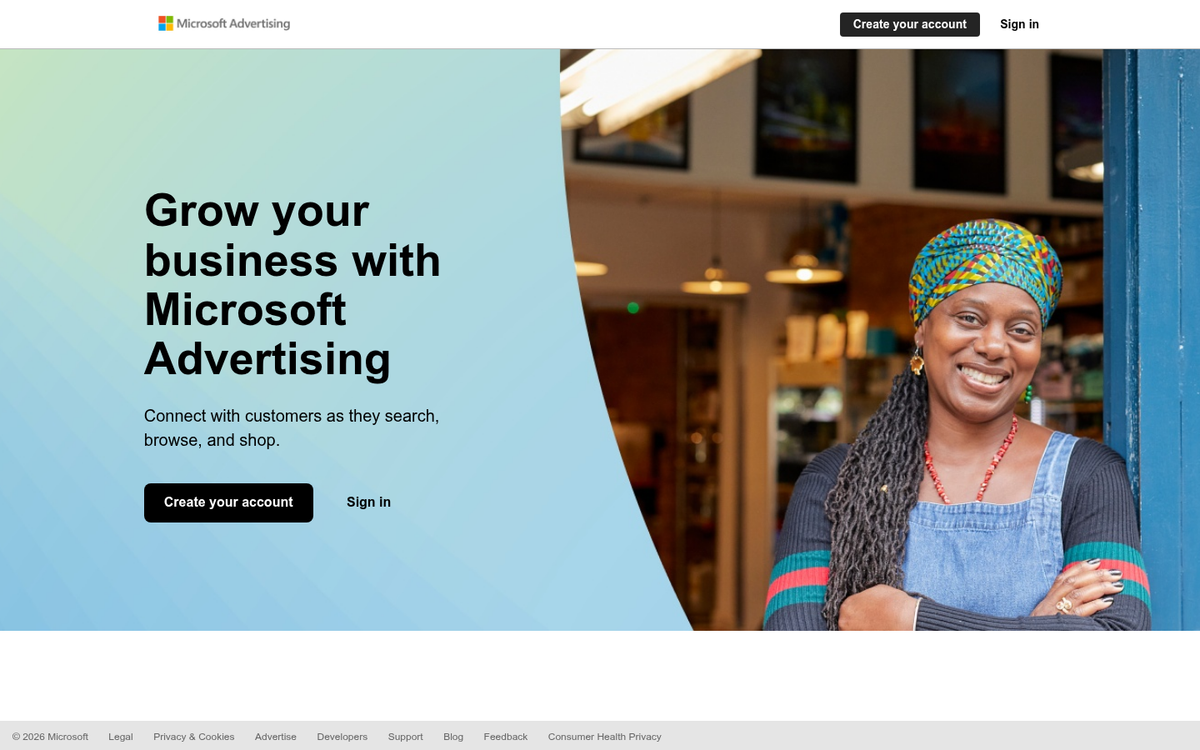
Formerly known as Bing Ads, Microsoft Advertising has matured into a legitimate alternative to Google, particularly following Microsoft's deep integration of AI across its search products. Bing's market share has grown modestly in recent years, partly due to the integration of AI-powered search features, and the audience skews older and more affluent on average - which is a genuine advantage for certain advertisers.
CPCs on Microsoft Advertising are typically lower than equivalent Google Search campaigns, and competition is lighter in most categories. For advertisers who've fully optimized their Google campaigns and are looking for incremental volume, Microsoft Advertising is usually the next logical step. The platform also now supports importing Google Ads campaigns directly, which has lowered the friction of getting started significantly.
What's your go-to ad network in 2026, whether you're on the publisher or advertiser side? The landscape has shifted quite a bit over the past few years - privacy changes, AI-driven automation, and the consolidation of spend around a handful of major platforms have all reshaped the equation. The networks and benchmarks above should give you a solid starting point, but the right answer always depends on your niche, your audience, and what you're actually trying to accomplish.