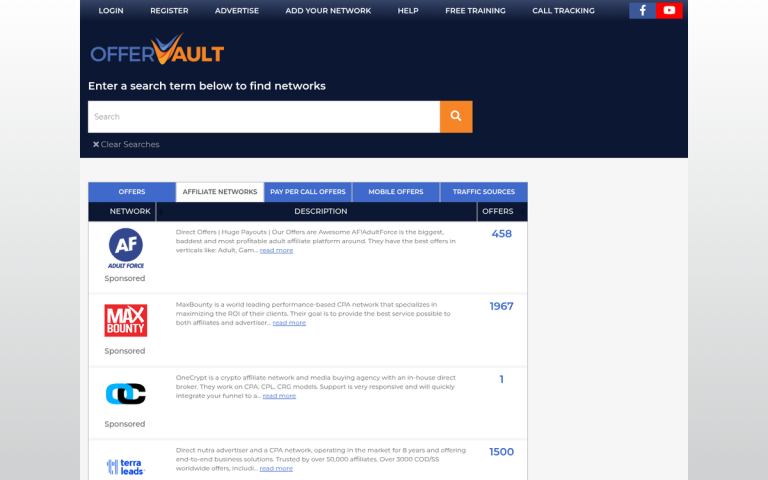
No, this isn't just a huge list. There will be a huge list, and if all you're looking for is a list, feel free to skip to the final sections. You'll know it when you see it. If not, stick around, and we'll discuss ad networks in general, how to identify a good network or a bad one, and why you might want to use any of them.
Key Takeaways
- Google and Facebook dominate PPC, with Google holding 78% of the global market and Facebook used by 86% of PPC marketers.
- Alternatives to major platforms are necessary when advertisers face bans, industry restrictions, rising costs, or need traffic diversification.
- Key network evaluation factors include retargeting capabilities, ad format support, mobile compatibility, targeting precision, and niche audience alignment.
- Niche ad networks offer focused audiences and personalized support, compensating for smaller scale with potentially higher conversion quality.
- Publishers should watch for exclusivity clauses, revenue share splits, fill rates, payment terms, and contract lengths before joining any network.
Why to Use Ad Networks Besides Facebook and Google
The first question you need to ask yourself is why would you ever use a third party ad network? When I say third party, in this context, I mean ad networks that aren't Google and Facebook. Google and Facebook together run the two biggest ad networks in the world, and they're as big as they are for very good reasons: they're excellent.
These ad networks have significant advantages over third party networks. Google holds roughly 78% of the global PPC ad market, and its Display Network alone spans over 35 million websites and apps. Facebook and Instagram together reach billions of users, and according to recent data, 86% of PPC marketers use Facebook while 70% use Instagram. These aren't just big numbers - they represent genuinely massive reach that's hard to replicate elsewhere.
Both platforms have so much ability to track and contextualize traffic that their ads can be extremely well targeted. Meta actually comes out ahead on audience data, just because of how much behavioral and demographic information flows through its platforms.
Both sites, because of their scale, can offer competitive pricing. The average cost per click across Google Ads sits around $2.59, with CPM rates around $3.12. Amazon Sponsored Products, now one of the biggest players in its own right, averages a CPC of just $0.71 with a strong 9.55% ad conversion rate - making it a serious contender alongside the traditional big two.
So why look elsewhere? Size and targeting are advantages, but they come with stiff competition and rising costs. In most niches, you're fighting for attention in a crowded auction, and your cost per acquisition can climb fast.
There are also practical reasons you might not be using Facebook or Google. Certain industries - finance, health, supplements, adult content - face strict platform policies that can get accounts suspended with little warning. Geographic restrictions exist too. And yes, some marketers have been banned from one or both platforms and need alternatives just to keep running campaigns.
Beyond bans and restrictions, diversification is simply smart strategy. Relying entirely on one or two platforms creates a single point of failure for your entire paid traffic operation.
Alternatives to Ad Networks

Before we get into more about ad networks in general, let's discuss what you can use instead of a traditional ad network. The landscape has actually evolved quite a bit here.
One thing you can do is search the Internet for phrases like "advertise with us". When you do, you'll find a lot of sites that sell ad space directly, outside of any network. You'll need to do some hunting to find sites in your niche, but the upside is more control and often a better relationship with the publisher.
Buying ad space directly used to be the norm before ad networks made it infinitely easier for site owners. Instead of managing rotations and tracking manually, a site owner only needs to install some code and let the network handle the rest. It's no surprise that direct buys became less common.
Another option is an ads marketplace. BuySellAds is a solid reference point here - it's a hybrid between a network and a marketplace, giving you more control over placement and targeting than a traditional network while still offering the convenience of a single platform. Learn more about whether BuySellAds is worth it before committing to it as your primary channel.
Newsletter advertising has also grown significantly as an alternative. Platforms like Beehiiv's Ad Network and SparkLoop connect advertisers directly with newsletter publishers, and this channel has seen a surge in popularity as email audiences tend to be highly engaged.
What to Look For in an Ad Network

There's a lot that goes into making an ad network worthwhile to use. I'm going to give you a list of ad networks, but I in no way guarantee or verify their quality. Everyone has different experiences, and traffic that performs well for one advertiser may flop for another.
Speaking of which, ad networks are marketers themselves. The worst ones are shady operators who want to convince you to use them so they can skim money off the top and deliver poor traffic and questionable placements. Unfortunately, bad actors are often the most aggressive about gaming reviews and buying positive press. So investigate before you commit, and always take reviews with a grain of salt.
The niche or topic focus of an ad network is an important signal. Some networks skew heavily toward gaming, tech, or entertainment audiences. If you're promoting something that doesn't align with a network's audience profile, your ads will be ignored no matter how well they're written.
You also want to look for an ad network that offers retargeting capabilities, either built into their system or compatible with your own tracking setup. Retargeting - also called remarketing - lets you follow up with users who clicked through to your site but didn't convert. These people are often genuinely interested; they just got distracted, were on mobile, or weren't ready to buy yet. Bringing them back with a second touchpoint is one of the highest-ROI moves in paid advertising.
Pay close attention to what ad formats the network supports. Banner ads, native ads, push notifications, interstitials, pop-unders, in-page push, video pre-rolls - these all perform very differently depending on your offer and audience. Native advertising in particular has grown considerably, with networks like Outbrain and Taboola dominating that space. Push notification networks like PropellerAds (which serves over 14 billion impressions daily across 195+ countries) and Adsterra (over 35 billion monthly impressions) have also become major players worth knowing about.
Mobile compatibility is no longer optional - it's a baseline requirement. The majority of web traffic is mobile, so any network that doesn't support mobile placements well is already behind. Some networks specialize in mobile, including app install campaigns and hyper-local geotargeted ads, which can be highly effective for the right offer.
Targeting options vary enormously across networks. Some give you little more than a broad interest category. Others let you drill into demographics, device types, operating systems, connection types, browser language, and more. The more precise your targeting, the less wasted spend.
The Publisher's Take

A lot of what I've written so far is from the advertiser's perspective. But there's another side to this coin - the publisher's side. For an ad network to function, it needs quality sites willing to display those ads, and there's plenty you need to consider if you're on that side of the equation.
- Ad placement requirements. Do they dictate where ads must appear on your site, and does that conflict with your layout or user experience?
- Ad sizes and formats matter for the same reasons. Learn more about standard banner ad sizes if you're unsure what to expect.
- Exclusivity clauses are a major red flag to watch for. Some networks prohibit you from running any other network's ads and can seize your unpaid balance if you violate that policy.
- Revenue share split. Some networks do 50/50, others 70/30 in your favor, and some take smaller commissions. Know what you're actually keeping. If you want to maximize what you earn, check out these ways to increase your blog's revenue.
- Payment terms. How often do they pay, what's the minimum payout threshold, and how long does processing take? Networks with high minimums and slow payments can effectively hold small publishers' earnings indefinitely.
- Fill rate. If you're dedicating ad space, you want it filled. A low fill rate in your vertical means you're losing revenue on empty placements. Some publishers use CPM networks with no required minimum as a fallback option.
- Contract length. If you're locking in for a year or more, you need to be confident in the network's quality and stability.
Are Niche Specialty Ad Networks Worthwhile?

One thing you'll notice when you browse the list is that many of the networks are relatively niche. That doesn't mean low traffic or low payouts - it means they serve a specific audience rather than a general one.
The biggest advantage of a niche network is exactly that: focus. A network built around gaming, finance, health, or any other vertical tends to attract publishers and users who are genuinely invested in that space. Your ads land in front of people who are already primed to care about what you're promoting.
The tradeoff is that niche networks are typically smaller and may have less premium inventory. But what they lack in scale they can sometimes make up for in conversion quality and personalized support. Small networks that want to survive compete on service - dedicated account managers, fast payments, and actual human communication.
Why Run Multiple Networks
One reason I'm listing so many networks is so you can consider using more than one simultaneously. As long as there's no exclusivity contract in the way, diversifying across networks means diversifying your traffic sources. If one network's performance dips or an account gets flagged, you're not left with nothing. These networks wouldn't exist if Google and Meta covered everyone - they don't. Most of the networks on this list serve as genuine supplements to your primary paid channels, filling gaps in geography, audience, or format.
A Note Before the List
I make no guarantees as to the quality of the networks listed below. The landscape has changed dramatically since this post was first written - many older networks have shut down, rebranded, or been acquired. I've cleaned up the list significantly to remove networks that are defunct or effectively dead as of 2026, and added newer and more relevant ones. That said, always do your own due diligence before spending money on any network. Traffic quality, support responsiveness, and payout reliability can vary widely and change over time.
Now: the networks.

- Adsterra
- AdThrive (now Raptive)
- Adblade
- AdMedia
- AdPushup
- Amazon Advertising (Sponsored Products, DSP)
- Amazon Associates
- Amobee
- Appnext
- Bidvertiser
- BuySellAds
- Chartboost
- Cheq (formerly TrafficGuard)
- CJ Affiliate (formerly CJ Affiliate by Conversant)
- Clickbank
- Criteo
- CPMStar
- Epom Market
- Ezoic
- Exoclick
- Facebook Ads (Meta Ads)
- Google AdSense
- Google Display Network
- Google DV360 (Display & Video 360)
- HilltopAds
- Index Exchange
- Infolinks
- IronSource (now Unity Ads / ironSource)
- Izea
- Juicy Ads (Adult)
- LinkedIn Ads
- Liveintent
- Magnite (formerly Rubicon Project)
- Media.net
- Microsoft Advertising (Bing Ads)
- MoPub (now part of AppLovin)
- Monumetric
- Nativo
- OpenX
- Outbrain
- Pinterest Ads
- PlayWire
- PropellerAds
- PubMatic
- Raptive (formerly AdThrive)
- Rakuten Advertising
- Reddit Advertising
- RevContent
- RichAds
- ShareASale
- Sharethrough
- Skimlinks
- Snapchat Ads
- Sovrn
- SparkLoop
- Spotify Ads
- Taboola
- Teads
- TikTok Ads
- TrafficJunky
- TrafficForce
- TrafficHolder
- TripleLift
- Undertone
- Unity Ads
- Unruly
- Vibrant Media
- Xandr (Microsoft)
- Yahoo Advertising
- YouTube Ads (Google)
- Zeta Global