





Key Takeaways
- Fewer than 0.1% of canceled domains daily have meaningful backlinks, making quality filtering essential over quantity.
- Relevance is critical - unrelated expired domains provide no link value and can appear as spam to Google.
- Three main strategies exist: 301 redirects (easiest), microsites (more effective), and full site overhauls (highest effort).
- Expect 3-8 months before an acquired expired domain reaches its full traffic and SEO potential.
- Raw traffic numbers are unreliable due to bot inflation; cross-reference link profiles and indexed content instead.
What Happens to a Website When It Dies?
What happens to a website when it dies? Does it go to website heaven? Geocities did, with a Tumblr account dedicated to posting archived screenshots of individual pages so memory of the site will never truly die. Most sites, though, don't get that luxury.
Geocities itself is actually an interesting example. Try to visit the URL today and you're taken to Yahoo's small business website hosting. This is, in a sense, the effect we're looking to create with expired domain buying. The difference is that Yahoo already owned Geocities to begin with, so redirecting the domain to their web hosting portal isn't unusual.
The concept of expired domain marketing isn't new, exactly, but it's not a technique that's widely used or well understood. It's not black hat by nature, but it absolutely can be abused in ways that will tank your site. There are some tips and tricks to doing it properly and safely. As usual, the trick is to keep relevance in mind, and to go in with realistic expectations about what expired domains can and can't do for you in 2026.
I'm getting ahead of myself here. Let's start from the beginning, explain the mechanics of expired domain traffic, and how you can use it safely.
Domain Registration and Expiration
To run a website, you need a domain name. A domain name is a plain-English set of characters that you can use in place of trying to remember a tricky IP address. If you've ever looked into the complexity of modern IPv6 addresses, you'll be thankful.
When you register a domain name, you're essentially buying ownership of it for a set period of time, usually a year. Domain registrars are essentially middlemen between you and ICANN, the Internet Corporation for Assigned Names and Numbers. ICANN is the entity that coordinates IP address allocation and maintains the name servers that keep records of what domains are assigned to what IP addresses.
As long as you run a site and own a domain, the domain points to the IP address of your site server. You could, technically, not have a domain name and require users to type in your IP address. No one does this because it's a bad idea. Still, if your domain expires but your hosting still exists, your site can still be accessed, just not via the domain name.
Domains expire when the contract to own them ends. Typically, one of three things will happen.
- You re-register it so you continue to own it. You can do this in advance so there's no lapse.
- The domain registrar parks the domain with ads while waiting to sell it to someone else.
- Someone else buys the domain and does what they want with it.
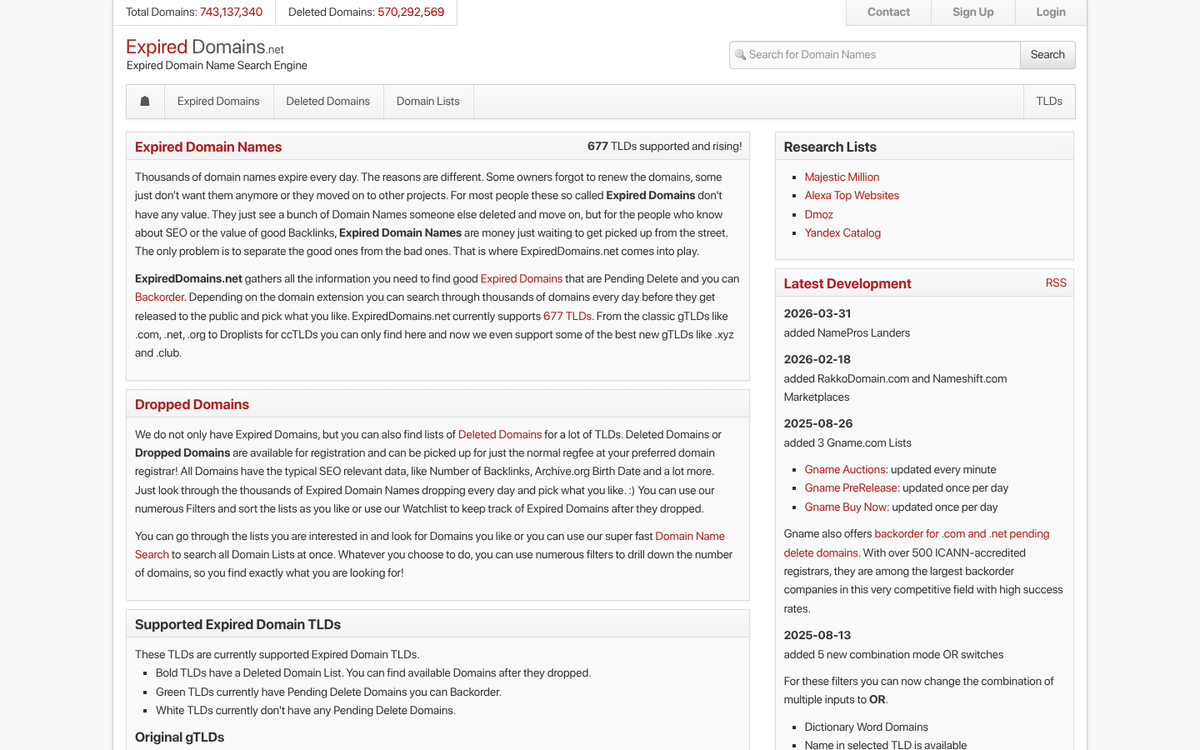
Two and three can happen in sequence, and they're where your opportunity lies. To put the scale of this into perspective: DomCop currently lists nearly 10 million expiring domains, over 12 million expired domains, and more than 19 million available dropped domains at any given time. The market is enormous. The opportunity, however, is much narrower than those numbers suggest, and finding the ones worth pursuing takes careful research.
Buying Expired Domains for Traffic
The concept behind expired domain buying is pretty simple. Find existing expired domains for sale, identify whether they suit your needs and have existing links and traffic, buy them, and leverage them to send that traffic and those links to your site. Strive to convert the traffic into readers and customers, filter the links for as much value as possible, and repeat.
Tools like SpamZilla, DomCop, and Dropl.io have made this process far more systematic than it used to be. SpamZilla alone processes over 350,000 domains every day, filtering them for spam signals and link quality. These tools have largely replaced the manual legwork that made expired domain buying so time-consuming a decade ago.
When you find a domain you're interested in, here are the steps to take:
- Use Whois information to identify the actual expiration date. Sometimes a dead site can still have 5+ years of registration left.
- If expiration is soon and renewal is unlikely, identify the domain registrar.
- Identify the auction partner of the registrar. Some companies handle it manually, while others work with platforms like NameJet, SnapNames, or GoDaddy Auctions to sell expired domains.
- Determine the demand for the domain name. Some will be in competitive auctions and can go for $15,000, $20,000 or more. Others will have no demand and you can simply buy them for the standard registration fee.
- If the domain goes to auction, determine a maximum price you're willing to pay and bid up to that point. Don't get drawn into emotional bidding wars. Stick to your ceiling.
One important reality check before you get too excited: according to current data, fewer than 0.1% of domains canceled each day have any meaningful backlinks of value. The vast majority of expired domains are digital ghost towns with no link equity worth pursuing. Quantity is not the opportunity here. Quality filtering is everything.
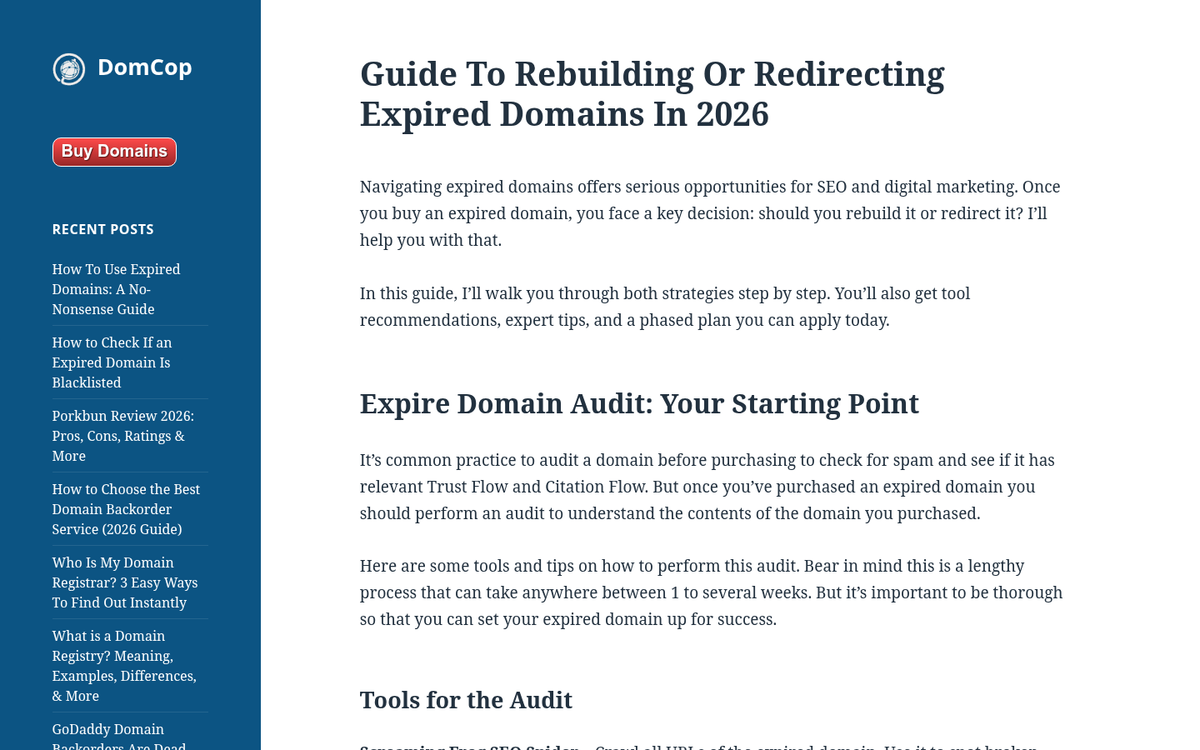
Ideally, at the end of the process, you will have spent a reasonable amount of money on a domain with a solid link profile and some residual traffic, which you can then leverage for your own use. If you've acquired a domain with an existing site, you may also want to review the steps to restoring an old website on an expired domain to get the most out of your purchase.
Exploring the Options: 301 Redirects

This is by far the easiest and least intensive option for leveraging an expired domain. It's fast to set up and it just works. On the other hand, it isn't always the most effective long-term play.
What you do is implement a 301 redirect from the old domain to your target domain. Any traffic coming into the old domain will land on your site instead. The 301 redirect is intended to pass both link equity and traffic, though how much link value actually transfers has always been a subject of debate among SEOs, and that debate continues in 2026.
The pros of 301 redirects are real but limited. It's very easy to set up, gets running quickly, and routes 100% of incoming traffic to your site with no additional overhead.
On the con side, Google has become increasingly sophisticated at detecting and discounting manipulative redirect patterns. You also inherit any residual penalties or spam signals from the old domain, and branded anchor text mismatches can dilute rather than strengthen your profile. Some SEOs prefer alternative link building methods for more predictable results.
This is the best option if you're investing minimal time and money. Otherwise, there are better approaches.
Exploring the Options: Microsite Filtering

This option involves creating a lean website that lives on the expired domain. It's not a full-blown site with a blog and ongoing content production. It's more of a specialized landing page that exists independently and links strategically to your main site.
This method has some notable benefits over the 301 redirect strategy. As an actual live site, links from it to your main site carry more weight than a raw redirect. It can also rank in search as its own entity, potentially giving you two positions on the same results page. A domain with even 50 to 100 visits per month signals to Google that it is a real, active website rather than a parked shell, which helps preserve whatever link equity the domain carries.
Additionally, your microsite can be used for more experimental marketing that your main brand might not want to touch. Having a solid marketing plan for it can make a real difference in how well it performs.
On the cons side, building and maintaining a microsite is a real investment. You also need to be careful not to make it overtly promotional of your main site, or Google may flag it as part of a link scheme. The traffic and link value has to flow through an intermediary, which introduces inefficiency. Understanding how to optimize the landing page experience can help you get the most out of any visitors who do arrive.
Exploring the Options: Site Overhauls
This third method is the most time-consuming of all, and it really shifts the frame from "leveraging an expired domain" to "acquiring and relaunching a dormant brand." You're essentially bringing the old site back to life as a legitimate business you can monetize, and using it to diversify your portfolio while sending some link and traffic value toward your primary site.
The appeal is that you're not starting from zero. There's established branding, a prior audience, existing inbound links, and some search presence to build from. But it comes with the full responsibility of running a second website, including ongoing content, maintenance, and promotion. You also need to be careful not to copy the previous site's content too closely, and your relationship to your main site should be organic rather than engineered.
This strategy makes the most sense for high-value domains where the original site had a real audience and genuine authority in your niche.
Exploring the Options: Domain Parking

This option is low-effort but also yields little long-term value. When you park a domain, you're essentially putting up a placeholder page with ads and letting the residual traffic monetize itself passively.
The downside is that parked domains lose value quickly. Links get removed, users stop visiting, and your investment depreciates steadily. You're not building anything sustainable, and you're passing no value to your main site. The only benefit is a modest ad revenue stream before the domain goes cold.
If the numbers work out and you bought the domain cheaply enough, parking can be a profitable short-term play. Just don't mistake it for a growth strategy.
Keeping Your Site Safe Through Relevance
No matter what method you choose, relevance is the single most important filter to apply when evaluating expired domains. A link from a high-value site in your niche is a strong positive signal. A link from a high-value site in a completely unrelated niche is largely worthless, and in volume, it looks like spam.
If you're buying up a poker site URL to redirect to your cat grooming business, those links are going to do nothing for you at best. At worst, they'll look like a link scheme to Google and actively hurt your rankings. Topical alignment isn't optional here. It's the foundation of the entire strategy.
Domain Qualities to Seek and Avoid
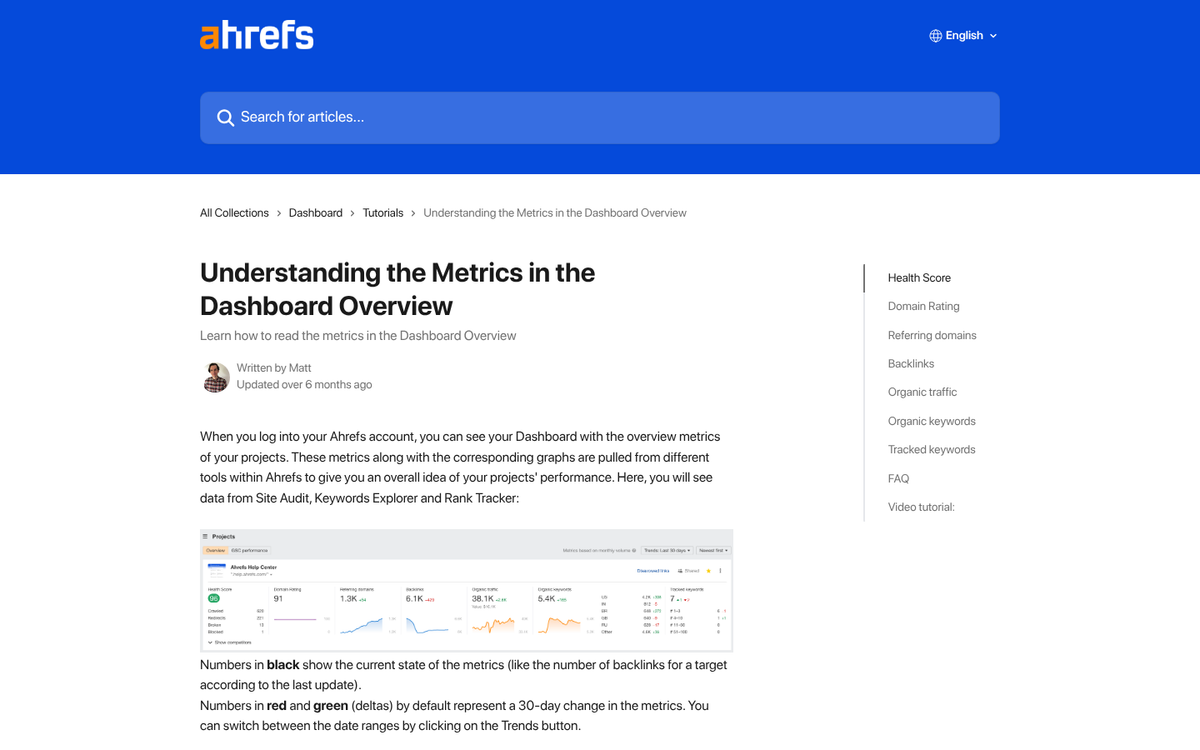
In addition to relevance, there are specific qualities to seek out or steer clear of. Here's a current breakdown:
- Seek out older domains. The older a domain is, the more SEO value it has had time to accumulate. Something at least 3 years old is ideal.
- Seek out domains with strong Ahrefs or Moz metrics. Domain Rating (Ahrefs) and Domain Authority (Moz) are the most widely used benchmarks in 2026. Use them as rough filters, not gospel.
- Seek out domains with strong metrics from Majestic and Semrush. Trust Flow, Citation Flow, and organic traffic history all paint a more complete picture.
- Seek out domains with high-quality backlinks and minimal spam links. If the site's "authority" came from black hat link building, you don't want it anywhere near your legitimate site.
- Seek out domains with natural, varied anchor text profiles. Domains where 80% of links use the same exact-match money keyword as anchor text are a clear spam signal and are likely to carry a Google penalty. Avoid them entirely.
- Avoid domains with existing Google penalties. Manual actions and algorithmic penalties can follow a domain through ownership changes.
- Avoid exact match keyword domains. These have been significantly devalued by Google and rarely offer the shortcut they appear to. Learn more about outdated SEO techniques that no longer deliver results.
- Avoid excessively long domain names. Shorter, brandable domains tend to hold and accumulate value better over time.
- Don't over-index on .com exclusivity, but do verify the TLD makes sense for the niche and the audience. A highly authoritative .org or .net in a directly relevant space can outperform a mediocre .com.
Check Link Profiles for Expiring Domains
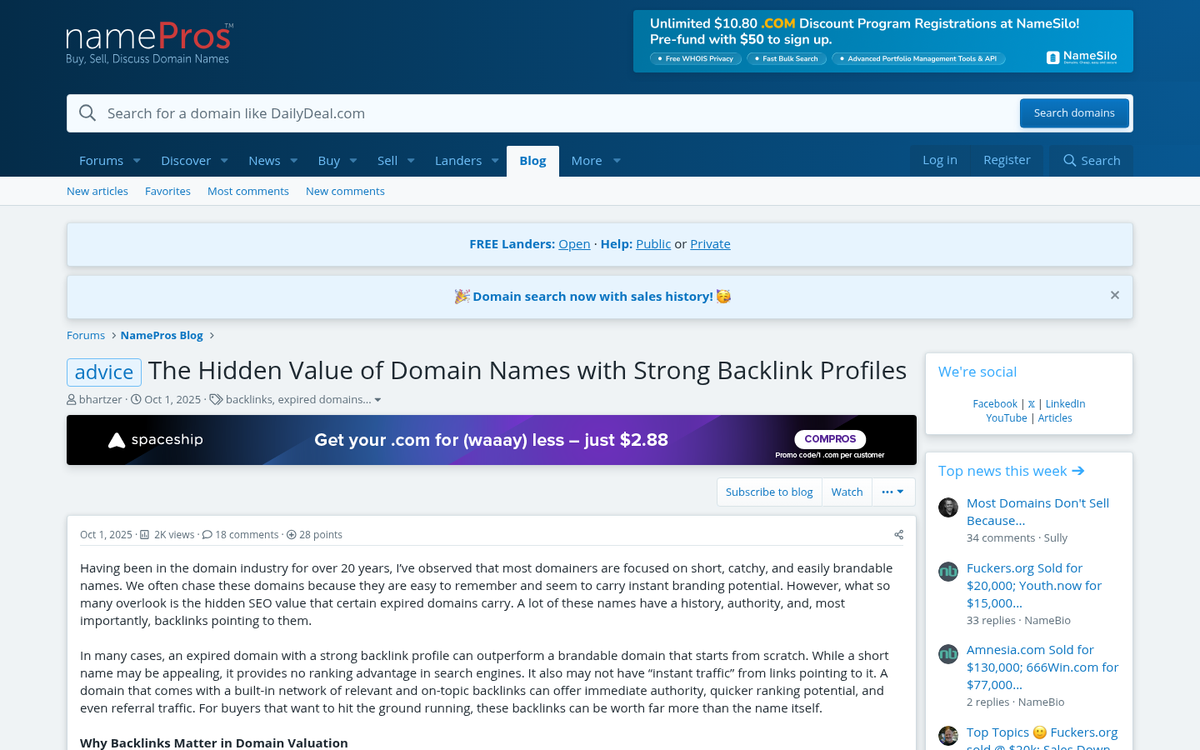
It's worth reiterating: checking the link profile of any domain you're considering is non-negotiable. Expired domains are removed from search results quickly, so the majority of the value you're purchasing comes from residual inbound links that haven't yet been removed. If those links are spam, passing them to your site will hurt you.
Watch specifically for anchor text manipulation. A domain where 80% of its backlinks use the same keyword-heavy anchor text is a red flag, not a feature. That's a signature of a link pyramid or PBN scheme, and it may be exactly why the site died in the first place.
What you're looking for is a link profile that shows genuine editorial links from relevant, trustworthy sources. A mix of branded, navigational, and naturally varied anchor text. Something that suggests the previous owner actually built something people cared about, even if they didn't care enough to keep it going.
The better the link profile and the higher the quality traffic, the more you should invest in one of the more robust methods for leveraging the domain. A high-value domain demands high-value effort to extract its full potential.
Set Realistic Timeline Expectations
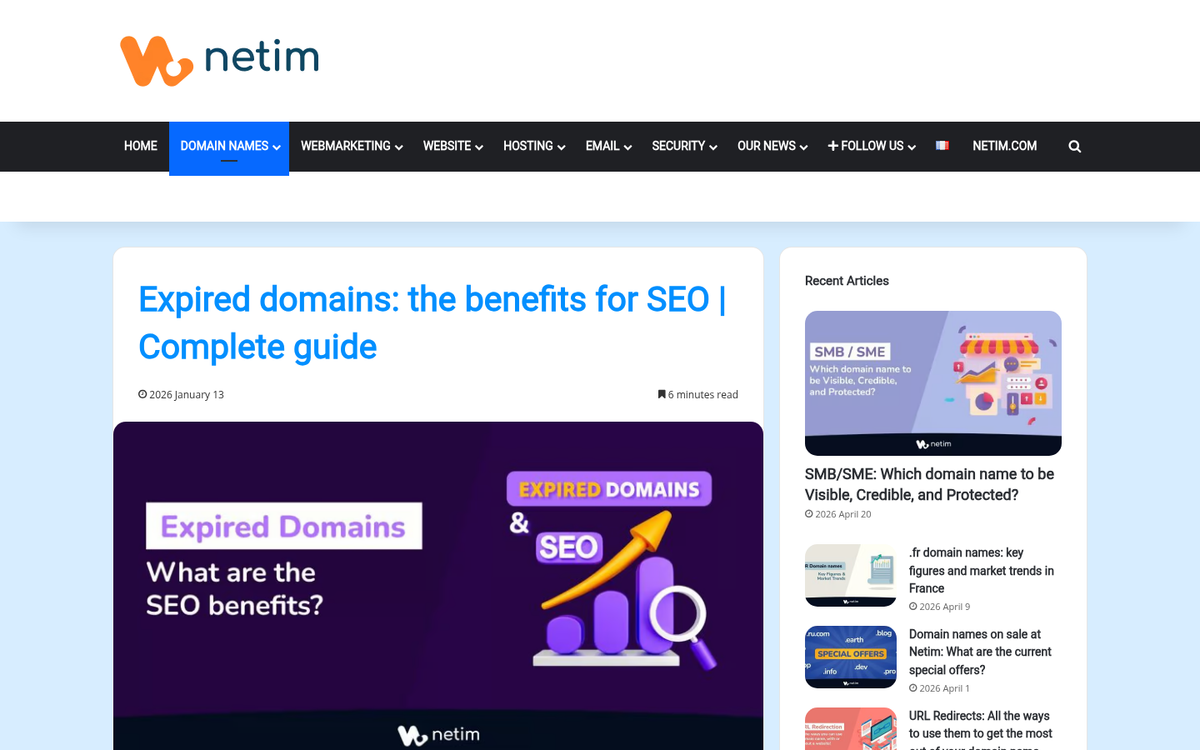
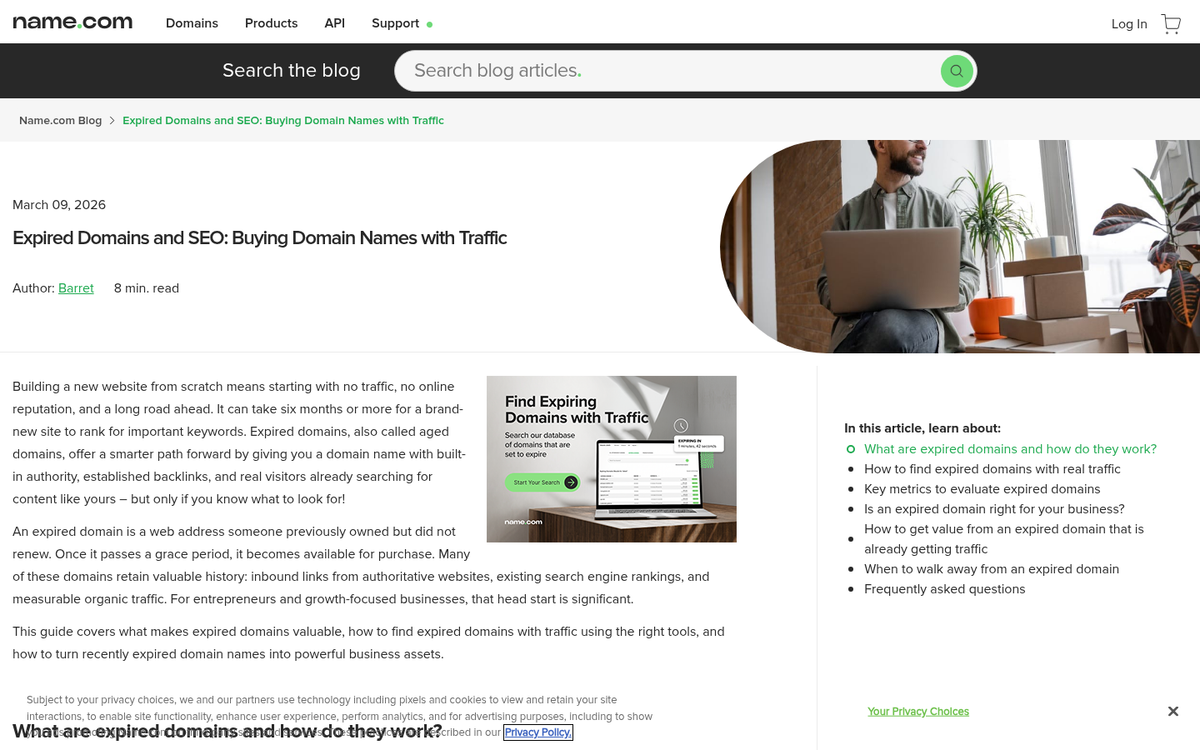
One thing the older guides on this topic consistently underestimated is how long it takes for an expired domain to realize its full value. According to current data from Dropl.io, it typically takes between 3 and 8 months for an expired domain to reach its full potential after acquisition.
That said, results can come faster than you'd expect when things are set up correctly. There are documented cases of sites built on expired domains winning featured snippets within 46 days of launch. That's the optimistic end of the spectrum, but it illustrates that a genuinely authoritative domain with clean links and relevant content can move quickly in search.
The takeaway is to plan for a 3 to 8 month runway before you see meaningful returns, and treat anything faster than that as a bonus rather than an expectation.
Be Wary of Bot Traffic Inflation

One thing you shouldn't put too much stock in when evaluating expired domains is raw traffic numbers. Domain auctioneers will post the highest figures they can record, even if those numbers aren't representative of real human visitors. This is compounded by the fact that there are many web bots that scrape Whois data and monitor expiring domains, inflating session counts in the process. This makes a domain look more valuable than it actually is.
Use traffic as a directional signal rather than a hard metric. Cross-reference it against the link profile, the topical history of the site, and what's actually indexed in Google's cache before drawing conclusions.
Don't Forget to Measure ROI

Finally, take costs and expected returns seriously before you commit. Factor in the purchase price of the domain, the time investment required to set up and maintain whatever strategy you're using, and any additional tools or content costs. Then build out three scenarios: pessimistic, realistic, and optimistic.
As a general rule, avoid investing heavily in any domain where you can't at least break even within the first six to twelve months. The longer the runway to profitability, the more you're essentially paying a premium to start from scratch. And given that fewer than 0.1% of expiring domains have meaningful link value in the first place, discipline in your selection process is what separates a profitable expired domain strategy from an expensive lesson.
2 responses
Thoughtful replies only - we moderate for spam, AI slop, and off-topic rants.
Please tell, should i go for a expired domain which already having social media accounts but not updated since a year. Like There is difference XXX.com and XXXs.com but both domain expired 2 month ago, I am going for xxxs.com but all media account with xxx.com, xxxs.com available on social media. should i go for xxxs.com, what will be pros and cons for it?
Hey Alex! Great question. Going for XXXs.com could work, but the mismatch with social accounts (tied to XXX.com) might confuse your audience. Pros: you get the domain you want with available social handles. Cons: building brand consistency will take extra effort, and users may question legitimacy. If XXX.com isn't available, XXXs.com is still workable - just create fresh, consistent social accounts under XXXs.com and build from there. Ultimately, brand clarity matters most. Good luck with your decision!