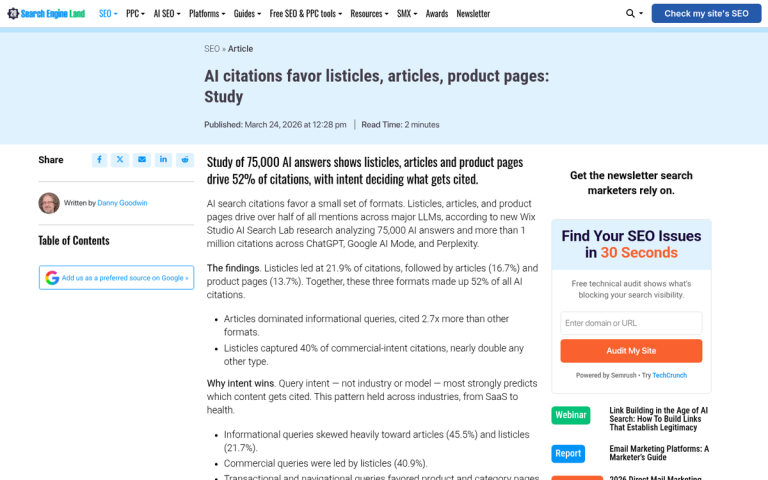
The answer isn't word count, and it isn't keyword frequency - it's something more precise, and once you understand it, the difference between ignored content and cited content starts to make quite a bit more sense.
That concept is semantic density - a measure of how much actual, interconnected information a piece of content packs into its language. AI models don't scan for effort or intent; they extract and review relationships between ideas, and content that clearly expresses those relationships tends to get pulled into replies far more.
I'll break down what semantic density actually means, how it shapes the way AI systems find citable sources, and what the current research suggests about writing content that earns that recognition.
Key Takeaways
- Semantic density measures how much interconnected information text contains, not keyword frequency or word count.
- AI-cited content averages 20.6% entity density, far above the typical 5-8% found in common web content.
- The citation sweet spot is a semantic density score of 0.65-0.85, producing 4.7 median citations per 100 queries.
- Named entities, attributed statistics, and sourced claims raise semantic density more effectively than general descriptive prose.
- One team added 18 entities per page to 12 high-traffic pages, achieving a 2.3x citation rate increase within 8 weeks.
What Semantic Density Actually Means in Plain Language
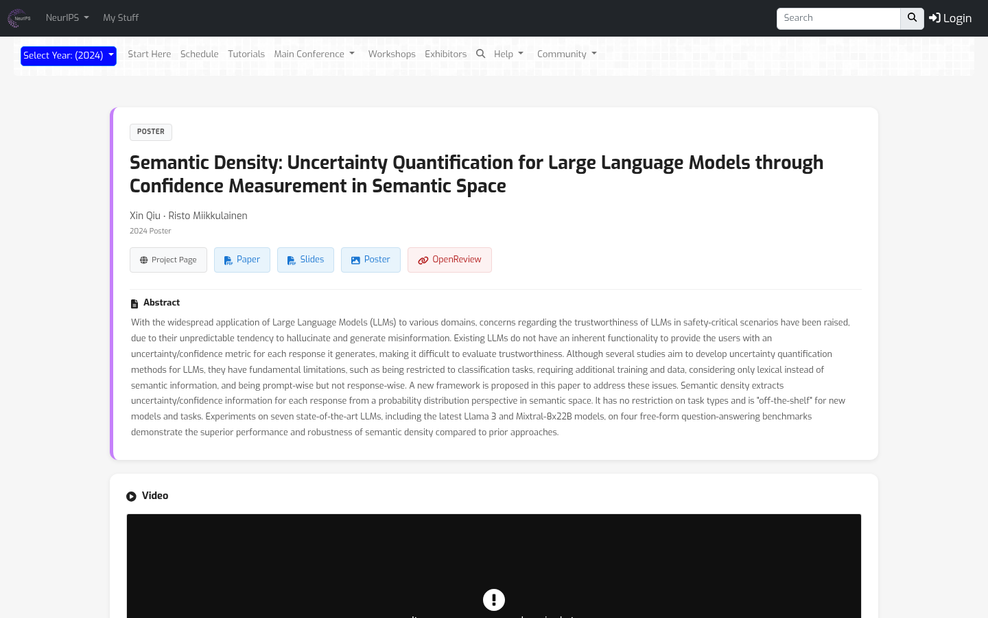
Semantic density measures how much actual information is packed into a piece of text. Think named entities, concrete facts, defined concepts and the relationships between them - all within a given word count.
It's not the same as keyword density, which is about repetition. You could mention "content marketing" fifteen times in a post and have very low semantic density. The text is full of the word but short on substance.
AI models process meaning - not just words. When a model reads your content, it's basically mapping out the ideas, entities and connections present in the text. A sentence like "Google's 2023 Search Quality Rater Guidelines emphasize E-E-A-T" carries far more semantic weight than "it's important to write good content that people trust." Both sentences have a similar length. But one gives a large language model something concrete to work with.
Research into AI citation behavior shows a known difference between cited and uncited content. Content that gets cited by AI models tends to have an entity density around 20.6%. But common web content sits between 5% and 8%. That is a significant difference and it seems like something steady in how models review what is worth referencing.
To make this more grounded, picture two blog posts on the same topic. One covers ideas loosely with general observations and vague advice. The other names studies, references tools, identifies patterns with dates and data and connects those facts to a point. Both posts could be the same word count. But only one is doing the heavy lifting at the concept level.
Semantic density is a way to measure that difference - it captures how much a piece of text actually says relative to how long it is - and for AI models, that ratio matters more than most writers expect. This connects closely to how semantic search evaluates meaning over simple keyword matching.
How AI Models Decide What Content Is Worth Citing
AI language models don't pull from content at random. They appear to favor material that gives them something concrete to work with - named sources, figures and claims that are grounded in a verifiable context instead of general opinion.
A 2024 study by Aggarwal et al., presented at KDD, found that content containing citations, attributions and statistics saw AI visibility increase by as high as 41.5%; it's a big lift just from being more precise about where your information comes from and what it says.
This matters because content that ranks well in traditional search doesn't translate well into AI citations. Search engines reward relevance, freshness and keyword alignment. AI models reward something closer to credibility - content that makes a claim and backs it up with enough context to be helpful.

Vague content gets passed over even when it's well-written. A paragraph that says something like "many experts believe this strategy leads to better outcomes" gives an AI nothing to anchor to. There's no named expert, no outcome to point to and no way to use that information without adding context that isn't there.
A sentence that names a researcher, references a published finding and ties it to a measurable result does work, and AI models seem to find these the difference.
The difference between "SEO-optimized" and "AI-citable" is worth thinking about. A page stuffed with target keywords and thin explanations can climb the rankings without ever being helpful enough to cite. A page with fewer keywords but more factual specificity - named entities, attributed claims, structured context - is far more likely to get pulled into a generated response. How Perplexity's retrieval model decides what to cite is a useful example of how these systems evaluate source quality.
AI models don't penalize keyword-focused writing. But they don't reward it the way search does. What gets cited is what's actually informative - and whether AI-generated content ranks without human editing comes down to much the same question of whether the material gives readers and models something real to work with.
The Density Sweet Spot - Why Too Much Can Hurt You
Packing more into your content doesn't automatically make it more citable. There's a range that works, and going past it pulls your citation rate down.
Research into semantic density scores and AI citation behavior shows a statistically significant correlation (p < 0.001) between scores in the 0.65-0.85 range and higher citation rates. Pages in that range hit a median of 4.7 citations per 100 queries. Pages below 0.65 scored just 1.4, which makes sense - thin content doesn't give AI models much to work with. But pages above 0.85 only managed 2.1 citations, which is worth sitting with for a bit.
The leading explanation for why denser content performs worse than moderately dense content is that over-stuffed pages start to read as noisy. When too many entities, claims, and facts compete for attention in a short space, AI models have a harder time pulling out a clean, honest answer. The content stops feeling authoritative and starts feeling cluttered.
| Semantic Density Score | Median Citations per 100 Queries | What It Signals |
|---|---|---|
| Below 0.65 | 1.4 | Too sparse - lacks entity and fact depth |
| 0.65-0.85 (sweet spot) | 4.7 | Balanced density - clear, factual, citable |
| Above 0.85 | 2.1 | Over-stuffed - may read as noisy or low-quality |
The instinct to load content with as many facts and terms as possible is understandable - more information feels more helpful. But AI models don't reward volume; they reward legibility and accuracy. Fact-checking your AI blog content before publishing is one way to keep density in check without sacrificing depth.
Content that sits in the middle range gives models something they can extract and reproduce with confidence; it's what drives citations, not density. Understanding how entity salience affects AEO can help you find that balance more deliberately.
What Types of Content Elements Raise Semantic Density Effectively
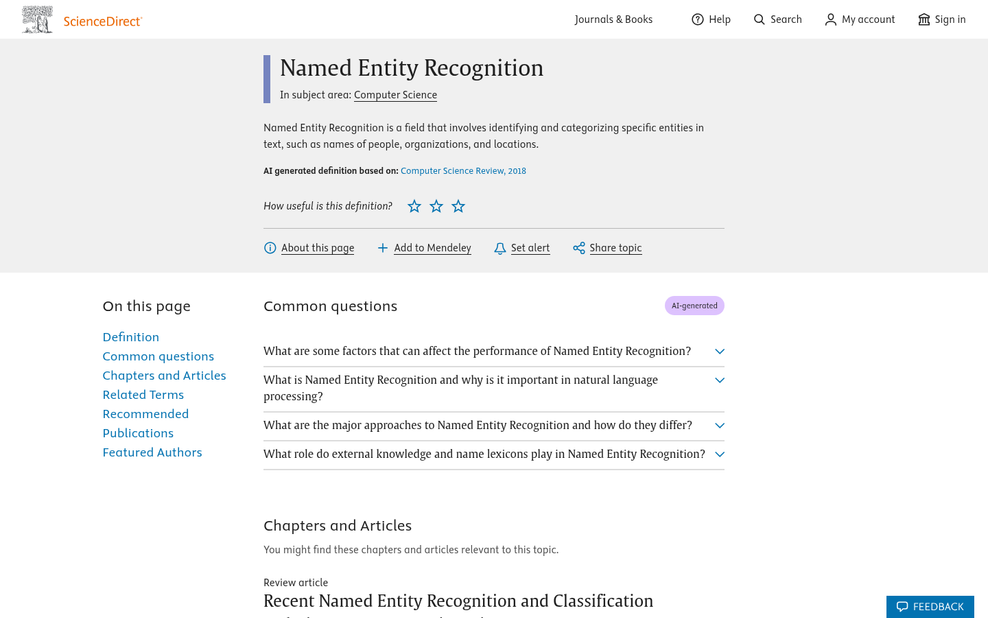
The elements that actually move the needle are more than expected. Named entities, sourced statistics, precise factual claims, and attributed quotations all carry more semantic weight than general descriptive prose. Adding these is fundamentally different from adding more words to a page.
A sentence like "many researchers have studied this topic" can add almost nothing. A sentence that names the researcher, the year, and the finding gives an AI model something concrete to reference and verify. That specificity is what raises density in a way that matters for citation.
Oleno's research suggests a helpful working target of 2-3 verifiable facts per 100 words; it's not a rigid rule. But it gives you a helpful way to audit your own content. Read through a page and ask yourself how many of its claims a reader could actually look up and confirm.
Attributions are worth calling out separately because they do double work. They signal that a claim is grounded in a source, and they introduce named entities at the same time. A sentence that credits a finding to a named institution or publication does more semantic work than an uncredited claim saying the same thing. Understanding what makes a citation-ready content block can help you structure these attributions more effectively.
Statistics with context are stronger than bare numbers. "Response rates increased" is weak. "Response rates increased by 34% over 18 months in a 2022 controlled trial" is the claim an AI model can confidently cite.
For a helpful audit, go through your existing pages and flag sentences that are vague or unsourced. Then look at which pages are already close to a helpful density level - those are your fastest wins. A page that has structure and some factual grounding needs only a few targeted additions instead of a full rewrite. Running a proper AEO content audit can make this process much more systematic.
Precision is the ingredient that separates content worth citing from content that fades into the background.
A Targeted Page Strategy That Produced a 2.3x Citation Lift
Here is what a focused effort looks like in practice. One content team identified 12 high-traffic pages and committed to raising the semantic density on those pages specifically, instead of spreading work across their whole site.
They added an average of 18 entities per page - things like named frameworks, measurable outcomes, and attributed data points. That moved their average density score from 0.57 to 0.74 across those 12 pages. Within 8 weeks, AI citation rates for that content increased by 2.3x.
The choice to focus on existing high-traffic pages was deliberate and it matters. Pages that already have some authority and engagement give you a foundation to build on. New content needs time to index, earn links, and accumulate signals - time you don't need to spend on pages that are already worth improving.
It's worth looking at your own content inventory before doing anything else. You probably have pages that already rank reasonably well or pull in steady traffic, and those are the right candidates to work with first.

The pitfall that slows teams down is trying to do this across too many pages at once. When you spread the effort too thin, no single page reaches the density threshold that actually moves the needle. Concentration is what made the 12-page strategy work - the team got each page to a meaningfully higher score before moving to the next batch.
A small, focused set of improved pages will outperform a large set of lightly touched ones. The data from this targeted work backs it up.
If you have 50 pages that could use this treatment, pick your top 10 and do the work. The results from that first batch will tell you how to scale from there.
Density Is a Signal, Not a Slot Machine - Here's How to Think About It
The most helpful change this calls for is pretty easy: audit what you already have. Identify the pages on your site that already carry the most factual weight, then ask if that weight is expressed - if every statistic is attributed, every named source is spelled out, every claim is as verified as possible. Those pages are your highest-use opportunities, and improving them costs far less than building something new from scratch.

From there, carry the same mindset into new content. Treat every fact as a citation opportunity and every named expert, study, or institution as an entity worth making explicit. There is a ceiling to how dense content should get - tone and readability still matter - but most content sits well below that ceiling and has room to become sharper, more specific, and more citable. That is not a stressful standard to meet - it's a more disciplined version of writing.