Here's the uncomfortable truth: the majority of content never even makes it into Perplexity's consideration set. It's not about keyword stuffing or domain authority in the traditional sense. There's a filtering layer happening before the model ever decides what to cite, and if your content doesn't meet that bar, it's invisible - no matter how good it is.
The good news is that the citation patterns in any niche are reverse-engineerable. By systematically studying what Perplexity is already citing - which sources, what formats, what types of claims - you can break down the logic behind its choices and use that to reposition your own content. It's less about gaming an algorithm and more about understanding what the model has been trained to trust.
I'll walk you through a helpful, repeatable strategy for that. I'll talk about how to map the citation landscape in your niche, find the patterns that keep showing up, and use those insights to make your content a stronger candidate for inclusion. No guessing, no theory - just a process you can run yourself starting today.
Key Takeaways
- Perplexity selects citations based on directness, recency, and topical trust-not traditional SEO signals like domain authority or backlinks.
- Run 15-30 niche queries, log cited URLs and page types, and identify repeated sources to map citation patterns.
- Winning cited pages define their core topic within the first 60 words and use descriptive, question-mirroring headings.
- Content older than 18 months risks being filtered out; updating key pages every 2-4 weeks maintains citation eligibility.
- Prioritize rewriting existing high-ranking pages before creating new ones-lead with direct answers and add named analyst citations.
Why Perplexity Citations Work Differently Than Google Rankings
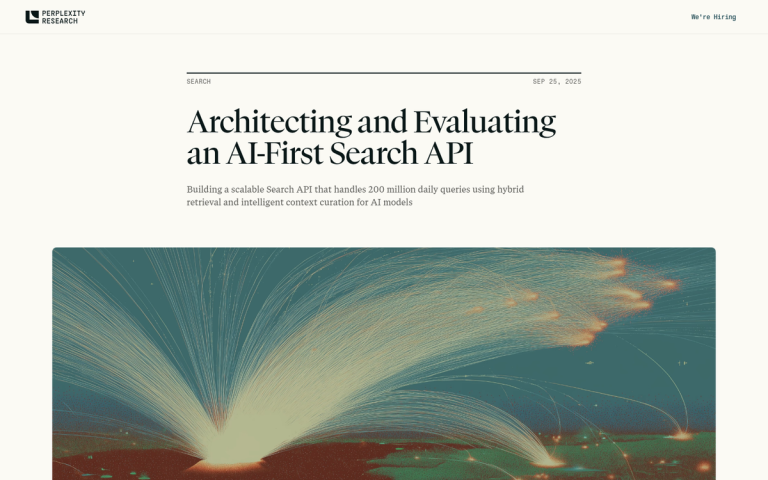
Perplexity indexes roughly 5 billion URLs. Google indexes hundreds of billions. That gap matters more than it looks, because a smaller index means fewer sources are competing for each answer - and the sources that do get pulled are doing a very important job.
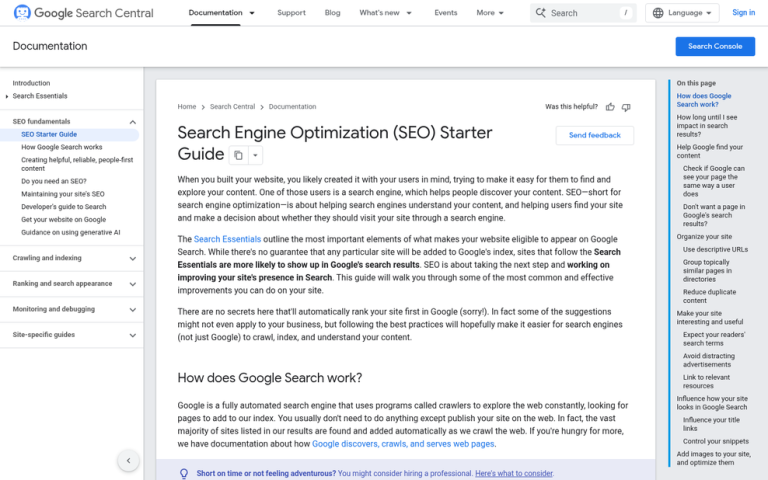
Google ranks pages to browse. Perplexity pulls sources to build an answer, and that changes everything about how it decides what to cite - it's not looking for the most authoritative domain in a general sense - it's looking for the source that most directly answers the question being asked.
That's why three things drive citation logic in a way that standard SEO doesn't prepare you for. Recency matters because Perplexity prefers content that reflects the latest state of a topic. Directness matters because the algorithm is synthesizing an answer, so it pulls from sources that state things plainly and match the query structure closely. Authority still factors in, but topical trust matters more than domain age or backlink count.
A page that ranks on page one of Google can be absent from Perplexity's answers, and a newer page from a mid-size publisher can get cited repeatedly - this happens because Perplexity isn't rewarding the same signals Google does.
Google asks "who has the most credibility overall?" while Perplexity asks "who answers this question best?" Those are related questions, but they don't always point to the same cited source.
This also means the competition in Perplexity is tighter in a concentrated way. You're not trying to outrank thousands of pages across a large topic. You're trying to be the source that gets selected for a narrow answer; it's a more winnable game for publishers, but only if you understand what's actually being cited in your niche and why.
How to Pull and Map What's Currently Being Cited in Your Niche
The starting point is easy: run a batch of queries in your niche and record what Perplexity cites. Aim for 15 to 30 queries to get a pattern instead of an isolated result. A similar audit across SaaS, Marketing and Tech - running 30 queries and logging which URLs showed up - found that citation patterns were steady enough to draw conclusions from.
For each query, log the cited URLs, the type of page it is (blog post, landing page, documentation, research report) and the domain it came from. You don't need to be precise about domain authority scores. But you do want a rough sense of whether Perplexity is pulling from large domains or smaller independent sites. That alone tells you something helpful about how open or closed the citation pool is in your space.
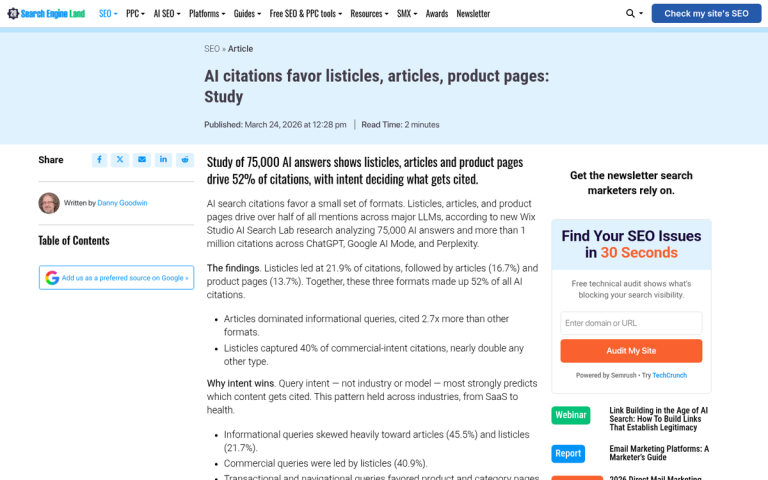
Query intent matters quite a bit here. A definitional query like "what is product-led growth" tends to pull different sources than a comparative one like "product-led growth vs sales-led growth." Informational queries favor structured, explanatory content while comparative queries lean toward pages that list trade-offs in a direct way. Run a combination so you're not accidentally mapping only one type of citation behavior.
| Query Type | Example | Common Citation Format |
|---|---|---|
| Definitional | "What is churn rate?" | Glossary pages, explainer articles |
| Comparative | "HubSpot vs Salesforce" | Comparison posts, review pages |
| Informational | "How to reduce SaaS churn" | Long-form guides, listicles |
Once you have your logged data, look across the full set for any URLs or domains that appear more than once. Repeated citations are a signal worth noting. Those pages are doing something that earns placement across different queries. Running an AEO content audit on your own library can help you identify which of your existing pages are structured to compete for that kind of placement.
The Structural Patterns That Winning Citations Share
Once you have your citation map, start looking at the pages themselves - not just what they say but how they're built. The structure tells you more than the content does.
The most steady pattern across cited pages is a direct definition in the opening paragraph. Around 90% of pages that Perplexity pulls from define the core topic within the first 60 words. That's not an accident. Perplexity's extraction logic needs a clean, confident answer to work from, and a direct answer gives it that. If your introduction spends three sentences warming up before it says anything concrete, you're already at a disadvantage.
Content length also factors in. But not in the way you'd expect. The cited pages aren't always the longest ones. They tend to land in a sweet spot - long enough to cover a topic with depth but structured well enough that sections can be extracted independently. Think between 1,200 and 2,500 words for most niches.
Heading structure matters quite a bit here. Pages that use descriptive H2s and H3s - phrases that mirror how someone would ask a question - give Perplexity landmarks to navigate. Vague headings like "More Information" or "Key Details" don't help the model find what it needs. A heading structure analyzer can help you spot where yours fall flat.
Trust signals show up too. Pages that reference analyst sources like Gartner, Forrester, or G2 Grid data tend to appear in citations more than pages that depend only on their own claims. What Perplexity needs to feel confident pulling from a page is structure it can parse and source credibility it can verify.
| Structural Element | What Cited Pages Do |
|---|---|
| Opening paragraph | Direct definition within the first 60 words |
| Content length | 1,200 to 2,500 words with clear sections |
| Headings | Descriptive phrases that mirror real questions |
| Trust signals | References to third-party analyst data |
The Freshness Filter - What the 18-Month Rule Means for Your Content Calendar
Perplexity tends to pull from content published or updated within roughly the last 18 months; it's a hard reality for anyone sitting on a library of well-written evergreen pages that haven't been touched in years - those pages might not be in the running, regardless of how well-written they are.
This doesn't mean old content is worthless - it means the publication date (or last-modified date) acts as a filter before anything else gets evaluated. A page can have perfect structure and strong citations. But if it reads as stale to the crawler, it won't make the cut.
The helpful question then can become: which pages on your site are worth prioritizing for updates? Your highest-traffic pages, the ones that already rank well, and the ones that directly answer the types of questions your audience types into AI tools deserve attention first.
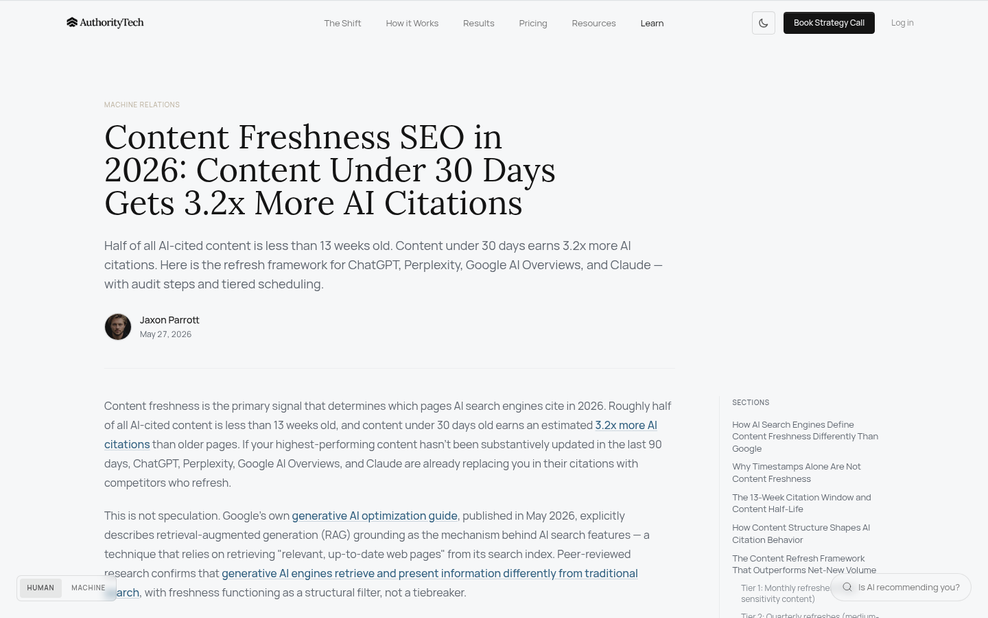
Updating every 2-4 weeks on your most important pages keeps those pages inside the freshness window and signals that the content is actively maintained. Even small additions, like a new data point or a revised section, can reset that clock. Understanding how much content decay costs you each month makes the case for staying on top of this even clearer.
| Update Frequency | Citation Risk Level | Recommended For |
|---|---|---|
| Every 2-4 weeks | Low | High-priority pillar pages |
| Every 2-3 months | Medium | Supporting topic pages |
| 6+ months or never | High | Pages likely already filtered out |
Pages in that bottom tier aren't necessarily lost causes. But they need more than a light edit to get back into contention. An actual structural refresh - not just a date swap - is what moves the needle. There are proven approaches for recovering traffic on pages that are declining that apply directly here.
It's worth building update schedules into your content workflow the same way you'd plan new posts. Freshness is a baseline requirement for citation eligibility - not a bonus feature.
How to Rewrite Existing Pages to Compete for Citations
Start by finding your highest-ROI targets. Look for pages that already rank on page one, cover a topic Perplexity pulls citations from in your niche, and have a publish or update date older than 12 months. Those pages are closest to citation-ready - they just need focused work - not a full rebuild.
The single biggest change you can make is to lead with a direct definition. Perplexity pulls clean, standalone answers from the top of a page. If your introduction spends three sentences warming up before it says anything helpful, rewrite it so the first paragraph answers the core question outright.
Next, look at how you reference outside sources. Citing a named analyst report or a published study - mixed together into a sentence instead of dropped in as a footnote - signals credibility to AI systems. You don't need ten references. One or two well-placed ones do the work.
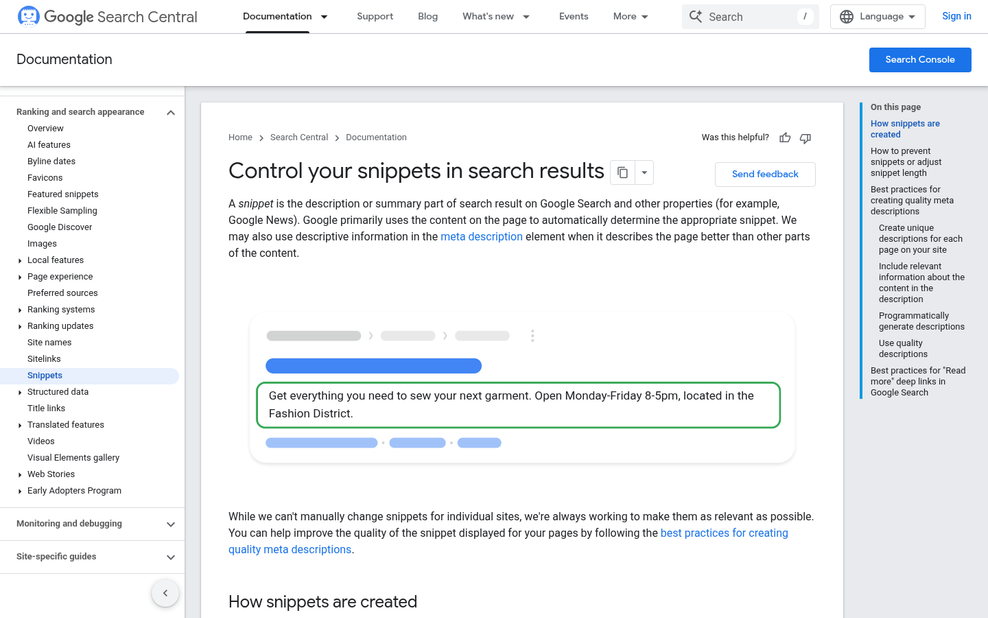
Don't forget your metadata. A stale title tag or meta description can undercut an otherwise strong page. Update them to align with the latest angle of the content, and make sure your publish date (or "last updated" label) is visible on the page itself.
A surface-level update that only changes a few words won't move the needle. If the structure, the depth, and the core claims stay the same, Perplexity treats it as the same page. Substance has to change for the freshness signal to register. It's also worth asking whether updating old pages is actually bad practice before you commit to a full round of revisions.
| Page Element | What to Change |
|---|---|
| Introduction | Lead with a direct, standalone definition or answer |
| Source references | Add named analyst or study citations in the body text |
| Metadata | Refresh title tag, meta description, and visible update date |
| Substance | Update claims, data points, or examples - not just phrasing |
Pick two or three pages to rewrite this way before building new ones. The lift is smaller and the payoff comes faster. Running a full AEO audit across your content library can help you prioritize which pages to tackle first.
Turn Citation Gaps Into a Repeatable Niche Advantage
The opportunity here is large relative to the competition. Perplexity's index is deliberately smaller than Google's, which is a disadvantage until it means fewer pages are competing for those citations. Most publishers in your space are not doing this yet. The structural gaps you find - missing sources, thin answers, outdated pages surfaced - are gaps you can close, because the barrier to entry is still low.
The clearest next step is also the simplest one: open Perplexity and run ten queries that represent the core questions in your niche. Note every domain that gets cited. See if your site appears, and if not, look at what does. That first pass will tell you more about where you stand than any tool report on your traffic sources, and it will give you a concrete list of pages and topics to act on. Everything else in this process follows from that starting point.