





True success with affiliate marketing means two things: getting as many sales as possible, with offers that pay as much as possible. Sure, you can set up long-term residual income with 10-cent commissions, but why bother with those when you can get $50 a pop, or even more, depending on your niche? Who wants to make their living selling nails when you can make a living selling yachts?
To that end, you want to invest in the highest paying affiliate networks out there. So what makes a high paying affiliate network?
- The offers give you a large commission.
That's it!
Okay, so there's a bit more to it. See, a high paying affiliate network is only high paying as long as the wholesalers on the platform providing offers are willing to pay. That means they filter their list of publishers aggressively to weed out the low quality sites.
- They filter out low quality publishers.
- They filter out low quality advertisers.
- They enforce traffic quality standards to avoid spam and bot issues.
Unfortunately, this also tends to mean that the highest paying affiliate networks aren't open to newcomers to affiliate marketing. You need to apply, and you need to provide suitable traffic numbers for the network to think you're worthwhile. Still, though, if you can meet their standards, these networks are good options to invest in for your residual income dreams.
Key Takeaways
- High-paying affiliate networks filter out low-quality publishers and advertisers while enforcing strict traffic quality standards.
- SaaS programs like Semrush, HubSpot, and Kinsta offer recurring commissions, turning single referrals into long-term monthly income.
- Canva offers one of the highest flat commission rates available, paying 80% on monthly Pro plan sign-ups.
- HubSpot's 180-day cookie window and up to 30% recurring commission for 12 months makes single referrals extremely valuable.
- Amazon Associates' cart spillover effect means you earn commissions on everything a referred customer purchases in one session.
1. Semrush
Semrush is one of the most well-known SEO and digital marketing platforms in the industry, used by everyone from solo bloggers to Fortune 500 companies. If your audience is made up of marketers, content creators, or business owners - and if you're running an affiliate marketing blog, it almost certainly is - this is one of the easiest pitches you'll ever make.
The commission structure is genuinely impressive. Semrush pays $200 for every new subscription sale, plus $10 for free trial sign-ups. That means even soft conversions are putting money in your pocket. On top of that, their cookie window is 120 days, which is among the longest in the industry and gives you an extended runway to earn credit for referrals. The program is managed through Impact, which is a reliable and well-respected affiliate platform.
2. HubSpot
HubSpot is a CRM and inbound marketing giant with a product suite that spans email marketing, sales automation, customer service, and more. Their plans range from $45 to $3,600 per month, which means the math on their affiliate commissions can get very interesting very quickly.
HubSpot offers up to 30% recurring commission for up to 12 months per referred customer. Refer someone on a $3,600/month enterprise plan and you're looking at over $1,000 a month from a single referral, for up to a year. Even mid-tier plan referrals add up quickly. They also offer a generous 180-day cookie window, giving you six full months to convert traffic into commissions. If your audience includes growing businesses or marketing teams, HubSpot practically sells itself.
3. Shopify
If you've ever looked into setting up an online business selling products, be it your own inventory or drop shipping, you've almost certainly come across Shopify. They remain one of the dominant e-commerce platforms globally, processing billions in transactions every year. Selling Shopify to people looking to launch or scale an online store is practically second nature.
Shopify values their affiliates and the program has evolved over the years. You earn a commission for each referred merchant who signs up for a paid plan, and the brand recognition alone does a lot of the heavy lifting for you. You're not promoting some unknown platform - Shopify is a household name in e-commerce, and that trust translates directly into conversions. If you're new to the platform, it's also worth knowing why some Shopify stores struggle to get traffic so you can help your referrals succeed.
4. Canva
Canva has grown from a simple design tool into one of the most widely used creative platforms on the internet, with over 200 million users as of 2026. If you're in any niche that overlaps with content creation, social media, small business, education, or marketing, your audience is almost certainly already familiar with Canva - or they should be.
What makes Canva genuinely exciting as an affiliate offer is the commission rate. You earn 80% commission on monthly Canva Pro plan sign-ups and 25% on annual plan sign-ups. That 80% figure is one of the highest flat commission rates you'll find anywhere in this space. The product is free to start, which lowers the barrier to getting people in the door, and the Pro plan upgrade is an easy sell once users hit the limits of the free tier.
5. Kinsta
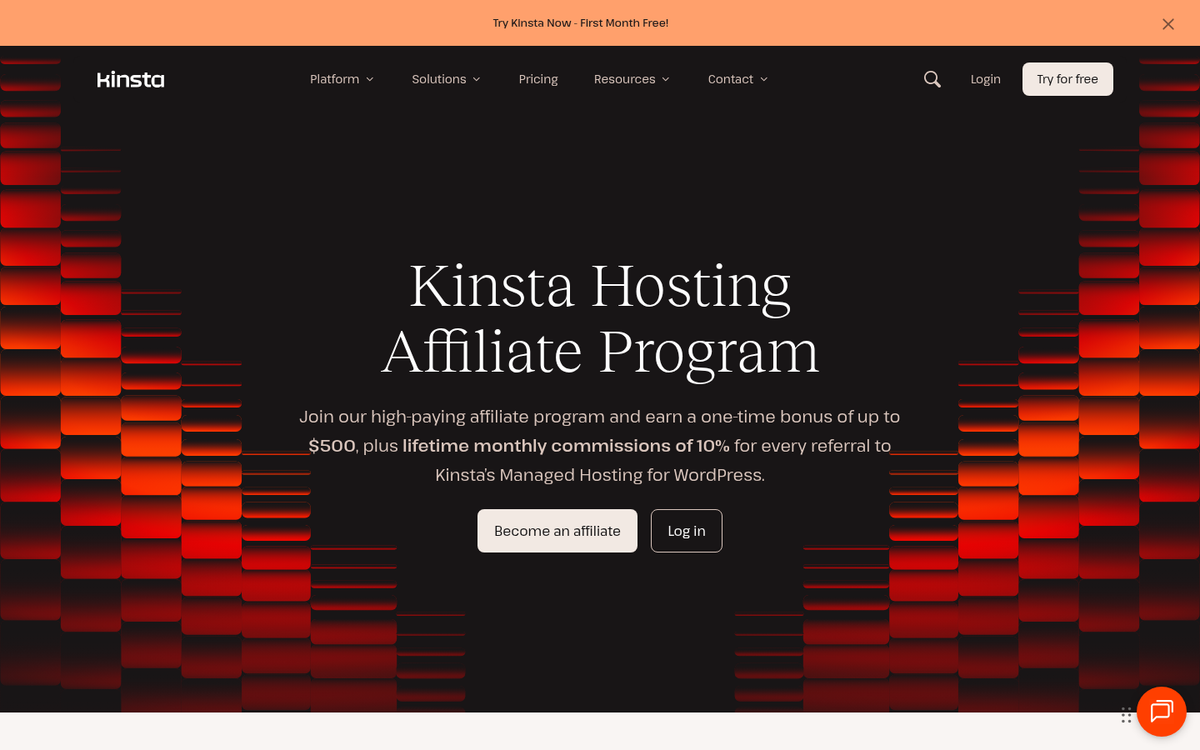
Kinsta is a premium managed WordPress hosting provider, and before you assume web hosting affiliates are all the same - they're not. Kinsta sits at the top of the market for good reason. Their infrastructure is built on Google Cloud, their support is genuinely excellent, and their customer churn rate sits at a remarkably low 5%, which matters a great deal when you're earning recurring commissions.
Kinsta's affiliate structure gives you $50 to $500 upfront depending on the plan your referral signs up for, plus an ongoing 10% monthly recurring commission for the lifetime of that customer. Given that Kinsta customers tend to stick around for years, that recurring tail can compound into serious income over time. If your audience includes bloggers, developers, or agencies managing WordPress sites, this is a natural fit.
6. Clickbank

Clickbank is a long-established affiliate marketplace with thousands of offers across a wide range of niches. It's particularly strong in digital products - courses, e-books, software, and subscription services - where margins are high and commissions reflect that.
The drawback of using a marketplace rather than individual company offers is that the marketplace itself takes a cut, so your commissions may be slightly lower on average than direct partnerships. On the other hand, the sheer variety of offers and the built-in quality controls are genuine advantages. You know affiliates will pay out, and the platform helps filter for traffic quality. Depending on your niche and marketing style, Clickbank can work well whether you're focused on high volume or high ticket.
7. FlexOffers

FlexOffers is a well-rounded affiliate network with an extensive catalog - over 12,000 programs spanning retail, finance, travel, technology, and more. That breadth makes it one of the more versatile networks available, particularly if you operate in multiple niches or want a one-stop platform to manage a variety of campaigns.
What sets FlexOffers apart from many networks is their support infrastructure. They assign you a dedicated account manager to help you optimize your campaigns, and they have an editorial team available if you want content support. For marketers who want more than just a dashboard full of links, that level of hands-on assistance is a genuine differentiator.
8. Rakuten Advertising
Rakuten Advertising (formerly Rakuten Marketing) has consistently ranked among the top affiliate networks globally, and for good reason. Their advertiser roster includes major household brands, their tracking and reporting tools are robust, and their reputation for on-time payments and quality control is well established.
They operate as a cost-per-sale network primarily, which means commissions are tied directly to verified purchases rather than clicks or leads. That model tends to attract higher-quality advertisers who are serious about their affiliate relationships, which in turn means better commission rates and more reliable partnerships for publishers. If you're evaluating options, it's also worth exploring affiliate network alternatives to see how Rakuten compares to other platforms in the space.
9. Amazon Associates
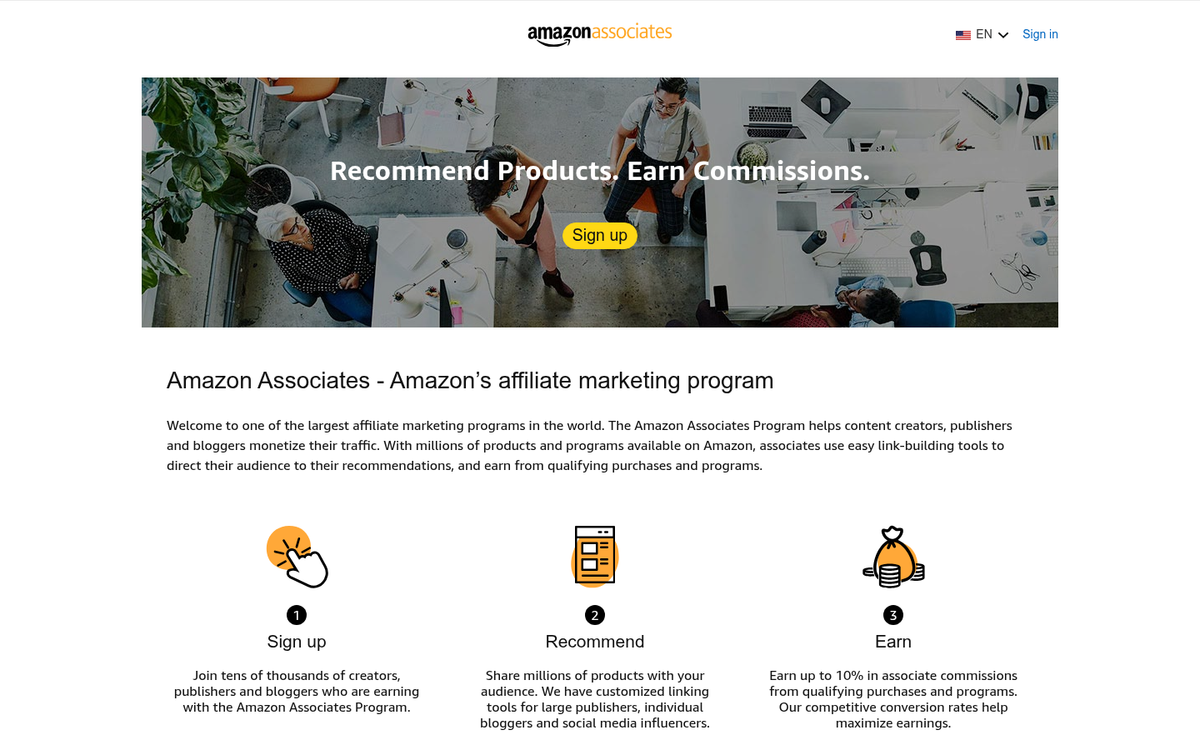
Amazon's affiliate program remains one of the most widely used in the world, and for good reason - the brand trust is unmatched and the product catalog is essentially limitless. If you can write about it, Amazon probably sells it.
Commission rates range from 1% to 10% depending on the product category, which isn't going to make you rich on individual sales. The real advantage is in breadth and behavior. When someone clicks your affiliate link and goes on to buy multiple items in the same session, you earn a commission on everything in that cart - not just the product you linked to. That spillover effect can meaningfully increase your effective earnings per click over time, especially if you're driving high-intent traffic. If you want to increase your Amazon affiliate percentage, there are a few strategies worth exploring, and it's also useful to understand how to view sales for individual products to better gauge where your efforts are paying off.
10. Booking.com

If your content touches travel in any way, Booking.com's affiliate program deserves a serious look. As one of the world's largest accommodation platforms, the brand recognition does a lot of your conversion work for you. People already trust Booking.com and many have existing accounts, which dramatically shortens the sales cycle.
The commission structure works as a 25-40% share of Booking.com's own commission on each accommodation booking. Your exact rate scales with your referral volume, so the more you drive, the better your cut. It's not the flashiest commission structure on this list, but in a high-frequency niche like travel where users book multiple times per year, the volume can more than compensate. If you're looking for ways to boost your conversion rate and sales, pairing a trusted brand like this with the right strategy can make a real difference.
Additional Mention: SaaS Programs Generally

If you're trying to identify where the best affiliate commissions are concentrated right now in 2026, the answer is SaaS - software as a service. According to Rewardful's revenue data, most SaaS affiliate programs offer commission percentages between 20% and 30%, with some reaching 40% for top-tier affiliates. Because SaaS products are subscription-based, commissions are often recurring, meaning a single referral can pay you month after month for years.
The programs listed above - Semrush, HubSpot, Kinsta, and Canva - are all excellent examples of this model in action. If you're building an affiliate strategy from the ground up in 2026 and you're not prioritizing SaaS offers with recurring commission structures, you're leaving significant long-term income on the table.
Over to You
Do you have a favorite top-earning affiliate network? Have you had a good (or bad) experience with the programs I've listed? Talk about your experiences in the comments! Just don't use me as a place to drop your own referral links; I'll strip those out - and if you're not seeing results, check out 10 reasons why you're not earning with affiliate marketing 🙂


17 responses
Thoughtful replies only - we moderate for spam, AI slop, and off-topic rants.
Well done! Do you think I would run into any road blocks using multiple affiliates at once
Thanks Tilo! I don't think so, just keep the networks varied and diversity niches. It may help to be on different hosts/IPs as well.
Thanks for the article. After a lot of searching for affiliate programs for the healthiest cookware, I joined Miriams Earthen Cookware's affiliate program. Like their pay structure, their service and best of all the unique and healthy products they sell. Goes well with my healthy cooking blogs.
Carol...anyone
jus starting out...really confused....searching for web host any suggestions .
This was a really helpful list. I am going through each one of the links now. The information I'm finding is helping me understand what could work for each of my sites. Many thanks.
thanks!
Excellent writeup .But dont you think that webhosting affiliate market is too saturated nowadays?
Thanks a lot . Due to you I have acheived a lot of traffic
Thanks for sharing such a great post on Affiliate programs. It is clean and clear.
Well done! amazing article .Thanks for sharing such a great post on Affiliate programs.
Great list here
Great info, thank you. After a long searching for trusted affiliate programs decided to use Alidropship affiliate program (software) and Cloudway (hosting). These are quite good, but maybe you can recommend more programs about software? Except Shopify, already tried it. Thank you in advance
Hi Helena! Great choices with Alidropship and Cloudways! For other software affiliate programs worth exploring, you might want to look into SEMrush, which pays well for marketing tools, or FreshBooks and QuickBooks for accounting software. ConvertKit and ActiveCampaign are also solid options in the email marketing space with recurring commissions. Hope that helps point you in the right direction! 😊
Kenny, thanks for the great list!
As for me, I prefer in-house programs, not networks. I'm a blogger in the e-commerce field and my latest best finds in the highest paying affiliate programs are AliDropship Affiliate Program (software), Cloudways Affiliate and Ambassador Program (hosting) and Divi (themes).
Great picks, Alyssa! In-house programs can definitely offer some solid advantages, like better commission rates and more direct communication with the brand. AliDropship and Cloudways are both well-regarded in the affiliate space, and Divi has a massive audience which always helps with conversions. Thanks for sharing your experience - this kind of real-world input is super valuable for other bloggers looking to diversify their affiliate income!
Thanks for the article, very useful! What do you think of Alidropship affiliate program? I decided to try it out, seen only good reviews so far. Did you hear anything about this one?
Hey Alicia! Great question! AliDropship is a solid choice - their affiliate program offers pretty generous commissions, especially since it targets the dropshipping niche which is quite popular right now. The one-time payment model for their plugin makes it an easier sell compared to subscription-based products. Since you've seen positive reviews, definitely give it a shot! Would love to hear how it goes for you. 😊