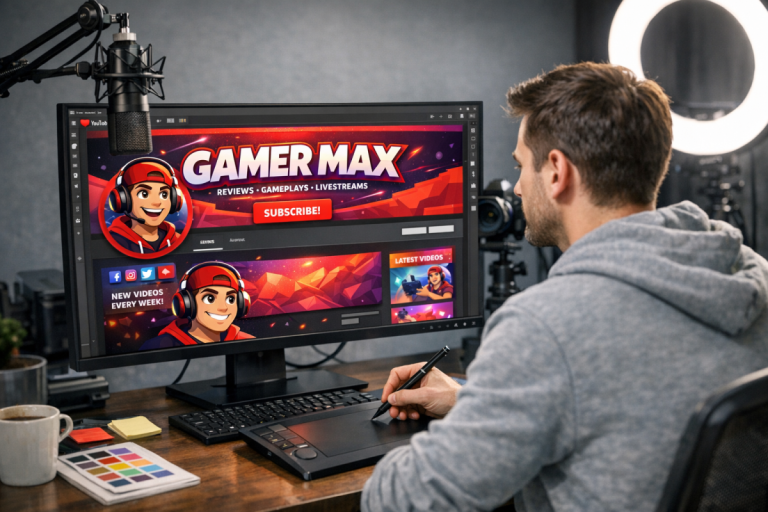
Video marketing has never been more accessible - or more competitive. A decade ago, you needed dedicated hardware and a fast connection just to stream reliably. Today, video is the default format of the internet. Your phone shoots in 4K. Your TV streams it natively. Even your car has a screen. The infrastructure is everywhere and your audience expects video as a matter of course.
YouTube remains the dominant long-form video platform. But the competition looks very different in 2026 than it did even a few years ago. TikTok influenced how people take short-form video, Instagram Reels followed and YouTube responded with YouTube Shorts. Facebook video is still in the combination. But it's no longer the scrappy challenger it once seemed. The change is this: short-form content and long-form content now serve very different purposes and a video marketing strategy needs to account for both.
Let's talk about what I recommend as a baseline platform strategy:
- Post your primary video content on YouTube. It embeds cleanly in blog posts, works well when shared across most platforms, and has the best long-tail discoverability of any video platform. A video you upload today can still drive traffic three years from now.
- Repurpose short clips for YouTube Shorts, TikTok, and Instagram Reels. These platforms reward frequent, short-form content and can funnel new audiences back to your main channel.
- Post natively on Facebook if that's where your audience lives, but don't expect it to replace YouTube. Use it as a supplementary channel, not a primary one.
One important note: 75% of all video plays now happen on mobile devices. Every choice you make - from thumbnail design to text size to video length - should be made with a mobile viewer in mind first.
On to the strategies you can use to grow your video marketing without throwing money at advertising.
Key Takeaways
- Optimize titles with relevant keywords, write for humans first, and test different angles to improve click-through rates.
- 75% of video plays happen on mobile, so design thumbnails, text, and length with mobile viewers as the priority.
- Responding to at least 10% of comments signals channel engagement to YouTube's algorithm and accelerates growth.
- Emails featuring video thumbnails generate 200-300% more click-throughs, making email a highly underused video promotion channel.
- Serialized content builds audience habits and consistent upload frequency remains the most reliable long-term growth strategy.
1. Research and Optimize an Excellent Title
A lot of work can go into your video title and you could be surprised by just how much it matters. You need to know what titles are performing well in your niche, what language your audience responds to and how to write something strong without veering into hollow clickbait territory. Your title also needs to have relevant keywords. YouTube and Google are indexing your content.
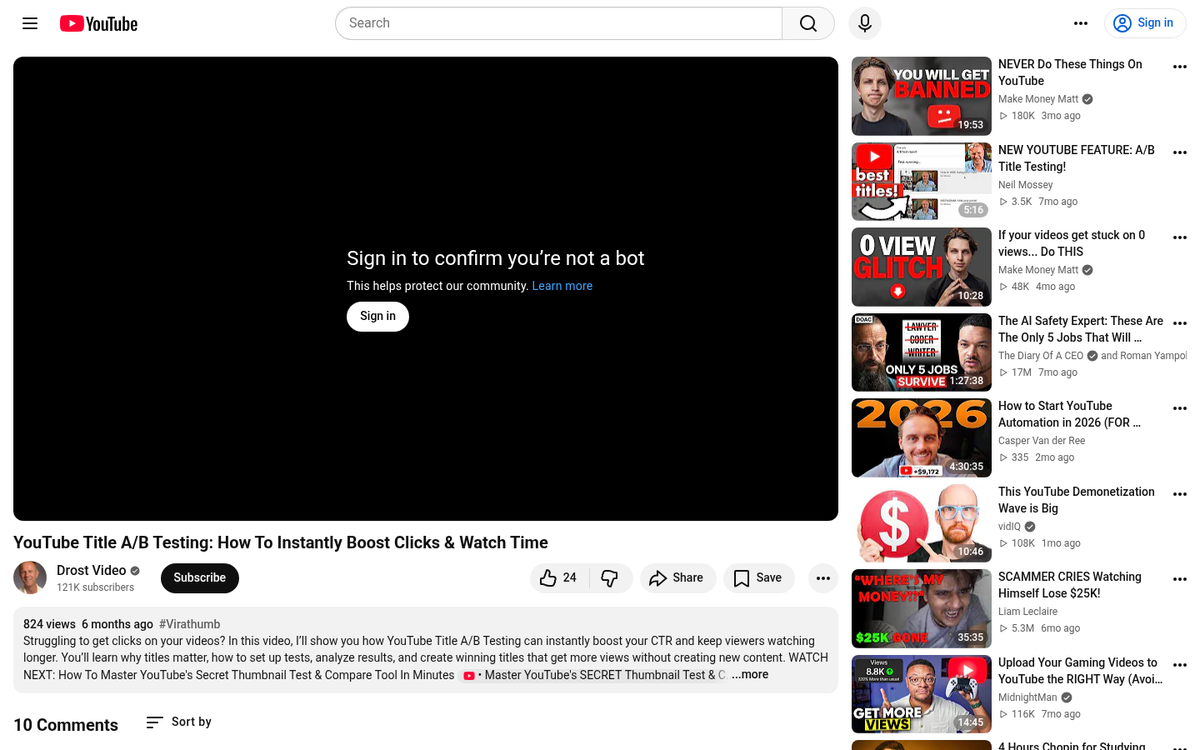
YouTube now has an A/B title testing feature for eligible channels which removes some of the guessing that used to make title optimization so frustrating. If you have access to it, you can use it. Otherwise you can still test titles the old-fashioned way - by changing how you describe the video when sharing it across social platforms and watching what drives the most clicks back to the video itself. For more on increasing views on your YouTube video, there are broader strategies worth exploring alongside title work.
Keep your most important keywords toward the front of the title and write for humans first, algorithms second.
2. Chase Trends and Capitalize on Them Quickly
Newsjacking and trend-chasing still work. But the window has become even shorter. In 2026, a trending topic can be born, peak and be forgotten within 48 hours. If you can't produce and publish a relevant video faster, you've already missed it.
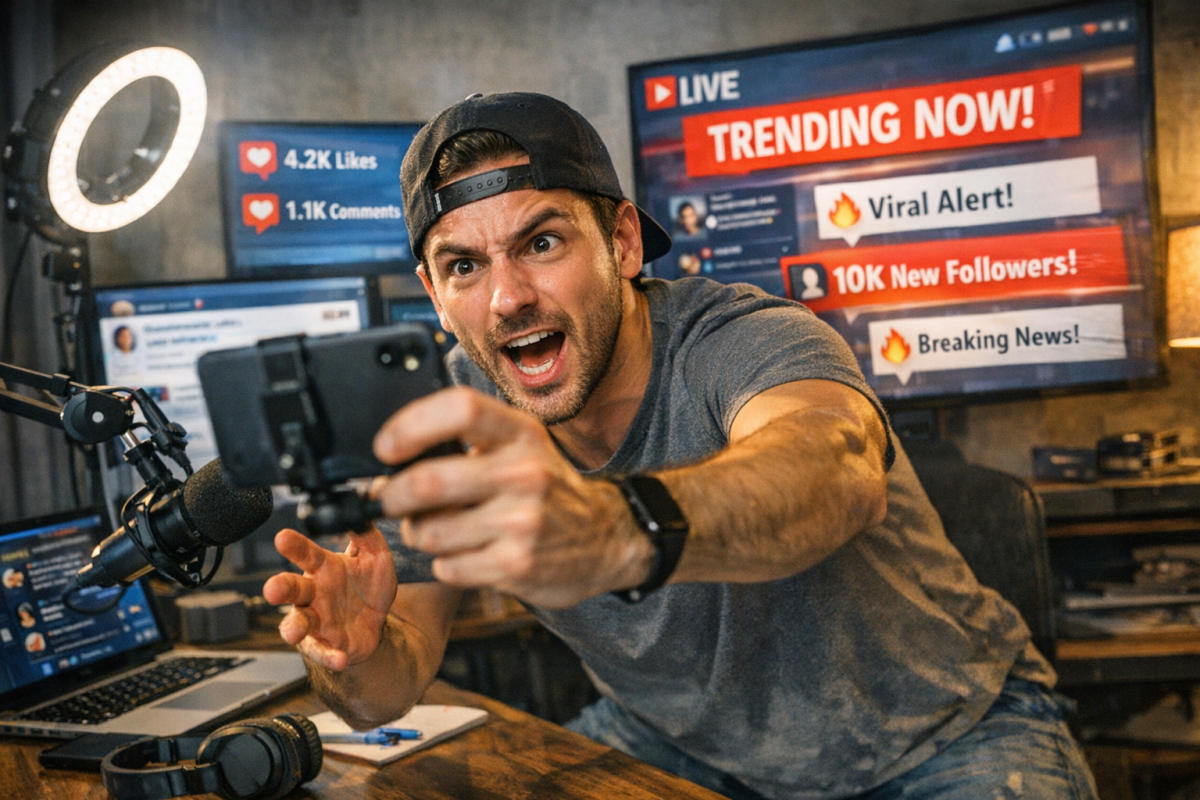
The number one requirement for helpful trend-chasing is a fast production pipeline. That means being able to move from idea to published video in a day or two. Rough, authentic and quick beats polished and late every time with trending content.
The second requirement is staying wired in to what's going on in your space. Google Alerts is a start. But you should also be watching YouTube's trending tab, Reddit threads in your niche and social listening tools. You want to find a wave early enough to ride it - not after it's already crashed.
3. Use Low-Key Clickbait
Clickbait is helpful and dangerous in equal measure - that hasn't changed. The difference now is that YouTube's algorithm actively penalizes videos with high click-through rates but poor watch time or high early drop-off. In other words, if your title promises something your video doesn't deliver, the algorithm will bury you. There are examples of clickbait you can learn from to find the right balance.
The sweet spot is a title and thumbnail that legitimately intrigue without misleading. Give viewers enough to want to click, but not so much that they don't need to. Avoid front-loading the value in the description or thumbnail. Make the video itself the payoff.
What you want to stay away from is over-explaining in your description. If viewers can get everything they need from reading the description, you've undermined your own video before anyone presses play.
4. Build a Comments Community by Responding
YouTube comments have come a long way from the wild west era, largely because of better moderation tools and filters that YouTube has rolled out over the years. They're still chaotic in places. But a well-managed comments section can become one of your most helpful community-building assets.
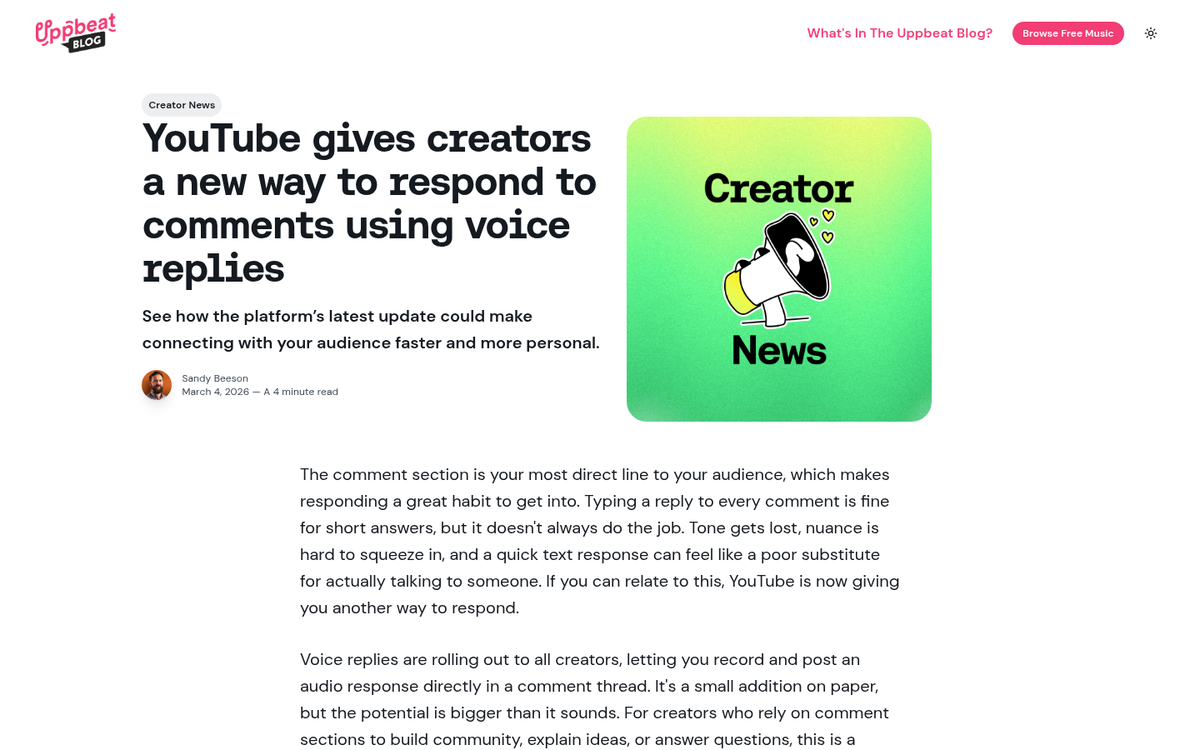
YouTube's own internal data shows that channels that respond to at least 10% of their comments grow faster than the ones that don't; it's not a coincidence - it signals to the algorithm and your audience that there's a person behind the channel who actually gives a damn.
My recommended three-pillar comments strategy:
- Respond to genuine, thoughtful comments to encourage discussion and make viewers feel seen - even on older videos, where a response can feel surprisingly personal.
- Use YouTube's moderation tools aggressively. Filter toxic comments, block repeat bad actors, and don't let garbage pile up in your community space.
- Mine your comments for content ideas. When multiple people ask the same question or express the same confusion, that's a video topic handed to you for free - a great starting point if you use a People Also Ask outline generator to structure it.
5. Funnel Other Social Traffic to YouTube
Cross-platform promotion is still one of the most underused growth levers for YouTube channels. The key in 2026 is matching your format to the platform. Don't just paste a YouTube link everywhere and call it a day.
Create short teaser clips optimized for the platform you're posting on - vertical for TikTok, Reels and Shorts; horizontal for Twitter/X. Use these clips to drive curiosity and funnel viewers to the full video on YouTube. A well-edited 30-second clip with a "watch the full video" call to action can move a meaningful amount of traffic.
Pinterest still works for evergreen video content, especially in visual niches. Email is also criminally underused - research from MarketingSherpa found that emails with video thumbnails get 200-300% more click-throughs than the ones without and the word "video" in your subject line alone can increase open rates by around 19%.
6. Split Test Titles When Sharing Socially
When you share a video on social platforms, you're not locked into the YouTube title. Take advantage of that. Write two or three different angles on the same video - one curiosity-driven, one benefit-driven, one question-based - and rotate them across your promotional posts.
Watch your analytics. Which version drives the most click-throughs back to YouTube? Which one generates the most engagement on the social post itself? Over time, this gives you a read on what language resonates with your audience and you can apply those lessons to future video titles.
Remember that what performs well on one platform might not translate to another. A title that crushes it on LinkedIn might not work on Instagram. Treat each platform as its own audience with its own preferences.
7. Customize Your Video Thumbnail
This one matters more than most people know. According to QuickSprout, a well-designed, visually compelling thumbnail can increase engagement by as much as 154%. In a feed full of competing videos, your thumbnail is doing the heavy lifting before a single second of footage plays.

The most effective thumbnails in 2026 tend to be clean and strong - a subject (a face with an expressive reaction), a short punchy text overlay and strong contrast. Overly busy thumbnails get lost. Simple and striking wins.
If you run multiple series, consider creating a consistent visual template for each one - it makes your content instantly recognizable in suggested feeds and on your channel page and it builds brand familiarity over time.
8. Know Your Ideal Video Length
The "shorter is better" rule has become more nuanced. Studies show that videos up to 2 minutes long get the highest engagement rates. But that doesn't mean every video should be 90 seconds - it means you should be ruthless about cutting anything that doesn't serve the viewer.

For YouTube specifically, longer videos - when the content actually warrants the length - tend to perform better for watch time metrics which matter for the algorithm and for qualifying for the YouTube Partner Program (which requires 4,000 hours of watch time, among other thresholds). A 12-minute deep dive that holds viewers beats a padded 8-minute video with a 60% drop-off rate every time.
The honest rule is: your video should be just as long as it needs to be and not a second longer. Cut the filler. Get to the point. Respect your viewer's time.
9. Use End Screens and Cards for Expanded Information
YouTube retired the old annotations system years ago. But the replacements - End Screens and Cards - are actually more helpful and mobile-friendly. Cards can be added at any point in a video and appear as a small icon that viewers can tap to pull up a link, a poll, or a suggested video. End Screens appear in the final 5-20 seconds and are purpose-built for driving subscribers, promoting other videos and linking to your website.
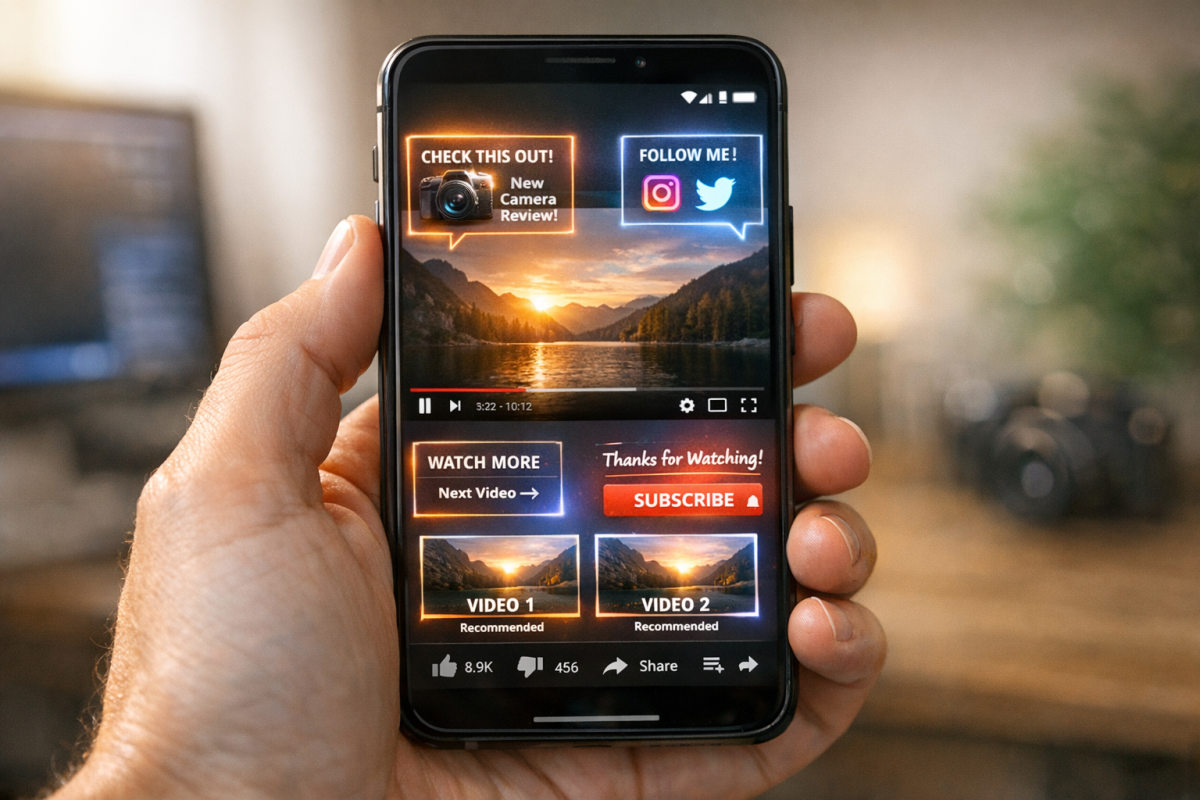
Use Cards to reference related content at relevant moments mid-video - treat them like internal links in a blog post. Use End Screens to close every video with a next action for the viewer. If you're not, you're leaving easy easy engagement on the table.
10. Create a Customized Video Endcap
Beyond YouTube's built-in End Screens, creators who design a branded endcap - a short 10-15 second segment at the end of every video that features their logo, a subscribe call to action and curated links to other videos or playlists - give their channel a polished, professional feel and give viewers something to do the second the main content ends.
The best endcaps are short, branded and consistent across all your videos. They work like the back page of a magazine - a predictable, familiar space where you make your ask and point viewers where to go next.
11. Create Video Playlists and Link to Playlists Whenever Possible
Playlists do two important things: they keep viewers on your channel longer by auto-playing related content and they help YouTube understand the structure and themes of your content which helps with recommendations.
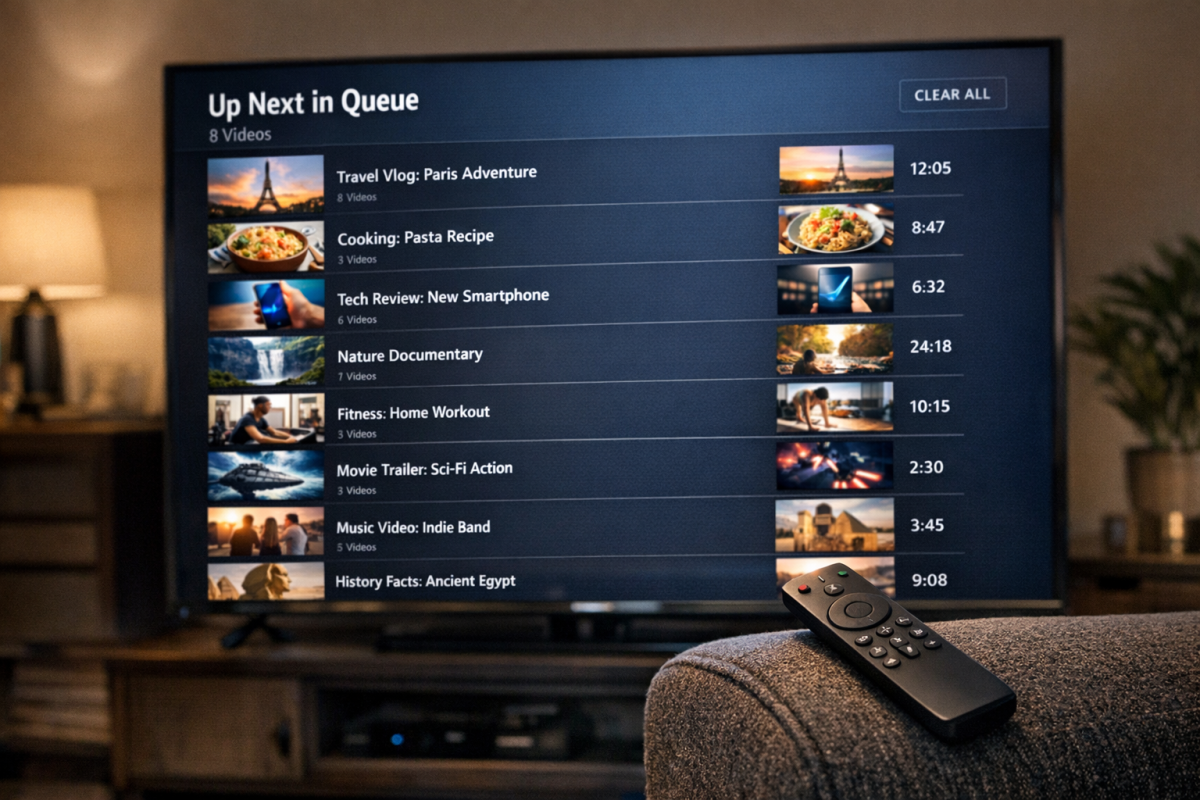
The strategy I recommend is multiple focused playlists instead of one giant catch-all - each series or content theme gets its own playlist. When you share a video, consider linking to the playlist instead of the standalone video - it immediately extends watch time and gives new viewers a path through your content library.
Playlists also get dedicated display space on your channel homepage which is prime real estate you should be using.
12. Emphasize Gaining Subscribers
Subscribers are worth less than they used to be in terms of views - algorithmic reach has changed how content gets distributed - but they're still a core signal of channel health and they represent your most loyal audience segment.
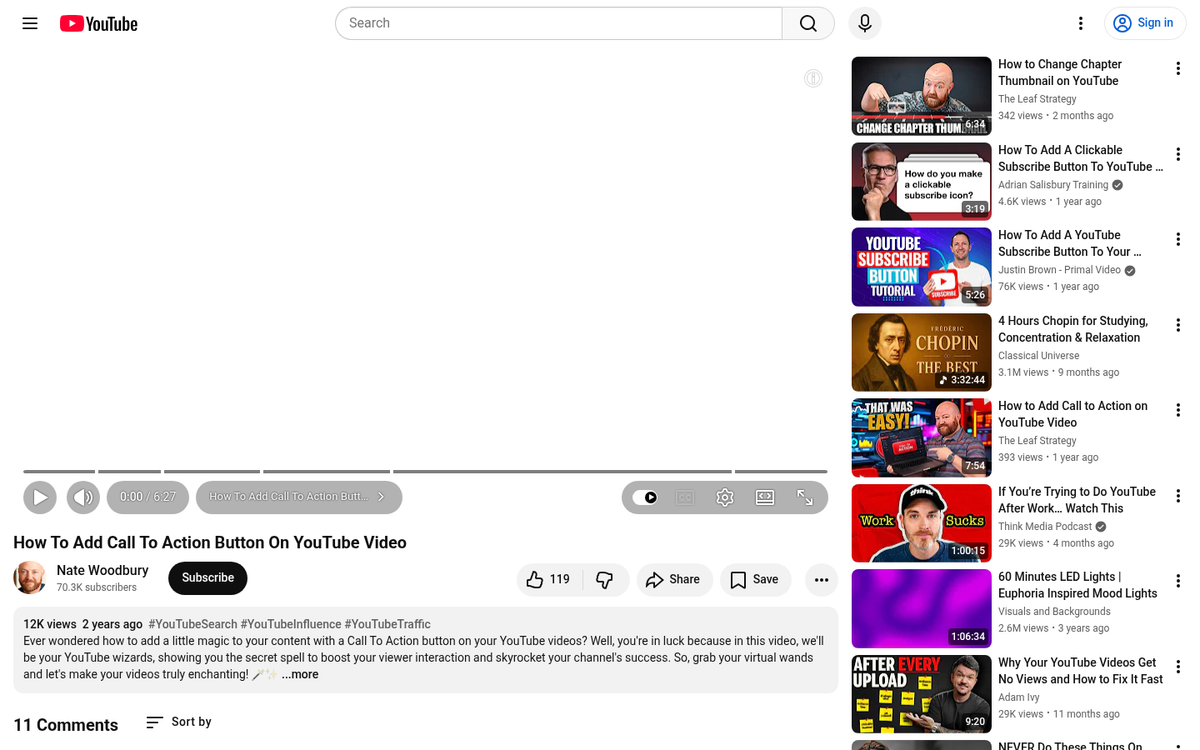
The simplest way to get more subscribers is still to ask specifically. Not a mumbled "like and subscribe" at the end of a video. But a direct, enthusiastic ask with a reason: "If this helped you, subscribe - I post every Tuesday on exactly this kind of topic."
Make sure your channel page is doing its job too. A channel trailer for new visitors, organized playlists and a complete About section all help convert casual viewers into subscribers. If you want to go further, there are paid services to promote your YouTube video and expand your reach beyond organic discovery.
13. Create a Robust Video Description
Your video description is indexable text - treat it like SEO copy. The first two to three sentences matter most, because that's what shows before the "Show More" fold. Lead with your most important information and keywords up front.
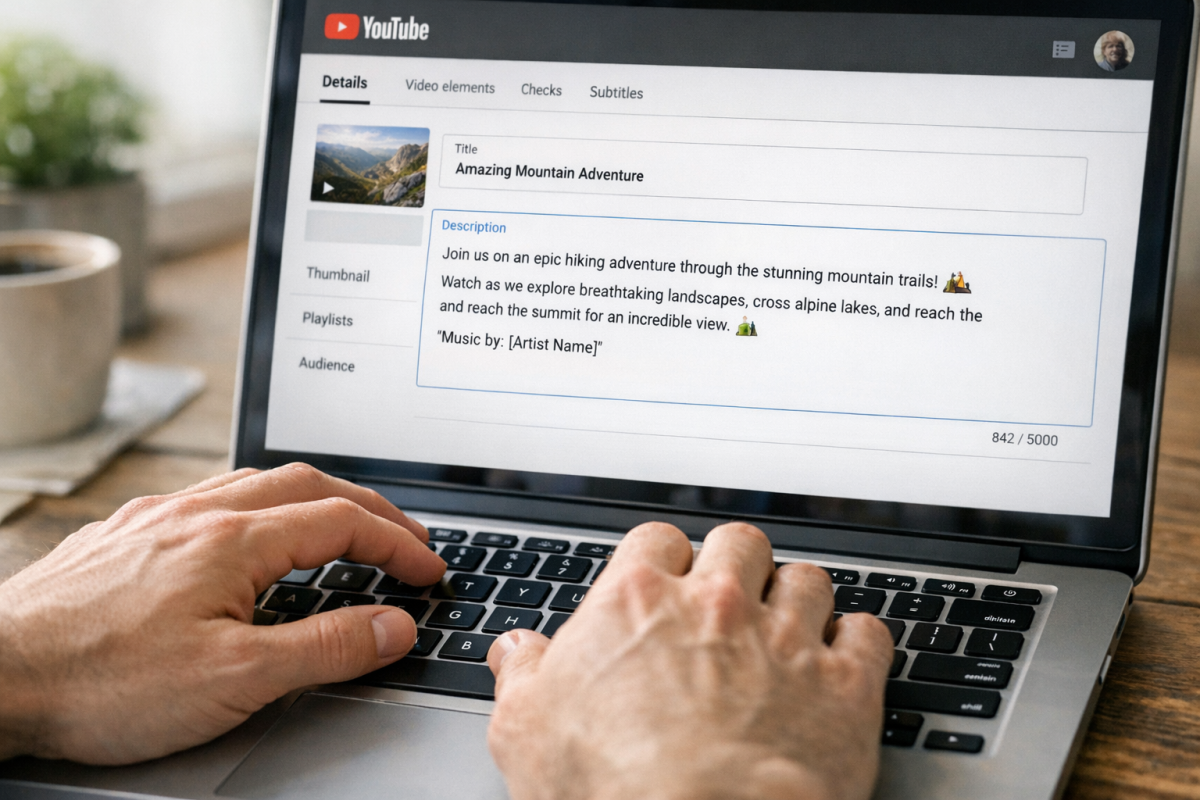
Below the fold, include timestamps (YouTube uses these to generate chapter markers which improve UX and can show up in Google search results), links to your website and social profiles and any relevant resources mentioned in the video. A well-structured description makes your video look more professional and makes it easier to find.
14. Use Appropriate Tags
Tags are less influential as a ranking signal than they once were - YouTube has become much better at understanding video content from titles, descriptions and the audio itself. That said, they're still worth using correctly. Focus on a handful of accurate tags that match the content of your video. Don't keyword-stuff. Don't use tags that are only loosely related in hopes of riding another video's coattails. Use them to explain context - not to game the system.
15. Focus on Improving Video and Audio Quality
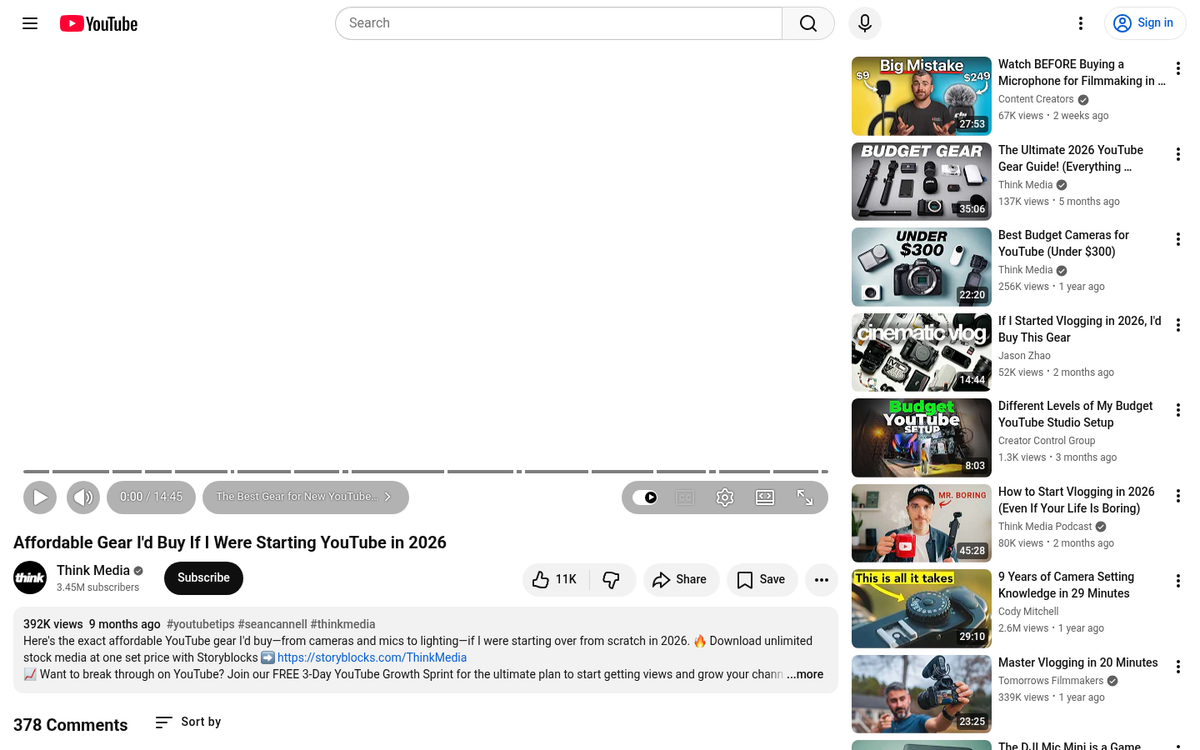
Production quality expectations have risen. But so has the accessibility of gear. In 2026, a decent camera, a basic ring light and a $50 USB microphone are enough to produce content that looks and sounds professional. Audio quality matters more than video quality - viewers will tolerate slightly soft footage. But they will click away immediately from bad audio.
Beyond the gear, invest in your editing. Clean cuts, pacing and minimal dead air make a video feel tight and watchable. You don't need flashy effects - you need a video that respects the viewer's attention.
16. Upload a Video Transcript
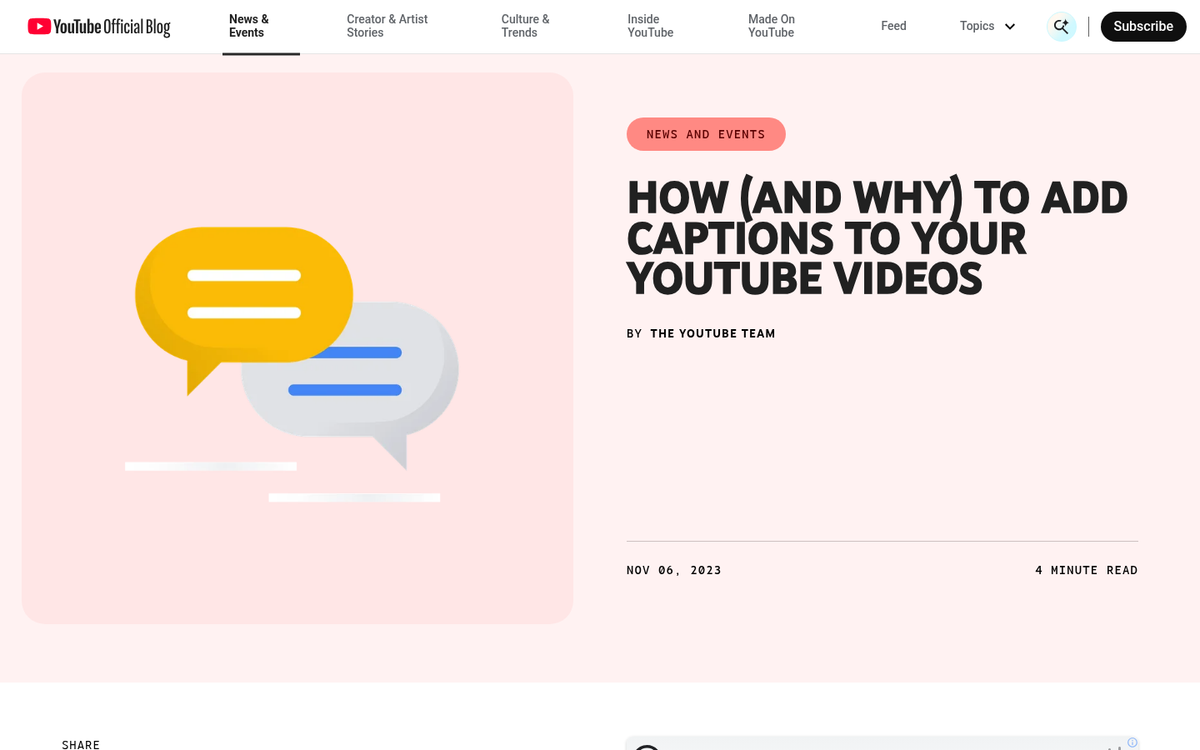
YouTube's auto-generated captions have improved considerably. But they're still imperfect - especially for technical vocabulary, proper nouns, or any speaker with a strong accent. Uploading your own transcript guarantees accuracy, helps with accessibility for deaf and hard-of-hearing viewers and gives YouTube cleaner text data to index against search queries.
Given that 75% of video is watched on mobile - in situations where audio isn't available - accurate captions also directly improve the viewing experience for a large portion of your audience. It's a low-effort, high-return task that too many creators skip. If you want to get even more mileage from your content, consider turning your YouTube videos into blog posts as well.
17. Form Relationships with Other Video Producers for Mutual Promotion
Collaboration remains one of the fastest organic growth levers on YouTube. A well-matched collab exposes channels to an audience that's already interested in adjacent content. Look for creators in complementary niches - not direct competitors - whose audience would legitimately benefit from discovering your channel.
Cross-promotions, joint videos, podcast appearances and featured mentions in each other's descriptions and community posts are all fair game. The more authentic the connection, the better it tends to perform. If you're struggling to find the right people, learn how to get well-known content creators to collaborate with you - many of the same principles apply across platforms.
18. Create Ongoing Series Themes
Serialized content builds habits in your audience. When viewers know that every Wednesday you drop a new episode of a series they start to expect it. That anticipation drives steady returns to your channel and builds the loyal audience that no single viral video can create on its own.
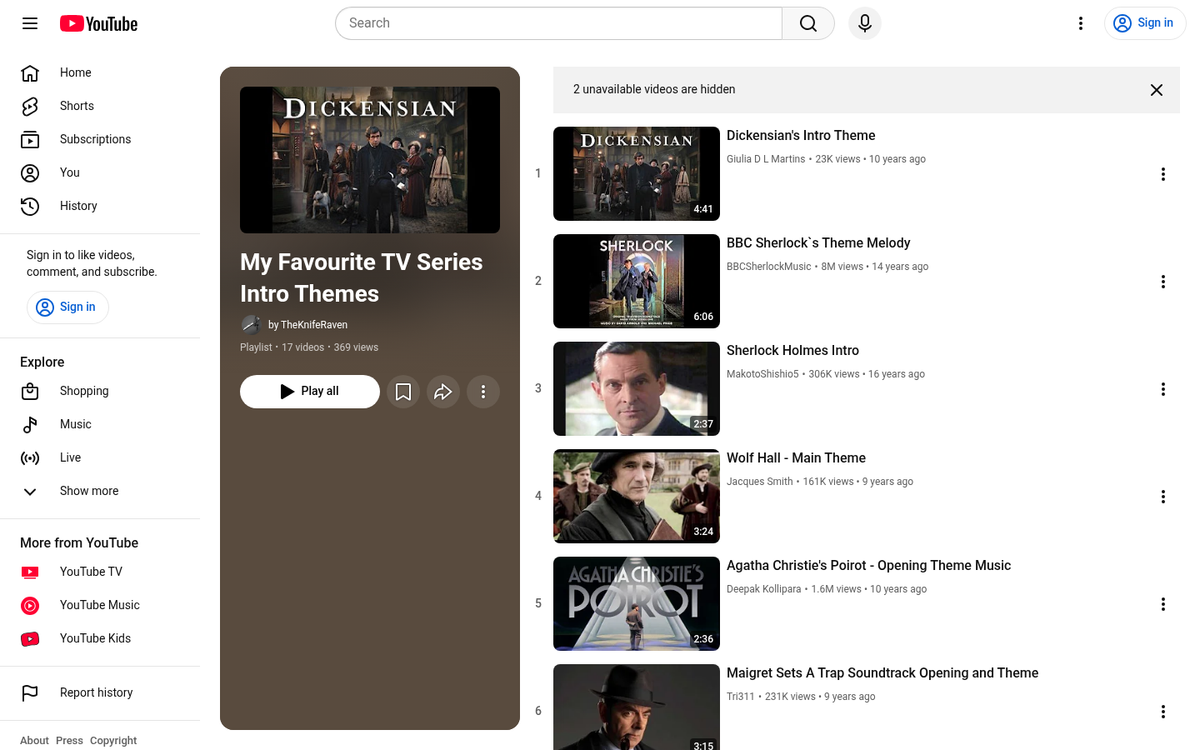
Running multiple series simultaneously also gives you creative flexibility and lets you serve different segments of your audience with content that's customized to their interests, while keeping everything under one channel roof.
19. Guest on Partner Videos
The video equivalent of guest posting is still one of the best ways to grow. Whether it's an in-person collab, a remote interview, or a simple shoutout exchange, appearing on someone else's channel puts you in front of a warm, relevant audience who has already bought into a creator they trust. That endorsement by association carries weight.
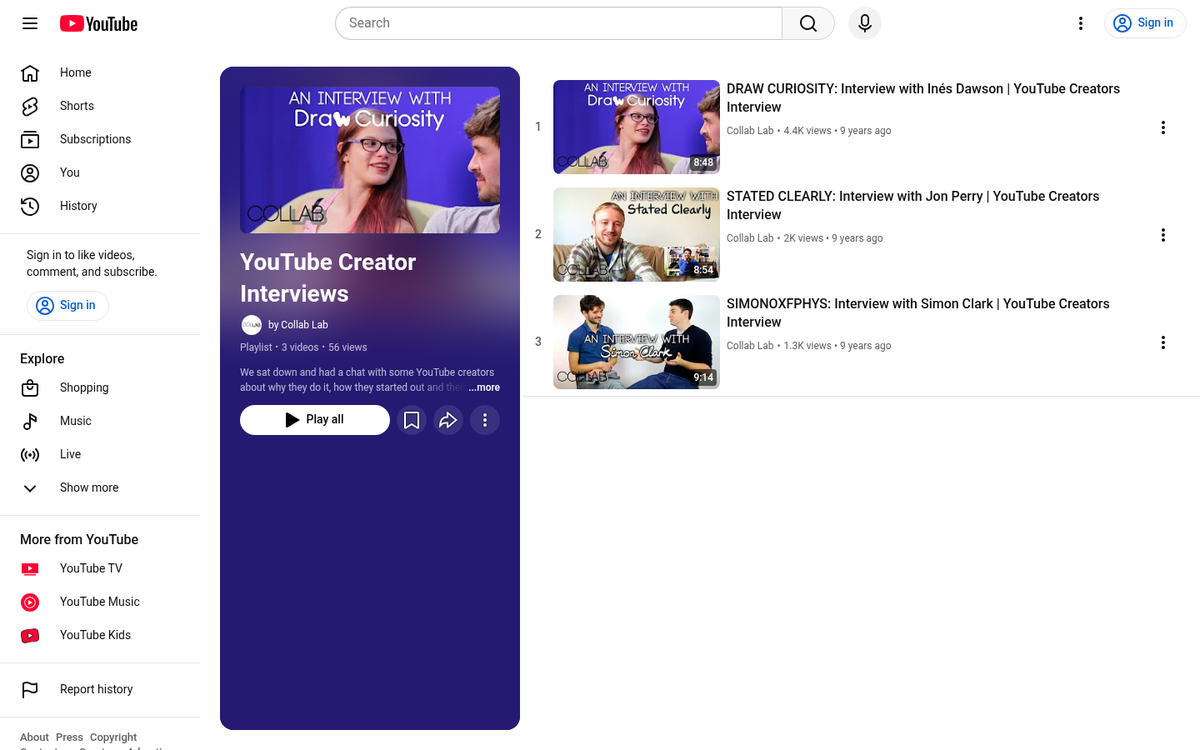
Approach it the same way you would a guest post pitch: lead with what value you bring to their audience - not what you hope to get out of it.
20. Make More Videos
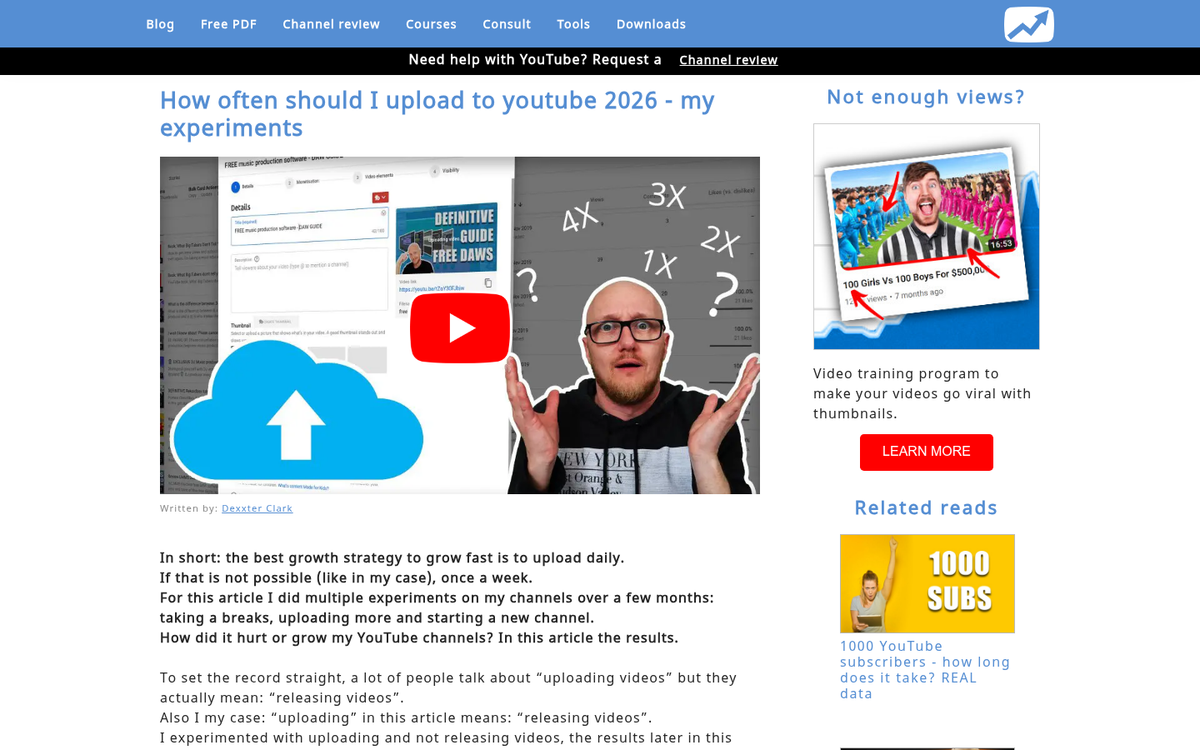
At the end of the day, the single most reliable way to grow a YouTube channel is consistent video uploads and frequency impact on YouTube channel growth