Key Takeaways
- Modern keyword research is less about exact-match phrases and more about topical authority, content coverage, and backlink context.
- Ahrefs and Semrush are the most comprehensive tools, offering competitor keyword data, traffic estimates, and gap analysis starting around $129-$140/month.
- Budget-friendly alternatives like SpyFu, SE Ranking, and Ubersuggest provide solid competitive intelligence at lower or no cost.
- No single tool captures everything; combining multiple tools reveals the most accurate competitive picture.
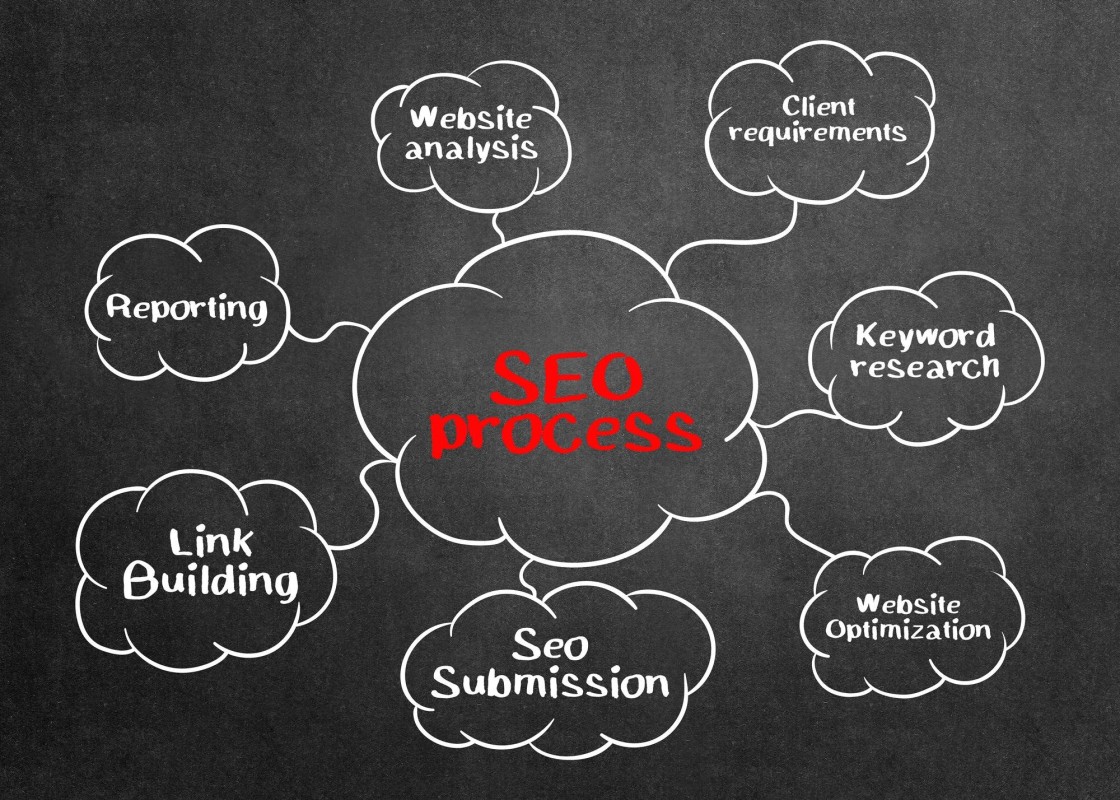
- The goal is identifying topical gaps competitors haven't filled, then creating better content to earn rankings.
The Best Keyword Research & Competitor Analysis Tools in 2026
Back in the day, the best way to get keyword information was to use Google Analytics on your own site, which provided a ton of data for your own optimization purposes. It was a golden age, before the "not provided" plague set in and killed direct keyword data for most webmasters.
Google's reasoning was that they wanted less emphasis on keywords moving forward - and honestly, in 2026, it's hard to argue they were entirely wrong. But that doesn't make planning content any easier. Keywords still matter in the sense that every article has a primary topic, and that topic needs to match what your audience is actually searching for.
The difference today is that Google's semantic understanding has matured enormously. You can rank for a search query without using the exact phrase even once. Synonyms, related concepts, and topical authority all factor in. This means that modern keyword and competitor analysis is really more about content, topical coverage, and backlink context than it is about stuffing exact-match phrases into your copy.
That shift changes how you use the tools below. Many of them won't hand you a clean keyword list and call it a day. Instead, they give you anchor text, title data, top-performing content, and traffic estimates - and from that, you build a picture of what topics to pursue. The ones that do provide direct keyword data are worth their weight in gold, which is why several of them carry a monthly price tag.
Use multiple tools. No single one captures everything, and the overlap between data sources is where the real insight lives.
Ahrefs
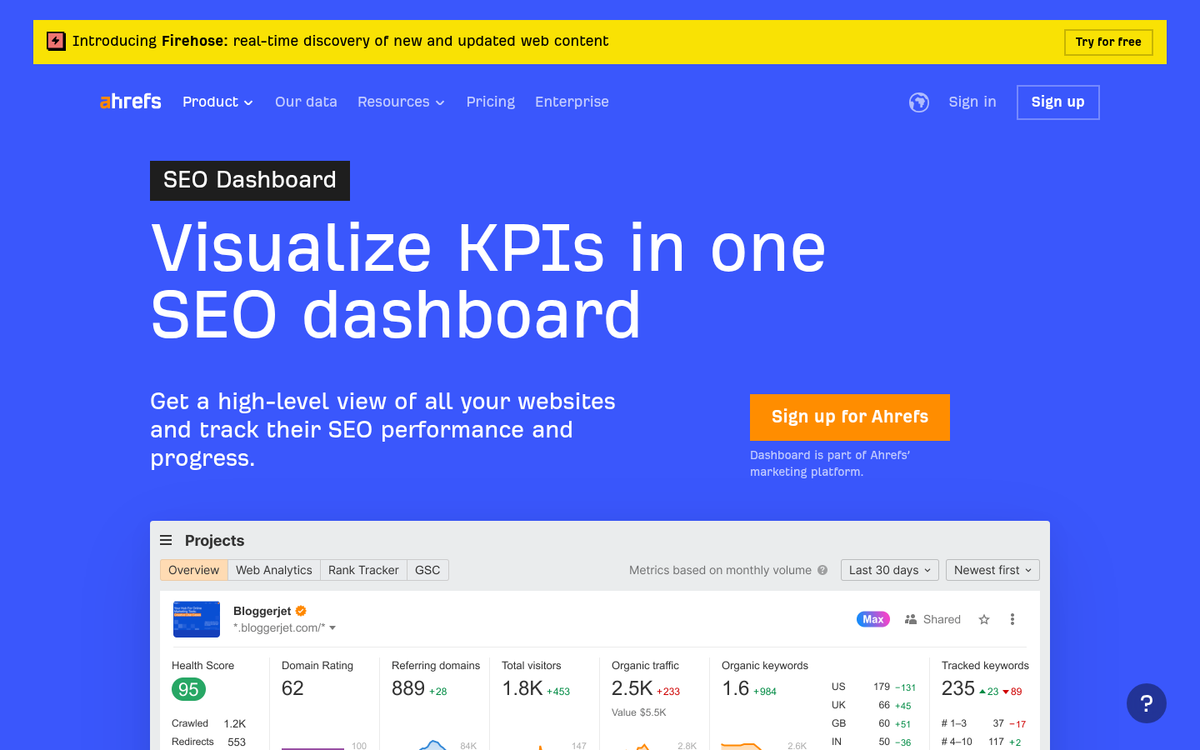
Ahrefs remains one of the most powerful and comprehensive SEO tools available in 2026. Named after the HTML link tag, it started as a backlink checker but has evolved into a full-suite platform covering keyword research, content analysis, rank tracking, site audits, and competitive intelligence.
Its backlink index is one of the largest and most frequently updated in the industry, crawling the web faster than most competitors. When it comes to pulling competitor backlink profiles, Ahrefs is still the first tool most SEOs reach for. If you're comparing options, see our breakdown of the best competitive analysis tools for PPC ads as well.
The free version is extremely limited. A paid subscription starts at around $129/month as of 2026, which is a jump from earlier pricing tiers, but the depth of data justifies it for anyone doing serious SEO work. The Keywords Explorer tool alone - which includes traffic potential, keyword difficulty, click-through data, and SERP analysis - is worth the price of entry for many users. For tracking where you stand in the results, you might also find these free tools to track your website's SERPs useful alongside Ahrefs.
Semrush
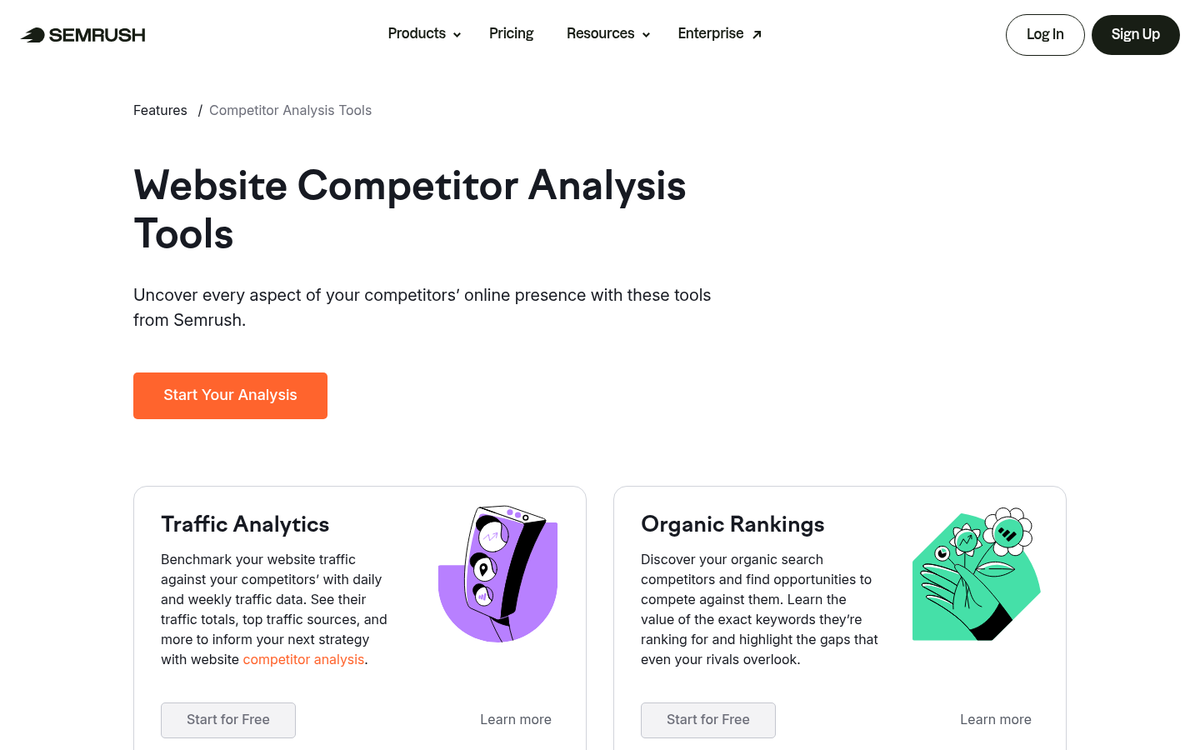
Semrush has grown into arguably the most well-rounded competitive intelligence platform available today. What was once a keyword-focused tool has expanded into a full marketing suite covering SEO, PPC, content marketing, social media, and PR monitoring.
For our purposes, the keyword research and competitor analysis features are best in class. You can plug in a competitor's domain and instantly see what keywords they rank for organically, what they're bidding on in paid search, how their traffic has trended over time, and what their top-performing pages are. The gap analysis tool is particularly useful for finding keywords your competitors rank for that you don't.
Pricing in 2026 starts at around $140/month for the Pro plan. Historical data requires a higher-tier subscription, but if you're doing competitive research at any meaningful scale, this tool earns its keep.
Majestic

Majestic remains one of the top backlink-focused tools on the market and a strong alternative or complement to Ahrefs. Its Trust Flow and Citation Flow metrics are widely used as proxies for link quality, and its index - available in both "Fresh" and "Historic" versions - gives you both current data and a longer view of a site's link history.
Free accounts give you access to your own site's data. To analyze competitors, you'll need a paid plan starting at around $50/month. It's slightly more affordable than Ahrefs for pure backlink analysis, and many SEOs use both tools in parallel since each captures links the other misses.
Moz Link Explorer
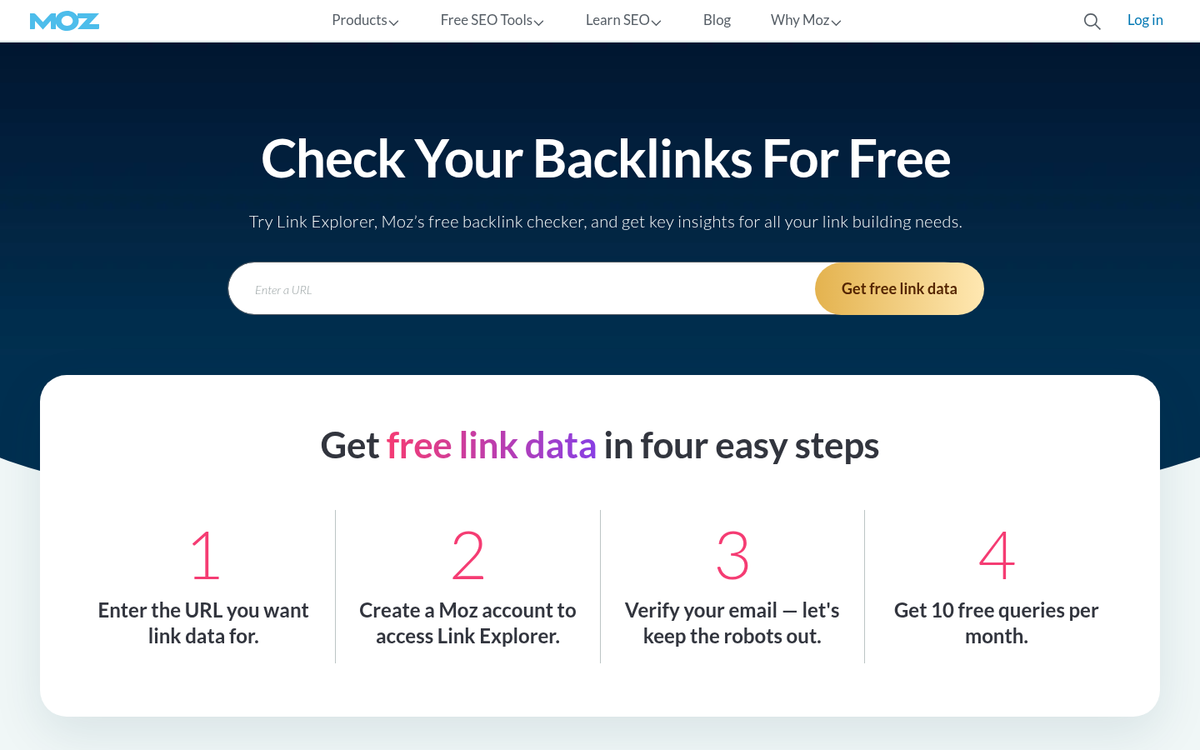
Moz has gone through some significant changes over the years, but their Link Explorer tool is still a solid option for backlink analysis, particularly for those already in the Moz ecosystem. Domain Authority (DA) and Page Authority (PA) remain widely used industry benchmarks, even though they're Moz-specific metrics and not direct Google signals.
The tool is useful for identifying high-quality link opportunities by filtering competitor backlinks through DA scores. As an added bonus, any site linking to your competitors may be willing to link to comparable content from you - making this a prospecting tool as much as an analysis tool.
Moz Link Explorer
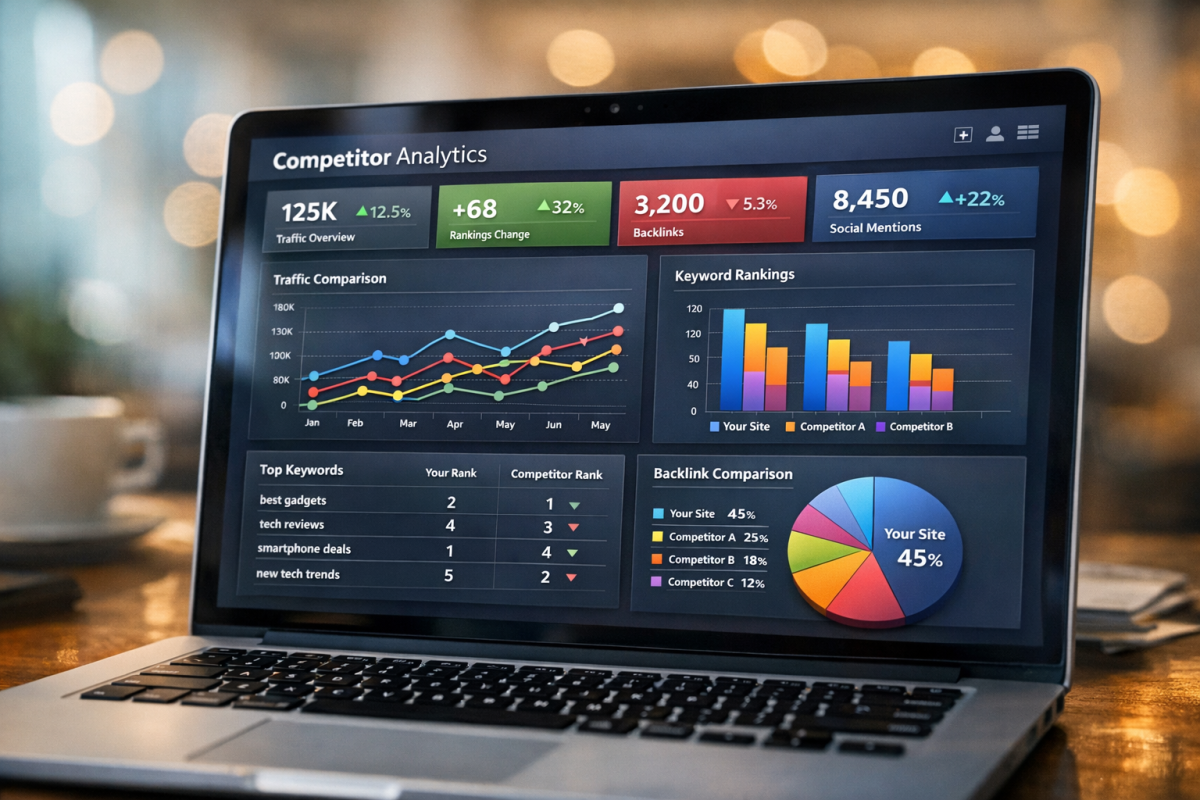
Moz has gone through some significant changes over the years, but their Link Explorer tool is still a solid option for backlink analysis, particularly for those already in the Moz ecosystem. Domain Authority (DA) and Page Authority (PA) remain widely used industry benchmarks, even though they're Moz-specific metrics and not direct Google signals.
The tool is useful for identifying high-quality link opportunities by filtering competitor backlinks through DA scores. As an added bonus, any site linking to your competitors may be willing to link to comparable content from you - making this a prospecting tool as much as an analysis tool.
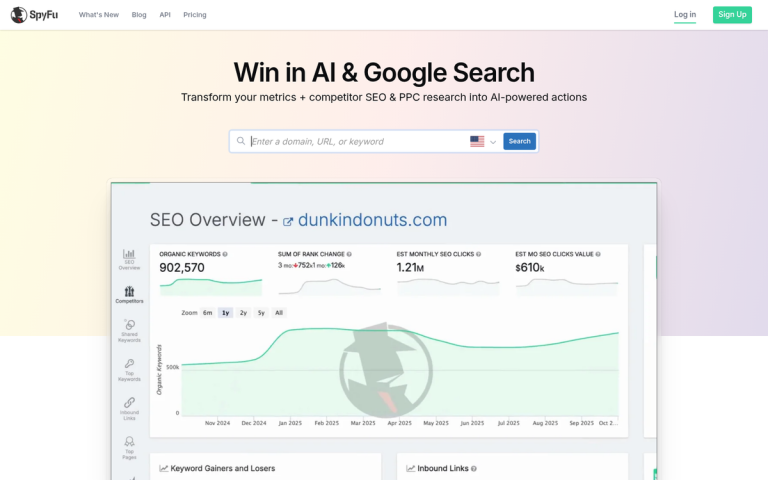
SpyFu
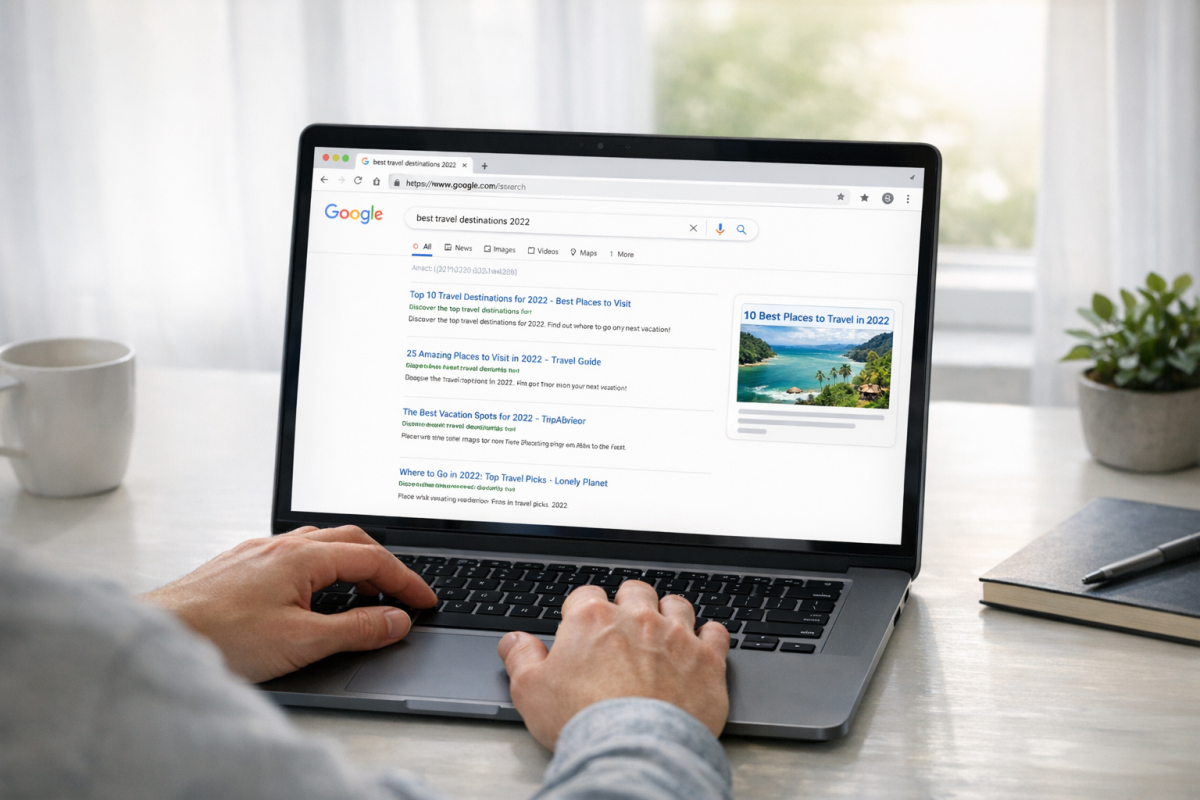
SpyFu has been around for years and continues to be one of the better-value competitive intelligence tools available. It has now sorted over 50 million websites into categorized lists and provides live SEO and PPC intelligence that refreshes every 15 seconds - making it one of the more current data sources on this list.
The core use case is simple: plug in a competitor's domain and see exactly what keywords they rank for organically, what ads they're running, and what their estimated traffic looks like. SpyFu is particularly strong for PPC research - if your competitors are paying for keywords, that's a strong signal those keywords convert.
Pricing is more accessible than many alternatives, making it a good starting point for smaller teams or those newer to competitive research.
Keywords Everywhere
Keywords Everywhere is a freemium Chrome and Firefox extension used by over 1.6 million people, and it's one of the most practical additions to your browser for day-to-day keyword research. Rather than requiring you to log into a separate platform, it overlays keyword data - including search volume, CPC, and competition - directly onto the pages you're already using.
It works across 15+ platforms including Google Search, YouTube, Amazon, Bing, and Google Search Console. The paid version adds historical volume trend data going back to 2004, which gives you a useful long-term perspective on keyword trajectory. At just a few dollars per month for most users, it offers exceptional value.
SE Ranking

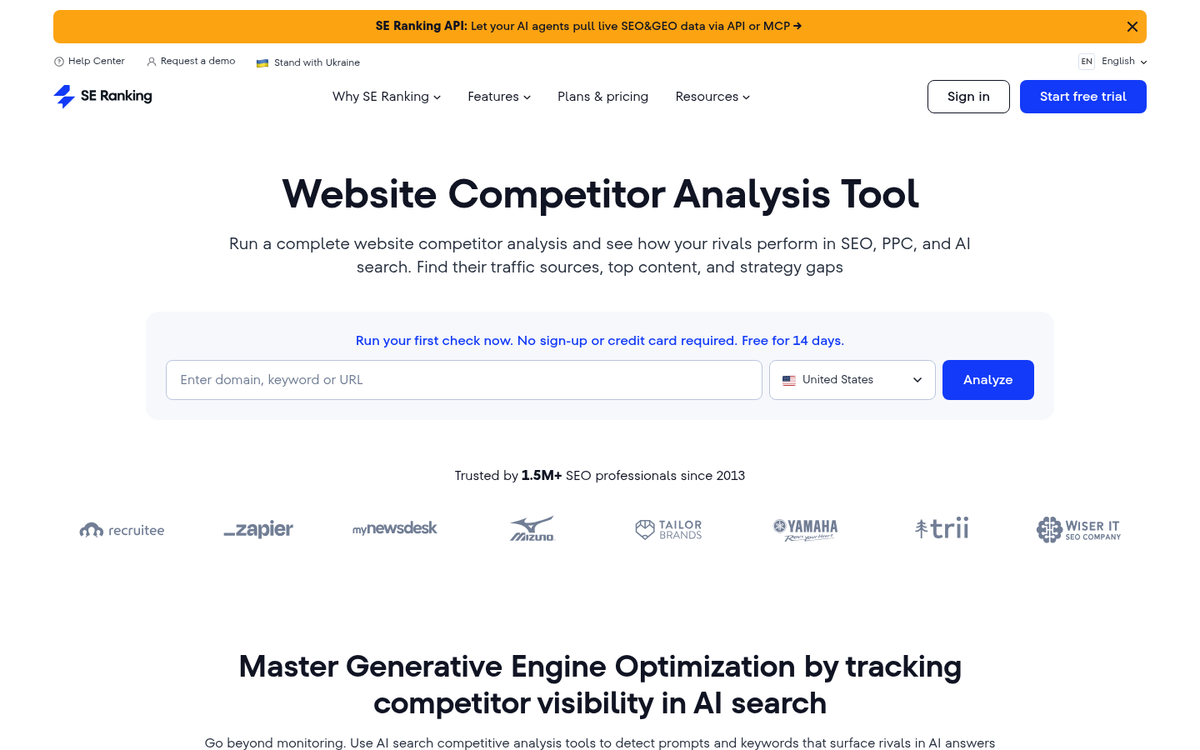
Launched in 2013 and now serving over 400,000 users worldwide, SE Ranking has matured into a legitimate all-in-one SEO platform that competes with the bigger names at a lower price point. It covers rank tracking, keyword research, backlink monitoring, site auditing, and competitive analysis.
The competitive research module is particularly strong - you can analyze a competitor's organic and paid keywords, estimated traffic, and backlink profile all in one place. For agencies and growing businesses looking for a comprehensive tool without Semrush or Ahrefs pricing, SE Ranking is worth serious consideration.
Google Keyword Planner
Google's own Keyword Planner still exists and still works in 2026. It remains one of the most reliable sources of search volume data since it comes directly from Google. The catch is the same as it's always been: you need an active Google Ads account to access the full data. Accounts that aren't running active campaigns tend to get bucketed volume ranges rather than specific numbers, which limits its usefulness for precise research.
That said, it's free, it's authoritative, and it's particularly useful for validating keyword ideas you've generated elsewhere. Use it as a sanity check against the data other tools provide. If you're also running paid campaigns, make sure you know how to properly optimize your Google Ads to get the most from your spend.
BuzzSumo
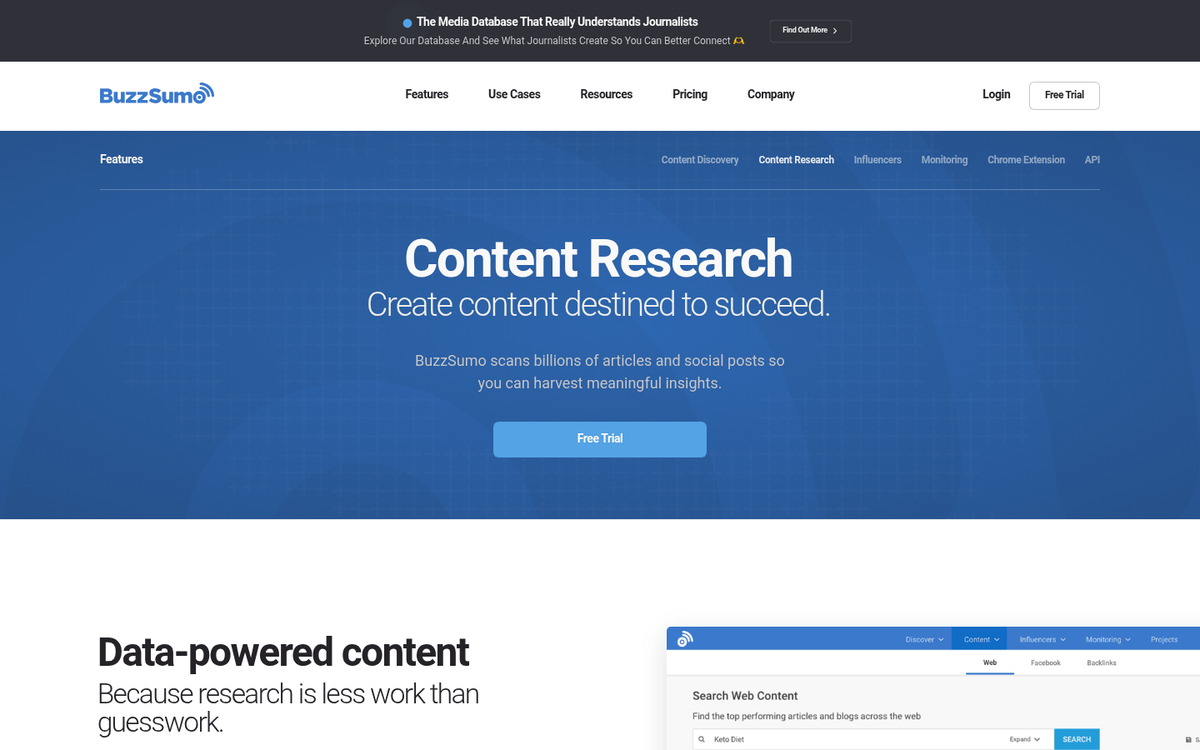
BuzzSumo remains one of the best content and social performance analysis tools available. Plug in a competitor's domain and you'll get a breakdown of their top-performing content by social shares, backlinks, and engagement. This is invaluable for understanding what topics are actually resonating with real audiences in your niche - not just what ranks, but what spreads.
The content analysis features require a paid account, though free trials are available. For identifying high-value topic angles and understanding the competitive content landscape, BuzzSumo is hard to beat.
Ubersuggest
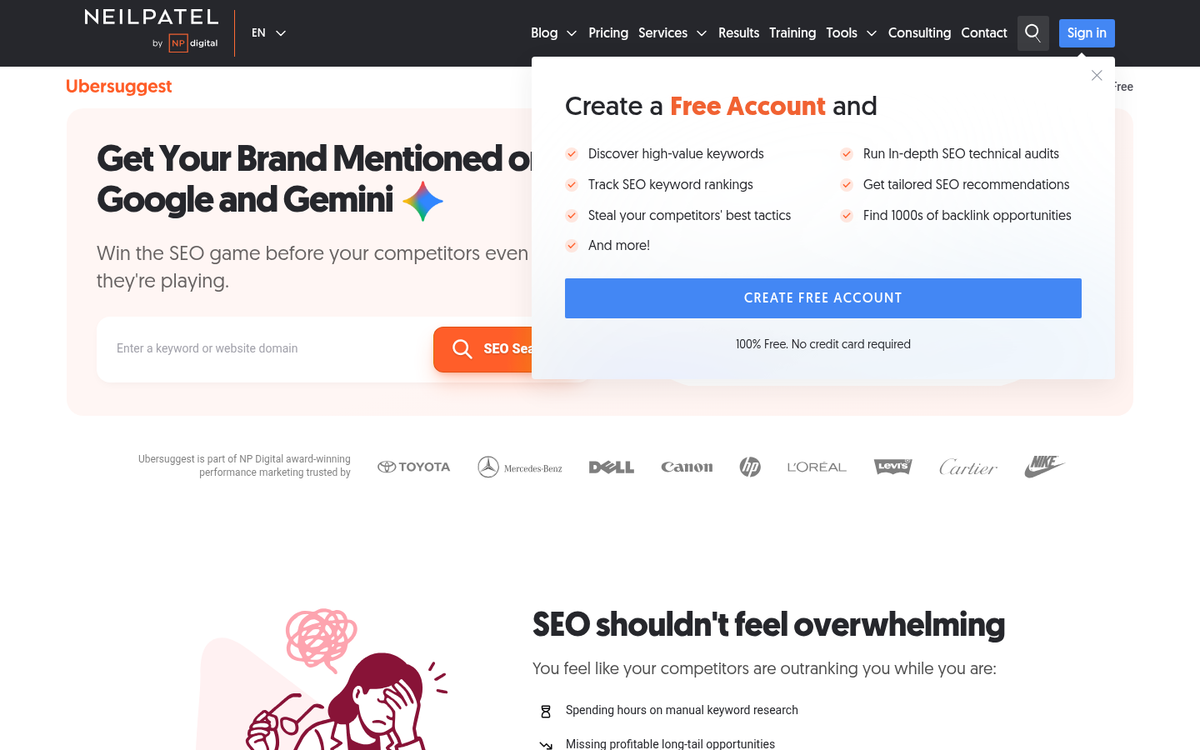
Ubersuggest has grown significantly since its early days as a simple autocomplete scraper. After being acquired by Neil Patel, it evolved into a more complete SEO platform with keyword research, traffic analysis, backlink data, and site audit functionality.
The free tier is more generous than most competitors, making it a reasonable starting point for those not ready to commit to a paid subscription. It's particularly useful for generating keyword ideas and getting a quick read on keyword difficulty and search volume without opening your wallet. For deeper competitive research you'll want to supplement it with one of the more robust tools above, but as a lightweight daily driver it holds its own.
Ubersuggest
Ubersuggest has grown significantly since its early days as a simple autocomplete scraper. After being acquired by Neil Patel, it evolved into a more complete SEO platform with keyword research, traffic analysis, backlink data, and site audit functionality.
The free tier is more generous than most competitors, making it a reasonable starting point for those not ready to commit to a paid subscription. It's particularly useful for generating keyword ideas and getting a quick read on keyword difficulty and search volume without opening your wallet. For deeper competitive research you'll want to supplement it with one of the more robust tools above, but as a lightweight daily driver it holds its own alongside other completely free marketing tools.
Answer The Public
Also now under the Neil Patel umbrella, Answer The Public remains one of the most useful tools for understanding how real people phrase their searches around a topic. Enter a seed keyword and it maps out questions, prepositions, comparisons, and related searches in a visual format that's immediately useful for content planning.
It won't give you backlink data or competitive traffic estimates, but for building out a content calendar or finding the long-tail angles your competitors haven't covered yet, it's a genuinely useful addition to your toolkit.
Putting It All Together
No single tool on this list will hand you a complete picture of the competitive landscape. The real value comes from combining them - using Ahrefs or Semrush for the heavy lifting, Keywords Everywhere for quick daily insight, BuzzSumo to understand what content actually performs, and Google Keyword Planner to validate your conclusions against real Google data.
The goal isn't to find a magic keyword list anymore. It's to understand your competitors' topical authority, identify the gaps they haven't filled, and build content that serves your audience better than anything already out there. That's how you earn rankings in 2026.