Key Takeaways
- Build a 2-3 week backlog of scheduled posts before traveling so publishing continues without gaps.
- Research co-working spaces and reliable Wi-Fi locations at your destination before departure to minimize disruptions.
- Move your entire workflow to the cloud so files are accessible across devices if hardware is lost or fails.
- Never rely on a single internet source; carry a local SIM or eSIM and always have a backup connection plan.
- Use travel experiences and events directly in your content, since authentic travel photos and perspectives outperform generic stock material.
Blogging while traveling is more common than ever. In 2025, the global travel blogging market was valued at USD 4.5 billion and it's expected to reach USD 9 billion by 2032, growing at a 12% CAGR. High-profile entrepreneurs, content creators and remote workers are always on the move - checking out conferences, giving keynote speeches, meeting with investors - all while keeping their blogs active and their audiences engaged. Some make their travels a main part of their brand. Others keep things running in the background, business as usual.
But make no mistake: blogging while abroad is a skill. If you head overseas expecting to maintain your usual output, you might find your schedule far more demanding than anticipated, or that a new environment kills your focus. Travel introduces variables that even experienced bloggers underestimate - time zone changes, unreliable internet, language barriers and the simple reality that a great new city is a bit more interesting than staring at a blank screen.
My number one tip before we even start is to have a buffer. Not the tool. But a backlog of scheduled blog posts. Ideally, you want at least two to three weeks of content queued up and ready to publish, with or without you actively working.
With a backlog in place, you can blog on your own terms while traveling. You won't miss a post if inspiration doesn't strike. And if it does - if you write something punchy, timely and full of local color - you can slot it into your schedule and push the other posts back without any gaps in your publishing cadence.
What You Gain
What do you actually get out of blogging while traveling? That can depend on your strategy. There are two philosophies here. The first: you're traveling anyway, for work or vacation and you want to stay steady and capitalize on any inspiration that comes your way. The second: blogging is your travel. You use it as a location-independent income stream, freeing yourself from any fixed address or office. Both are legitimate and are employed by thousands of people globally every day.
The financial case for travel blogging is strong. The median monthly income for travel bloggers sits at around $5,000 and 94% of travel blogs monetize through display advertising. Once you cross 10,000 visitors per month, you unlock access to premium ad platforms like Ezoic and Mediavine opens its doors at 50,000 sessions per month and gives you better RPMs than entry-level ad networks. Sponsored posts are another revenue stream, with the average rate sitting around $200 per post, though that number scales with your audience size and niche authority.
The number one traffic driver for bloggers earning six figures or more is organic search, which means the work you do - writing quality posts, building backlinks, targeting the right keywords - pays dividends long after you've returned home from any given trip. Let's talk about how to make that work while you're on the road.
Know Your Itinerary, Destination, and Details
This matters for travel. But it matters even more when you're trying to maintain a publishing schedule alongside it. The principle is easy: iron out as many logistical kinks as possible before you leave. Every problem you have to solve on the road is energy and time taken away from your work.
Know your schedule. Whether it's a packed conference itinerary or a loose travel plan, having it mapped out in your calendar - your phone's native app, Notion, Google Calendar, whatever works for you - means you can find windows for writing even on the go. Don't guess at this on arrival.
Research your destination with your work in mind. Where can you sit comfortably with a laptop? Are there reliable cafés, co-working spaces, or hotel lobbies with decent Wi-Fi? Co-working spaces in particular have exploded globally over the past few years, which makes it far easier to find a productive environment in cities across Southeast Asia, Europe, Latin America and beyond. I personally like to dedicate at least one day to a focused content capture session - photos, video, local observations - that I can pull from for weeks of future posts. One afternoon in a new city can fuel a dozen pieces of content if you approach it deliberately. If you're still finding your footing with the whole process, a content editorial calendar can make planning these sessions much more structured.
Also sort out the helpful facts in advance. Currency norms, safety considerations, local SIM options and any language basics you'll need to know. None of this is exclusive to blogging while traveling. But it cuts back on friction so you can focus when you sit down to write.
Set Up In The Cloud
If you haven't moved your workflow to the cloud, travel will force the issue. Cloud storage and cloud-based tools are an absolute must for blogging on the road. You need access to your files, your drafts, your images and your assets from any device, anywhere in the world.
Google Drive, Dropbox and Notion are all options depending on how you work. The goal is simple: nothing that matters should exist only on one physical device. Laptops get stolen. Bags get lost. Devices fail. Cloud storage removes that as a catastrophic risk and also means you can switch between devices fluidly - working on your laptop in the hotel, switching to a tablet in the airport, finishing edits on your phone in the back of a cab.
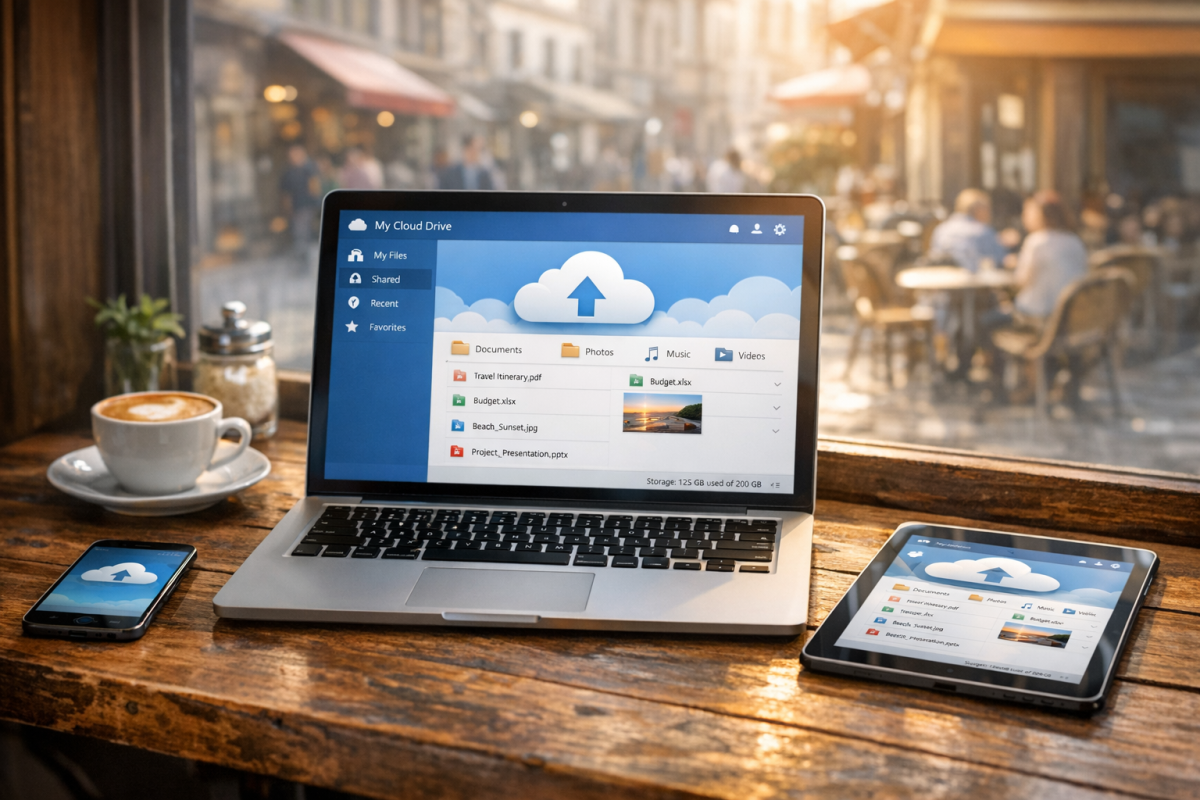
Beyond file storage, consider your full writing and publishing workflow. Tools like Google Docs for drafting, Canva for graphics and your CMS's mobile app for publishing mean you are able to manage the entire process remotely without needing your home setup. In 2025, there's legitimately no reason to be tied to a single machine to run a blog from any device.
One more thing worth mentioning here: AI writing tools have changed the travel blogging game. Tools like Claude, ChatGPT and Gemini help you outline posts, rough up drafts, beat writer's block, or repurpose notes from a long travel day into a polished piece of content in a fraction of the time it would have taken previously. That doesn't mean outsourcing your voice entirely - authenticity is still your biggest asset - but AI as a drafting and editing assistant while on the road is a legitimate workflow that successful bloggers use to stay steady through demanding travel schedules.
Have a Backup Internet Source
Internet access abroad is better than it has ever been. But it's still not uniform. Hotel Wi-Fi ranges from fast to barely functional. Café connections are hit or miss. And if you're spending time outside of urban centers, you might find yourself with nothing at all.
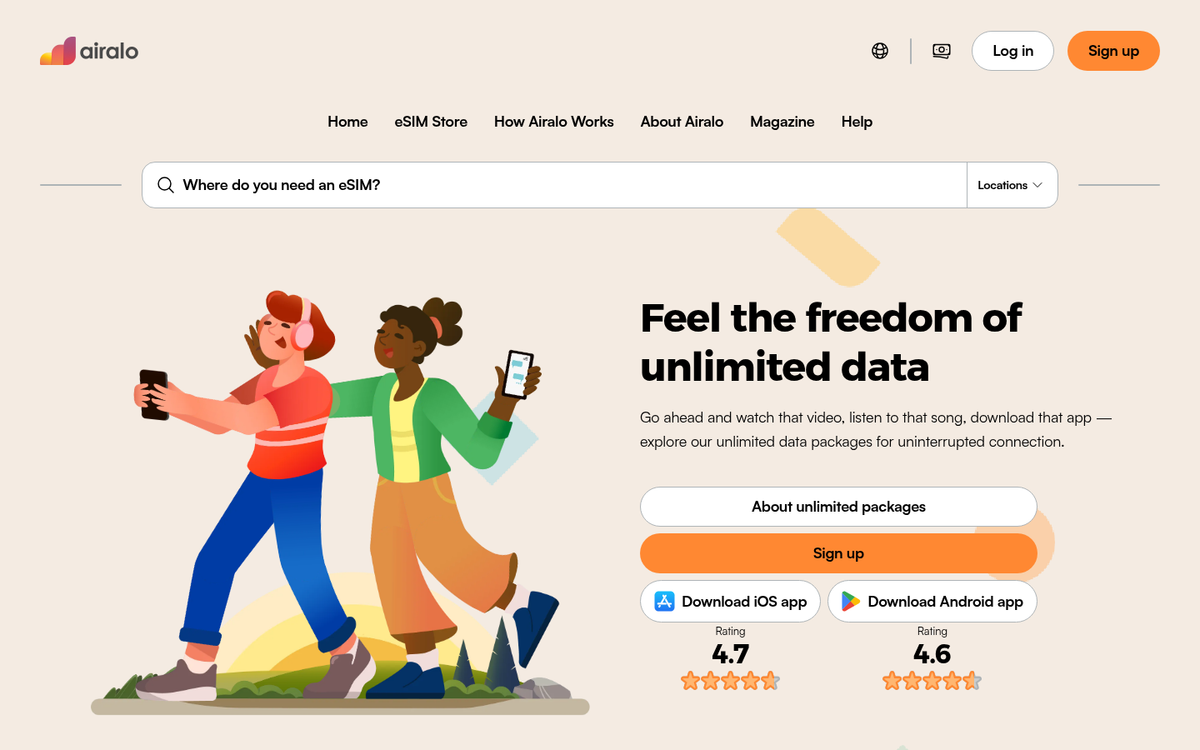
The most reliable answer is a local SIM card with a data plan. In most countries, you can pick one up at the airport or a convenience store for a few dollars and have a functional data connection within a few minutes. Use your phone as a hotspot for your laptop when you need to. eSIM technology has also made this easier - services like Airalo let you buy and activate a local data plan online before you even board your flight.
If you're a frequent international traveler, a global data plan through your carrier or a dedicated travel data device may be worth the investment. The point is essentially this: never rely on a single source of internet access when your livelihood can depend on being connected. Have a primary, a backup and a rough plan for what you do if both fail.
Bring a Device You're Comfortable Using
Your productivity while traveling is closely tied to how comfortable you are with your tools. This is not the time to experiment with a new device or a new workflow. Bring what you know and know what you're bringing.
For most bloggers, a lightweight laptop remains the gold standard for travel. Modern ultrabooks are thin, powerful and capable of handling everything from writing and editing to image work and light video. If you're a heavier content creator working with video or large image libraries, then you'll want to account for processing power and storage accordingly.

Tablets with keyboard attachments - the iPad Pro with a Magic Keyboard, or a Surface Pro - are legitimately viable options for bloggers and give you a lighter footprint than a traditional laptop. Working purely from a phone is possible in a pinch. But for standard output over a multi-week trip, most find it limiting.
Don't forget accessories. A portable mouse, a compact power bank, the right international adapters and a quality set of noise-canceling headphones can be the difference between a productive session and a miserable one. Small investments in your travel setup pay for themselves faster than you'd expect.
Incorporate Your Travels in Your Writing
The single greatest benefit of blogging while abroad is the access to experiences, environments and perspectives that your average reader doesn't have. Use it.
The first strategy is experiential. What did you see? What surprised you? And how did experiencing business, culture, or life in a different country change how you think about your own niche? A marketer observing how a street vendor in Bangkok uses social proof, or a productivity blogger finding how work culture is different in Tokyo versus New York, has raw material for some legitimately interesting content. You don't need to stretch for the connection - if the experience legitimately gave you a new perspective, write about it.

The second strategy is event-driven. If you're traveling to speak at a conference, attend an industry summit, or participate in a professional event, tie your content directly to that. New readers who found you at the event will arrive at your blog and find content that extends the conversation they were already having with you - it reinforces your authority and gives you a natural on-ramp for new followers.
Remember that users spend an average of just one minute and 45 seconds on a travel blog, which means your hook, your structure and your visuals matter enormously. Photos from your travels, used authentically, perform better than stock imagery and give your content a specificity that builds trust over time.
Consider Hiring a Writer - or Leaning on AI
There is always one more option on the table: don't be the one doing the writing. Some of the most successful blogs in any niche are maintained by owners who haven't personally written a post in years. They hire skilled writers who understand their voice, their audience and their editorial standards. The content stays consistent. The blog keeps growing. The owner focuses on strategy, relationships and the higher-value parts of the business.
If you're concerned about maintaining consistency through heavy travel, hiring a writer - or building a small team of contributors - is worth thinking about. It costs money. But it buys back your time and removes the stress of trying to produce quality content while managing a demanding travel schedule simultaneously.

In 2025, there's also a middle ground that didn't exist a few years ago: AI tools to reduce the burden without outsourcing the work. Drafting with AI assistance, using it to repurpose existing content for new formats, or having it generate outlines based on your notes from a travel day are all helpful ways to stay productive without burning out. What matters is maintaining your authentic voice and not letting the content feel generic - readers can tell the difference and so can search engines.
Whether you build a buffer, hire a writer, use AI tools, or simply write through your travels the old-fashioned way, the core principle remains the same: the world is a legitimately interesting place and that interest is a resource. The more of it you experience, the more you have to draw from. Channel it deliberately and your blog will grow with it.